
Opinion
How corporate landlords are using AI algorithms to raise rents
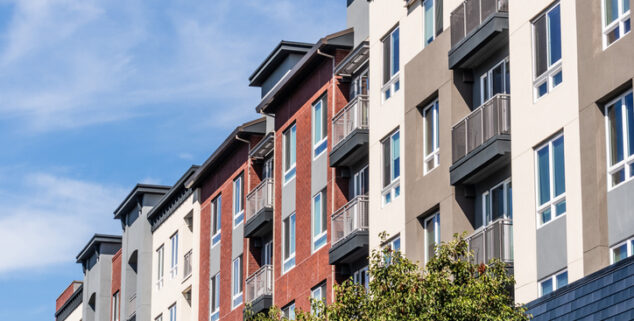 Exterior view of modern apartment building offering luxury rental units in Silicon Valley; Sunnyvale, San Francisco bay area, California
Capitol Weekly welcomes Opinions on California public policy or politics. Please read our guidelines for opinion pieces before submitting an Op-Ed. Submissions that do not adhere to our guidelines will not be considered for publication.
OPINION – In many communities across California and elsewhere, people searching for rental housing often find that there are no fair deals to be had anywhere, except perhaps at places operated by mom-and-pop landlords.
An important reason is that corporate landlords, who increasingly dominate housing markets, have been colluding with each other to raise rents as high as possible on tenants. Recently, those landlords have begun using special AI computer software, known as “pricing algorithms,” to fix rents sky high.
Pricing algorithms like the seemingly ubiquitous RealPage let corporate landlords collude with each other on rents, replacing smoke-filled back rooms with computers. With multiple corporate landlords in the same markets using the same pricing algorithms, the effects are exactly the same as traditional retail price-fixing, with renters as the victims.
The U.S. Department of Justice – under both President Joe Biden and President Donald Trump –has fought back with litigation against some of the worst corporate landlords: Cortland Management, Greystar Management Services and Livcor (a Blackstone company), plus RealPage. The Department of Justice has been able to settle the disputes with those four mega corporations on terms fairly favorable to tenants.
But none of those lawsuits are in California, where residential rents are among the highest in the country, and none of those settlements entirely prevent landlords from misusing pricing algorithms in the future.
Fortunately, some California cities – including San Francisco, Santa Ana and San Diego – have passed ordinances to restrict corporate landlord’s use of pricing algorithms and to provide needed relief for renters. And the California Legislature has been considering a bill, Sen. Melissa Hurtado’s SB 295, that would prevent this practice statewide.
As could be expected, California’s corporate landlords and their allies, such as Virginia lobbyist Mario H. Lopez, have tried to thwart the Golden State’s pro-tenant movement. They make the specious argument that pricing algorithms are just benign means for kindly corporate landlords “to understand the market and consumer preferences” and to “help recommend rental rates appropriate for market conditions.”
What corporate landlords really want “to understand” is the maximum amount of money – down to the penny – that each tenant can be made to pay in rent, and that pricing algorithms “help” corporate landlords fix rental rates that are most exploitative for market conditions.
Furthermore, a slew of scholarly studies, by researchers at Iowa State University, the University of Connecticut, the University of Pennsylvania, the University of Virginia and Yeshiva University, have proven that – as common sense indicates – pricing algorithms do lead to higher rents. In short, it is beyond reasonable dispute that restricting the use of pricing algorithms helps tenants by holding back unfair or even illegal rent increases.
With no good argument to make in favor of pricing algorithms, corporate landlords and their allies resort to a classic red herring, asserting that the real problem is an acute shortage of housing. But what good does it do to build more housing if the prices of the units are artificially kept as high as possible by AI software?
Almost every Californian, as well as the vast majority of economists of all ideological persuasions, agree that there is an acute shortage of affordable housing in the Golden State. It is absolutely imperative to build more new affordable housing and to adapt existing but underused commercial, hotel, and retail buildings to become affordable housing. At the same time, we must remove government red tape that limits the development of more new, and the upkeep of existing, affordable housing.
There is little dispute with the logical premise that increasing affordable housing supply should bring down housing prices and thus better satisfy the demand for housing. However, pricing algorithms subvert that fundamental law of economics by deliberately, artificially pushing housing prices as high as they can go.
There is not a single solution to the housing crisis. It is right to call for more affordable housing but wrong to protect pricing algorithms. Restricting pricing algorithms is fundamentally important for bringing high rents down.
Jonathan M. Eisenberg serves as Deputy General Counsel at AIDS Healthcare Foundation.
Want to see more stories like this? Sign up for The Roundup, the free daily newsletter about California politics from the editors of Capitol Weekly. Stay up to date on the news you need to know.
Sign up below, then look for a confirmation email in your inbox.
Leave a Reply