
News
Meet the insurance commissioner candidates: Sen Ben Allen
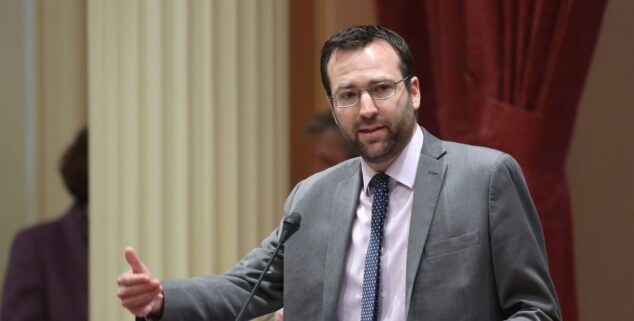 Sen. Ben Allen. Photo by AP.
 Much of the political world these days is focused on which one of the many candidates seeking to replace termed-out Gavin Newsom will wind up in the California governor’s office. That makes sense, given the state’s role as the fourth largest economy on the planet. But there is a fair argument to be made that who will replace Ricardo Lara as insurance commissioner is almost as consequential as who will win the governor’s race.
Capitol Weekly recently asked the leading insurance commissioner candidates to answer a set of identical questions regarding how they would approach this incredibly important and challenging job. The candidates participating are Sen. Ben Allen, former Sen. Steve Bradford, California Working Families Party executive director Jane Kim, Insurance agent Stacy Korsgaden, Los Angeles school teacher Lalo Vargas and financial analyst Patrick Wolff. Over the next few weeks we will present their questions and answers individually in alphabetical order by last name, starting with Sen. Ben Allen.
What professional experience or background best prepares you to serve as California’s Insurance Commissioner, and how would that experience guide your decision-making in this role?
On January 7, 2025, the Palisades Fire erupted miles from my home, tearing through the community I represent in the State Senate. Helping friends, neighbors, and constituents who lost everything navigate insurance claims gave me a front-row seat to our broken insurance system. Standing amid smoke and uncertainty, I saw what failure looks like. Those experiences have shown me the importance of transparency, accountability, and putting people first. I got to work helping survivors and pushing legislation for resources and reforms. I have a long track-record of getting difficult legislation through on a wide variety of topics. As Insurance Commissioner, I would bring Capitol know-how with the local experience of the fires to fight for a system that works better for working Californians.
Many Californians report difficulty finding or keeping homeowners insurance coverage. What is your plan to ensure insurance remains available statewide, particularly in higher-risk areas?
Californians deserve access to reliable insurance no matter where they live. As Insurance Commissioner, I would focus on stabilizing the market by pairing strong consumer protections with real investments in wildfire prevention and home-hardening. Reducing risk is essential to keeping insurers in the market and coverage available. Availability and affordability must go hand in hand.
How would you propose to bolster California’s FAIR Plan?
The FAIR Plan should be a strong safety net, not a permanent solution for families who want comprehensive coverage. I will work to improve its financial stability, strengthen claims handling and customer service, and reduce long-term reliance on it by expanding access to the private market. That requires better coordination between insurance policy, wildfire mitigation, and community resilience and hardening efforts. The goal is fewer Californians forced into last-resort coverage.
California insurance rates — especially homeowners insurance — have risen sharply in recent years. What specific actions would you take as Insurance Commissioner to slow or reduce rate increases while ensuring insurers remain financially stable?
The Insurance Commissioner must protect consumers from unjustified rate hikes while ensuring companies can meet their obligations. I would demand transparency in rate filings, push back on increases that aren’t supported by the facts, and ensure insurers properly account for risk-reduction efforts. Over the long term, preventing losses through wildfire mitigation is the most effective way to control rates. Affordability and stability must be addressed together.
How will you maintain independence from insurance companies, political parties, and special interests while serving as Insurance Commissioner? Please describe any ethics standards or transparency practices you would implement or strengthen.
The Insurance Commissioner’s responsibility is to the public, not to insurers or special interests. That’s why I’m not accepting donations from the insurance industry in my campaign. I plan to implement strong ethics standards, clear disclosure rules, and transparent decision-making so Californians can understand how decisions are made. Independence also means being willing to stand up to powerful interests when consumers are at risk. Public trust in the office is essential.
Wildfire and natural disaster risk increasingly shape California’s insurance market. What role should the Insurance Commissioner play in addressing these risks — before disasters occur — and how should costs be shared among insurers, homeowners, and the state?
The Insurance Commissioner should play an active role in reducing risk before disasters strike. That means aligning insurance policy with wildfire prevention, resilience investments, and science-based risk modeling that reflects climate change. The costs of preventing losses are far less than the costs of rebuilding entire communities after disaster strikes. The billions spent helping communities like Paradise, Santa Rosa, Altadena and the Palisades recover after disaster strikes would have been better spent, and would have gone further, preventing those disasters in the first place. Protecting vulnerable communities must remain a top priority.
Bonus questions (optional)
California law allows private plaintiff groups to “intervene” in insurance rate filings by challenging an insurer’s rate filing request. Insurers then compensate the intervenor for its costs. Supporters of the process say it helps consumers, while opponents claim it simply duplicates work the CA Department of Insurance already does to evaluate insurer rate filing requests. Where do you stand on California’s intervenor process?
The intervenor process has long helped ensure that consumers and the public have a voice in insurance rate proceedings. It is supposed to add an important layer of transparency and accountability in decisions that directly affect families’ budgets. As Insurance Commissioner, I would respect and uphold that role while making sure the process remains fair, transparent, and efficient for consumers. The goal is a system that Californians can trust and that actually helps keep rates affordable.
How should voters measure whether an Insurance Commissioner is succeeding? What outcomes should Californians expect to see by the end of your first term?
Success means insurance that is available, affordable, and fair across the state. Californians should see stronger consumer protections, clearer rate decisions, and a more stable market that holds up after disasters. By the end of my first term, families should be facing fewer coverage gaps, have better customer service from the Insurance Department, have greater confidence in the system when disaster strikes, and fewer Californians on the FAIR Plan. The insurance market needs to work for people – period.
Want to see more stories like this? Sign up for The Roundup, the free daily newsletter about California politics from the editors of Capitol Weekly. Stay up to date on the news you need to know.
Sign up below, then look for a confirmation email in your inbox.
Leave a Reply