
News
The Capitol’s generational evolution
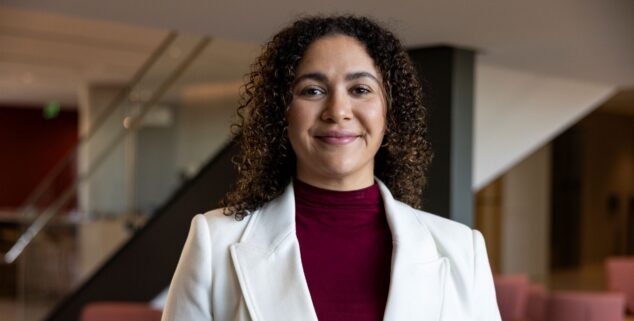 Cassidy Denny. Photo by Ellie Appleby, Capitol Weekly
A new national poll from the Institute of Politics at Harvard Kennedy School found that, of more than 2,000 young Americans between 18 and 29, more than half say they are under intense economic pressure, and are increasingly losing faith in the nation’s political system.
“Too many young Americans feel invisible to the people in power — let alone represented by them,” said John Della Volpe, Director of Polling at the Institute of Politics in an article on the institute’s website. “In a democracy, that’s a signal leaders can’t afford to ignore.”
According to the U.S. Census Bureau, members of the Gen Z and Millennial generations — ages 14-29 and 30-45, respectively — will make up 74 % of the U.S. workforce by the end of this year.
Meanwhile, in California, just 12 of the 135 members sworn into office for the current 2025-2026 legislative session were aged 35 or younger. The average age of California State Assembly members is 49 years, and the average age of California Senate members is 55 years, according to research by Rutgers University.
And yet, in Sacramento, younger legislative staffers are more regularly gaining access to positions of influence in the capitol, even as their generations remain underrepresented among elected officials. Many legislators have begun hiring increasingly younger staff, as the “Silver Tsunami” of Baby Boomers begins to leave the workforce. That, combined with the promise of meaningful advocacy and the state’s competitive benefits packages have been an enticing lure for many in an age bracket that has a notable, generational desire for political activism.
There’s no official count of California capitol staffers by age, but anecdotally, staffers of all ages report seeing less of the “middle tier” — people with 10-20 years of experience in the capitol — leaving a smaller share of highly-experienced staffers as retirement age looms for Baby Boomers and, increasingly, Gen Xers.
That trend, combined with the promise of meaningful advocacy and the state’s competitive benefits packages have been an enticing lure for many young people, in an age bracket that has a notable desire for meaningful political activism.
That leaves a growing number of high-profile staff positions being filled by Millennials and even Gen Z state workers, who are finally getting a shot at truly crafting and honing policy in California’s halls of power.
Cassidy Denny, chief of staff for Sen. Angelique Ashby (D-Sacramento) was just 28 when she got the job in 2024, and is still one of the youngest chiefs working in the capitol, at just 31. Denny said she thinks younger staffers “bring a sense of fun” to government and remind each other that the world is bigger than the sometimes-stifling halls of the capitol building.
“We will fight to the death for a lot of issues, but we will also go walk outside and smell the flowers on our lunch break,” she said. “It’s not just fighting for a better world, it’s also going on a walk, eating lunch. Like it’s bigger than all of this, it’s bigger than the building, it’s bigger than just one person. I think the Millennials and Gen Z (staffers) are good about reminding each other of that.”
Raayan Mohtashemi, a 27-year-old policy analyst in the office of Sen. Scott Wiener (D-San Francisco), said he believes housing affordability has become an intensified issue for Millennial and Gen Z staffers working in the Capitol.
“We will fight to the death for a lot of issues, but we will also go walk outside and smell the flowers on our lunch break.”
Mohtashemi, born in 1998, is on the cusp of both generations, and is therefore in the unique position of identifying with parts of both. He said he believes every generation in the Capitol brings special focus to different issues that matter to their cohort. In particular, Mohtashemi said, “there’s been a strong recognition that we have to have an underlying shift in our housing policy, to encourage production and … ensure that people in the younger generations have a chance at home ownership.”
Gen Z and Millennials have been a “driving force” behind the “Yes In My Back Yard” campaign, Mohtashemi said, “and that’s been a frankly bipartisan movement.”
“Sen. Wiener … is a great example of a member who trusts and empowers younger staff to work on complex, high-stakes legislation,” Mohtashemi said in a text. “When I started out in the Capitol, I would have never guessed that I’d be able to immediately start working on time-sensitive issues like high-profile state transit funding.”
The public groundswell for younger elected officials to represent a growing demographic on a national level has coincided with an enormous amount of staff turnover at the California state capitol, thanks in part to the COVID-19 pandemic, Denny said. During the pandemic, a lot of senior positions opened up all at once, partly due to a large cohort of staffers accelerating their retirement plans.
“I don’t know if that was because they just didn’t want to work in the building during COVID, or if COVID made them realize life was too short,” she said, “but we saw a pretty big wave of transitions after, which left a lot of senior positions needing to be filled.”
Denny posited that transition has left a dearth of middle-career staffers, those with the knowledge and experience gleaned from 10-20 years in the building, who she said often leave for higher-paying jobs.
“I really value life experience,” Denny said. “There are certain things that you only learn through experience. Someone can tell you something a million times, but until you do it or until you mess it up, you won’t learn.”
Zak Castillo-Krings, 47, and the legislative director for Assemblymember Buffy Wicks (D-Oakland), will soon celebrate his 20th anniversary as a capitol staffer, though he first entered the building in 2003. He reported seeing a huge change in culture since then, especially in the work-life balance that is a must-have for Millennial and Gen Z staffers.
“Before I started, there was an expectation that all workers in the capitol would volunteer for the party of their member, and I’ve heard stories about… expectations that you would phone bank and contribute in other ways, including spending your vacation time on campaign,” he said.
He also agreed with Denny’s characterization of a missing middle class of capitol staffers:
“There’s this unfortunate brain drain, and a tendency to spend a few years at the capitol and then move on to other things,” Castillo-Krings said. “I think the proof is how many years people have and what classifications they have attained in those years.”
In his nearly two decades at the capitol, Castillo-Krings said he’s seen a lot of “overdue pushback” from Millennials and Gen Z staffers “that wasn’t going to happen” with Gen X staffers, in part because he believes they were taught to keep their heads down at the office. So Castillo-Krings has personally been very supportive of the unionization efforts, but also warns that younger staffers need to know they’re not walking into a regular, 9-5 kind of job.
Overall, he said, the capitol’s culture has changed enough in the right direction that he feels “much more comfortable telling somebody who wants to do public policy to start working at the capitol today” than when he was a new staffer in the early 2000s.
As Millennials and Gen Z staffers take on greater responsibility in California’s capitol, they’re inheriting more than the opportunity to shape policy: They’re also inheriting an institution in transition, with the very real possibility of lost legislative history, weaker institutional continuity and less effective policy development.
Capitol staffers of all ages must now figure out how to pass many decades of experience to a new generation, meshing fresh perspectives with institutional knowledge, and ultimately shaping the future for millions of Californians.
Want to see more stories like this? Sign up for The Roundup, the free daily newsletter about California politics from the editors of Capitol Weekly. Stay up to date on the news you need to know.
Sign up below, then look for a confirmation email in your inbox.
Leave a Reply