
Opinion
Regardless of Flock, California must better regulate use of automated license plate recognition
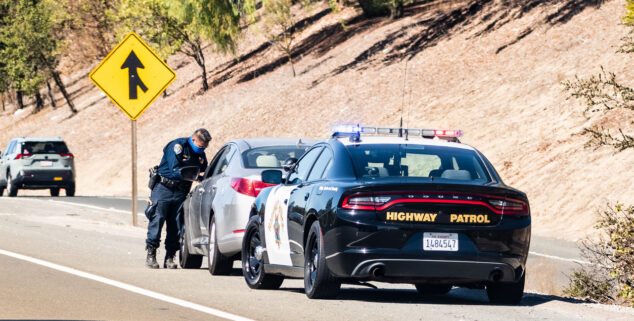 Image by Sundry Photography.
Capitol Weekly welcomes Opinions on California public policy or politics. Please read our guidelines for opinion pieces before submitting an Op-Ed. Submissions that do not adhere to our guidelines will not be considered for publication.
OPINION — If you oppose Flock cameras, you have legitimate reasons to be concerned. If you support the use of automated license plate recognition, you have legitimate reasons to defend them.
Flock Safety’s automated license plate recognition (ALPR) technology helps police locate stolen vehicles, missing people, kidnapped children and suspects much faster than officers manually checking thousands of vehicles. The same technology, however, can produce inaccurate alerts, erroneous government actions and government misuse of information collected for legitimate purposes.
The answer is to establish proportional rules and safeguards for how the government uses ALPR. Erroneous government action and misuse of information present greater risks rather than the cameras themselves.
Flock did not create ALPR surveillance. California law enforcement agencies have used this technology for years. A 2020 California State Auditor report found that 70% of surveyed California law enforcement agencies operated or planned to operate an ALPR system. The surveyed agencies included Fresno, Los Angeles, Marin County and Sacramento County.
California legislators recognized the need for safeguards. Enacted in 2015, Senate Bill 34 established privacy requirements for agencies using ALPR systems, including requirements concerning authorized use, access, security, sharing and usage policies. The State Auditor later found that four agencies it examined had inadequate safeguards and questionable policies in place. Findings revealed deficiencies in auditing and data-sharing practices.
The benefits, however, are real and documented. A randomized experiment by the Mesa, Arizona Police Department found that license-plate recognition produced nearly three times as many “hits” for stolen vehicles and twice as many vehicle recoveries as manual checks and patrols alone. The National Center for Missing & Exploited Children reports that Flock systems have contributed to the safe return of more than 1,000 missing people, including children.
The issue is that as technology augments more government capabilities, risks grow proportionally and points of failure become more consequential.
The algorithm can be wrong. The human can be wrong. The government can misuse the information.
In Green v. City and County of San Francisco, an ALPR system misread a license plate, generating an erroneous alert that ultimately contributed to officers stopping the wrong vehicle at gunpoint. The officers failed to verify the alert before acting on it.
A 2026 audit of San Francisco’s Flock-powered ALPR network found nearly 300 instances of improper access by outside agencies. California law prohibits the unwarranted sharing of ALPR data with out-of-state and federal agencies, but inconsistent policies created a blind spot. Flock Safety emphasized that the cameras themselves were not accessed by the outside agencies.
The state has responded to these issues. In 2023, Attorney General Rob Bonta issued guidance reminding law enforcement agencies that ALPR use must comply with state law. In 2025, the Attorney General sued the City of El Cajon over allegations of improper ALPR data sharing with over 100 out-of-state agencies; the litigation continues.
These types of problems do not mean ALPR technology should be abandoned. Governments themselves need rules for using it responsibly.
The debate is often framed entirely as a Fourth Amendment question. That is incomplete. In United States v. Rubin, a federal district court concluded that the government’s particular use of information from an ALPR database did not constitute a Fourth Amendment search. The broader question is what happens after the government obtains the information and acts upon it. That is where administrative law becomes relevant.
In “Regulating by Robot,” Cary Coglianese and David Lehr from the University of Pennsylvania analyze algorithmic government decision-making, drawing on Mathews v. Eldridge and offering a useful framework. The government should consider the private interest at stake, the risk of erroneous deprivation, the value of additional safeguards, and the government’s interest and administrative burden.
Applied to ALPR, this means six balanced safeguards: validating accuracy; requiring points of meaningful human review; restricting access consistently regarding purpose and sharing; maintaining detailed and auditable records; conducting adversarial testing to find vulnerabilities; and providing timely mechanisms for correcting erroneous information agencywide.
These safeguards should apply proportionally to the potential deprivation presented by each ALPR use. A system helping an officer locate a stolen vehicle presents different risks than an unverified alert contributing to an arrest. The greater the potential deprivation, the stronger the safeguards should be.
Flock cameras are new tools in an existing system. ALPR can make government better at finding stolen vehicles, solving crimes and bringing missing people home. Used carelessly, it can amplify errors, enable misconduct and fan the flames of resistance against a perceived impending Orwellian surveillance state.
California’s challenge comes in ensuring that rules keep pace with the technology.
Rayhan Sarwar studies public policy and administration at Cornell University, focusing on tech and public-private partnerships.
Want to see more stories like this? Sign up for The Roundup, the free daily newsletter about California politics from the editors of Capitol Weekly. Stay up to date on the news you need to know.
Sign up below, then look for a confirmation email in your inbox.
Leave a Reply