
Micheli Files
Reading on the Assembly floor
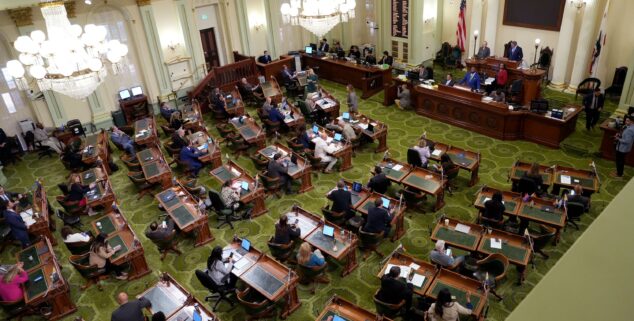 The California Assembly in session. Photo by AP
On occasion, if you listen to the proceedings on the Floor of the California State Assembly, you may hear either a legislator seeking “permission to read on the Floor,” or you might hear a legislator raise a point of order that a colleague is reading on the Floor. What is the basis for either of these two statements?
 Assembly Rule 112, which is titled “Objection to Reading of Any Paper,” provides that an Assembly Member, once recognized by the presiding officer, “may object to the reading of any paper before the Assembly.” If such an objection is made, the presiding officer can make a ruling on the objection. Or, the question of reading by an Assembly Member is determined by a majority vote of the Members present and voting. This vote would follow a brief statement by the presiding officer regarding the substance of the objection. No debate is allowed following this explanatory statement.
As a result of AR 112, Assembly Members generally seek permission from the house to “read” a document or statement. The presiding officer will simply respond by saying, “without objection.” In other words, so long as no one objects, then the Assembly Member can read on the Floor whatever paper is before them. However, if there is objection to granting unanimous consent to allow the reading of the paper, then it is treated as any other motion, which passes with a majority vote of those present and voting. It is a rare occasion when a colleague would object to reading of a paper.
There is not an equivalent rule contained in the Senate Rules.
Support for The Micheli Files is provided by The McGeorge School of Law Capital Center for Law & Policy.
Want to see more stories like this? Sign up for The Roundup, the free daily newsletter about California politics from the editors of Capitol Weekly. Stay up to date on the news you need to know.
Sign up below, then look for a confirmation email in your inbox.
Leave a Reply