
Opinion
Plastic tags don’t protect California’s kids
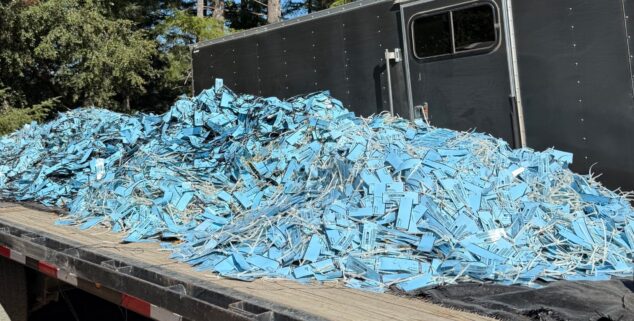 Photo courtesy of Origins Council.
Capitol Weekly welcomes Opinions on California public policy or politics. Please read our guidelines for opinion pieces before submitting an Op-Ed. Submissions that do not adhere to our guidelines will not be considered for publication.
OPINION — Pedro Molina’s recent opinion piece, “Weakening cannabis track-and-trace rules put California’s young people at risk,” raises important concerns: California cannabis rules should protect young people, prevent diversion, and ensure that cannabis is produced and sold within a regulated marketplace.
Everyone can agree that these goals are fundamental to a well-regulated cannabis market. But the real question is a more difficult one: Which state regulations actually advance these aims, and which are counterproductive? As Molina points out, the Department of Cannabis Control’s own research has found that only 40% of cannabis consumed in California comes from the legal market. If we take this figure seriously, it should be clear that something in the state’s current approach must change.
To respond effectively to the challenge posed by California’s persistent illicit market, policymakers cannot simply assume that all regulations are good regulations. In many instances, the opposite is true: when 60% of the market is illicit, placing more regulatory burden on the 40% of the market that does play by the rules will only further disadvantage those operators. Conversely, identifying policies that needlessly burden the regulated market is one of the most promising avenues to address the existing market’s shortcomings.
In this context, the DCC’s proposal to allow the group tagging of cannabis plants is an important step in the right direction. Existing DCC regulation requires a non-recyclable plastic tag to be attached to every cannabis plant, requiring dozens of hours of labor even on California’s smallest licensed cannabis farms. While this policy has sometimes been justified based on the notion that each cannabis product can be traced back to an individual plant, the reality is that following harvest, multiple harvested plants are commingled within a single consolidated batch, removing any regulatory benefit associated with the originally-tagged plant.
By any measure, the DCC’s group tagging proposal has been unusually highly vetted. In 2023, the California legislature passed Senate Bill 622 — the legislation that established the current statutory authority for the DCC’s group tagging proposal — with zero “no” votes at any point in the legislative process, and with strong support from environmental organizations concerned about waste from plant tags. Nearly three years later, DCC is now proposing to use this authority to enact the legislature’s intent in regulation.
In a comprehensive analysis of the group tagging proposal, DCC finds that the existing requirement to individually tag every cannabis plant creates “significant economic and environmental costs without a commensurate regulatory benefit.” In addition to highlighting significant labor and administrative burdens, the DCC cites alarming data on the environmental impact of non-recyclable tags, finding that “250 million plant tags have entered the general waste stream, ultimately ending up in landfills” in addition to “millions of zip ties or other fasteners.”
The photo accompanying this article shows the waste generated from just one year of tags used by a 1-acre farm. These findings should be particularly concerning given California’s nation-leading efforts to reduce or eliminate the use of single-use plastics throughout the state.
While highlighting the costs of the current policy, DCC’s analysis also concludes that there is no meaningful regulatory difference, or increased risk of diversion, in moving from individual and group tagging. Under DCC’s proposal, all plants still must be recorded in California’s track-and-trace system, groups must be associated with unique identifiers and physical locations, and farmers must record the number of plants in each group.
Tagging 5,000 plants with individual plastic tags, or a group of 5,000 plants with one plastic tag, makes no difference in the tracking system: In both scenarios, the track and trace system has a record of 5,000 plants, and the system preserves the necessary data to support DCC compliance staff.
No single policy, including group tagging, will definitively solve the problems facing California’s cannabis market. But the DCC’s forward movement on group tagging illustrates a larger point: Policymakers must continually ask whether the rules created nearly a decade ago, when the state-legal cannabis market was still an experiment, are in fact accomplishing their intended purpose. Good regulatory policy is not zero-sum. When smart regulation supports a viable legal market, it also protects communities, prevents diversion and youth access, promotes safe products and preserves tax revenues that would otherwise be lost to the illicit market.
Put simply, California cannot defeat an illicit market merely by regulating the legal market harder. To protect youth and communities, provide safe consumer access and preserve tax revenue, there is no alternative to the difficult work of building a market that actually works.
Ross Gordon is a policy analyst with Origins Council, a nonprofit representing California’s small, independent cannabis producers. Caren Woodson is president of the California Cannabis Industry Association.
Want to see more stories like this? Sign up for The Roundup, the free daily newsletter about California politics from the editors of Capitol Weekly. Stay up to date on the news you need to know.
Sign up below, then look for a confirmation email in your inbox.
Leave a Reply