
Opinion
My husband has Parkinson’s. That’s why I started asking questions about paraquat.
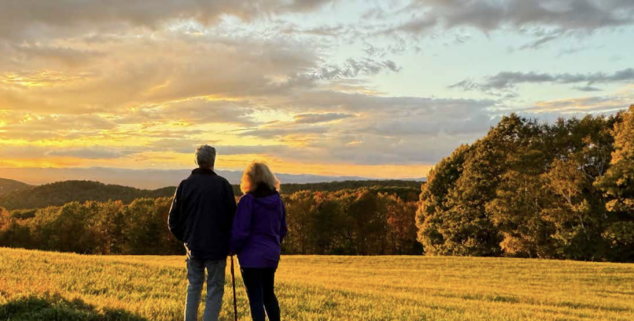 Photo by Laura Nespola, courtesy of Sarah Teale.
Capitol Weekly welcomes Opinions on California public policy or politics. Please read our guidelines for opinion pieces before submitting an Op-Ed. Submissions that do not adhere to our guidelines will not be considered for publication.
OPINION — The California Department of Pesticide Regulation (DPR) announced in August that manufacturers of pesticide products containing paraquat dichloride (generically known as “paraquat”) — which has been linked with Parkinson’s disease and a host of other adverse health effects — would voluntarily cancel product registrations in the state.
The cancellations came after regulators felt the need to request additional scientific data to address newly identified gaps in their assessment of potential health risks.
“For years, communities have fought to end the use of paraquat, a weedkiller associated with negative impacts to human health and wildlife,” California Secretary for Environmental Protection Yana Garcia said in a statement. “California will keep moving toward pest management practices that protect health and our ecosystems.”
Garcia is not alone in her assessment; nor is the Golden State. Paraquat skepticism is growing nationwide. Two months before the California DPR made its announcement, the Environmental Protection Agency (EPA) announced in June that it too would be scrutinizing the controversial substance. The agency announced it would convene a roundtable on paraquat and require manufacturers to conduct real-world volatility studies.
This begs the question: If concerns are serious enough to prompt both federal and state-level inspection — both a national reevaluation and a phase-out in the largest agricultural state — why does paraquat remain so widely used elsewhere?
That question is personal for me. Several years ago, my husband, Gordon Chaplin, was diagnosed with Parkinson’s disease.
We own a farm on the New York-Vermont border. Soon after his diagnosis, I discovered that 36 of my immediate neighbors also had Parkinson’s, most of them farmers. Medicare rolls revealed a staggering 577 people with Parkinson’s in a 25-mile radius of our farm.
I called Dr. Ray Dorsey, a renowned neurologist and Parkinson’s expert, who agreed to speak to our community. Our tiny town hall holds 60 people, but 85 packed in. A third had Parkinson’s.
We were shocked when Dr. Dorsey explained that only a minority of Parkinson’s cases can be attributed to genetics, with environmental factors believed to play an important role.
What could be causing so many cases in our area?
I started going door-to-door. The common thread I found was paraquat: People had used it or lived opposite fields where it was regularly applied.
Paraquat is a highly toxic weedkiller used on crops across the United States. As the EPA warns, “one sip can kill.” Older farmers in my community told me they used to mix it with their hands. Even today, farmers who want to avoid paraquat may not recognize it when purchased under product names like Blanco, Firestorm or Quik-Quat.
Research has raised serious concerns about the relationship between paraquat exposure and Parkinson’s disease. The chemical is even used in laboratory research to produce Parkinson’s-like effects in animals. Dozens of countries have prohibited it, yet it remains legal here.
What began as a local mystery on our farm is now becoming national.
This year, Vermont became the first state to ban paraquat, with Gov. Phil Scott courageously signing H.739 into law. In March, a paraquat spill in Northern California triggered shelter-in-place orders, closed roads and forced hundreds of residents, including elementary-school students, to stay indoors. Now, California is beginning its phase-out.
Other states are weighing action, too. New York lawmakers have introduced legislation that would phase out paraquat beginning in 2028, and advocates plan to continue pushing for it this year. In Michigan, State Rep. Julie Rogers introduced legislation that would phase out the pesticide in the Wolverine State within two years.
The momentum reflects a growing recognition that paraquat is not merely a farm issue, but a public health one.
The damage is already done for my husband and our neighbors. But we can still act to protect future generations from known neurodegenerative risks.
My daughter will grow up with a father who has Parkinson’s disease. I don’t want her generation to inherit the same risk. Whether in rural Vermont, upstate New York, Michigan cherry country, California’s farmland or elsewhere in America, families deserve protection from a chemical increasingly linked to a devastating disease.
California has shown that moving away from paraquat is not hypothetical. Vermont has acted. Other states are following suit. And the EPA itself is taking another look at whether current protections are adequate.
The science is mounting. The warnings are growing louder. Policymakers should act before more families live the story mine is living today.
Sarah Teale is an Emmy Award-winning documentary filmmaker and farmer in New York. She is producing a documentary about Parkinson’s disease, called Where the Sweet Birds Sang.
Want to see more stories like this? Sign up for The Roundup, the free daily newsletter about California politics from the editors of Capitol Weekly. Stay up to date on the news you need to know.
Sign up below, then look for a confirmation email in your inbox.
Leave a Reply