
News
Meet the insurance commissioner candidates: Lalo Vargas
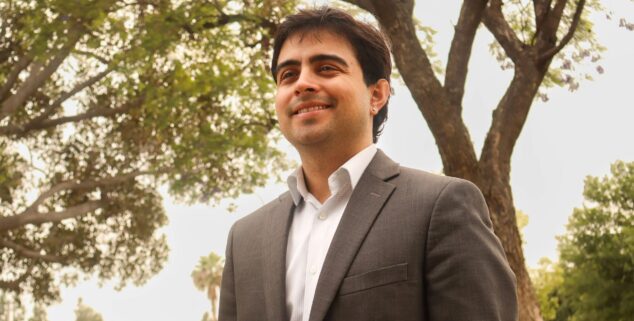 Lala Vargas. Image by Vargas for Commissioner website.
 Capitol Weekly recently asked a half dozen insurance commissioner candidates to answer a set of identical questions regarding how they would approach this incredibly important and challenging job. The candidates – Sen. Ben Allen, former Sen. Steven Bradford, California Working Families Party executive director Jane Kim, Insurance agent Stacy Korsgaden, Los Angeles school teacher Lalo Vargas and financial analyst Patrick Wolff – all submitted their answers, which we will be presenting individually in alphabetical order by last name. In recent weeks we have featured answers from Sen. Ben Allen, former Sen. Steven Bradford, California Working Families Party executive director Jane Kim and insurance agent Stacy Korsgaden. This week we bring you the answers provided to us by school teacher Lalo Vargas.
What professional experience or background best prepares you to serve as California’s Insurance Commissioner, and how would that experience guide your decision-making in this role?
To address the insurance crisis, the next Insurance Commissioner must have a deep understanding of climate change, wildfire risk, and experience working with populations who have been victims of climate catastrophe. As an environmental science teacher, former firefighter and first responder I would bring subject matter expertise about soil composition, remediation, toxicology, forestry, particulate matter pollution, and its effects on human health into the Department of Insurance. Today the taskforce drafting insurance regulations around remediation is staffed by 5 representatives of the insurance industry and not a single toxicologist or scientific expert who understands the chemistry of smoke damage. The Department of Insurance needs real scientific experts who can put forward insurance solutions that are funded by taxing the billionaires and the corporations who caused the climate crisis.
Many Californians report difficulty finding or keeping homeowners insurance coverage. What is your plan to ensure insurance remains available statewide, particularly in higher-risk areas?
By restricting the availability of insurance, the major insurance companies are holding the state hostage and demanding that we pay their ransom which is less regulation, higher rates, and higher premiums. As Insurance Commissioner I will open up market conduct investigations into the largest property and casualty insurers in the state and hold companies accountable for illegally boycotting the state. Any corporation that markets itself as a safety net, and then lets its policyholders fall through when they need them the most is a criminal enterprise and needs to be treated as such. With insurers leaving the state, the market has proven itself a weak foundation for our insurance system – the only rights that are respected are the rights of billionaires to make endless profits off of our misery, not your right to insurance. As Insurance Commissioner, I would build a public insurer that can guarantee coverage for all – whether it’s in response to a natural disaster, a car crash, or a health emergency – everyone deserves affordable insurance as a human right.
In that regard, how would you propose to bolster California’s FAIR Plan?
The FAIR plan is not a sustainable system for consumers, but neither is the private insurance market. Over 600,000 people have been forced onto the FAIR plan, because of the profiteering and maneuvering of the private insurance industry. The way out of this crisis is to confront the private insurance industry head on and to transition consumers not only off the FAIR plan, but off the private insurance industry altogether. Using the assets and the profits of the existing insurance industry, we could create a public insurance system which provides low cost, but expansive coverage for homes, auto, and healthcare. Instead of our premiums going to fund the exuberant salaries and investments of insurance executives, that money should be recycled back into the policyholders – to fund mitigation efforts, lower risk and provide coverage to more people.
California insurance rates — especially homeowners insurance — have risen sharply in recent years. What specific actions would you take as Insurance Commissioner to slow or reduce rate increases while ensuring insurers remain financially stable?
I would place a freeze on insurance rates and deny any further rate hikes. In California, whether or not your insurance premiums go up is a political choice made by regulators. The Insurance Commissioner has the right and the duty to deny any rate hikes that they deem as excessive. State farms 17% rate hike last year was excessive and should have never been approved. That single approval has unleashed a tide wave of other rate hikes. Over the holidays Lara approved a 6.9% rate increase for Mercury Insurance and CSAA. Rate increases for Farmers Insurance Group and the FAIR plan are expected to be next. And these are the same insurers that are using illegal tactics to leave survivors of the LA fires high and dry. With any other product or service, when you pay for it, you expect to receive it. But in California if you’re an Insurance company that doesn’t provide compensation, you get rewarded with a rate hike. That’s the foundation of insurance regulation today and it is criminal. As Insurance Commissioner I pledge to freeze rates and deny further rate hikes until insurance companies cease their exploitative business practices and pay the survivors of the Los Angeles fires the full compensation needed to rebuild and repair their homes.
How will you maintain independence from insurance companies, political parties, and special interests while serving as Insurance Commissioner? Please describe any ethics standards or transparency practices you would implement or strengthen.
Under a Socialist leadership, the department of insurance would operate under a very simple principle: the needs of people will always be put before the profits of the insurance industry. This is something I can guarantee, because I am not running as a representative of either of the two corporate parties. I am running as a Peace and Freedom candidate, pledging to not take any money from the insurance industry. I believe the only way we can defeat the insurance industry is if we build a mass movement. Without ties to a mass movement that can keep both elected officials and the insurance industry itself accountable, any candidate running for office risks succumbing to the pressure of the insurance industry.
Wildfire and natural disaster risk increasingly shape California’s insurance market. What role should the Insurance Commissioner play in addressing these risks — before disasters occur — and how should costs be shared among insurers, homeowners, and the state?
The Insurance Commissioner should play a major role in lowering risk for climate disasters and making sure that any costs associated with mitigation efforts are directed to those responsible for causing the risk in the first place. The climate crisis is racking up an enormous bill, but why should those who are least responsible for the climate crisis have to pay for it? Why should the working class pay for this crisis while the pockets of the fossil fuel industry and energy industry remain untouched? As a socialist, I believe that those responsible for causing the climate crisis should be the ones who pay for it, and it’s the billionaire class and their corporations who have destroyed our environment. It’s time to make them pay up to save our homes and save our planet before it’s too late.
Bonus questions (optional)
California law allows private plaintiff groups to “intervene” in insurance rate filings by challenging an insurer’s rate filing request. Insurers then compensate the intervenor for its costs. Supporters of the process say it helps consumers, while opponents claim it simply duplicates work the CA Department of Insurance already does to evaluate insurer rate filing requests. Where do you stand on California’s intervenor process?
The intervenor process is an important way consumers can directly influence the rate approval process. We should make sure that consumers always retain that right to challenge an insurance company’s request for more profit, especially because the Insurance Commissioner and direction of the department can change every four years. However, I also believe that there are even more powerful ways to encourage policyholders to participate in the regulatory process. As Insurance Commissioner, I would put working people at the helm of the department – to staff major leadership positions, task forces, and even the regular staff of the department’s multiple branches, with people who have proven track record fighting for policyholders. It should be the fire survivors aided by real scientific experts, who make the regulations around remediation and smoke claims – not the representatives of the insurance industry.
Want to see more stories like this? Sign up for The Roundup, the free daily newsletter about California politics from the editors of Capitol Weekly. Stay up to date on the news you need to know.
Sign up below, then look for a confirmation email in your inbox.
Leave a Reply