
Opinion
If developers don’t pay impact fees, who will?
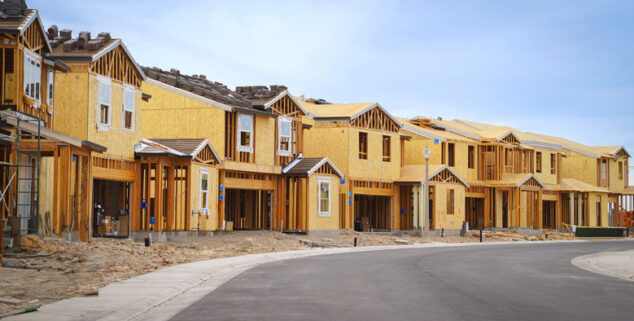 Single family homes under construction on an empty street
Capitol Weekly welcomes Opinions on California public policy or politics. Please read our guidelines for opinion pieces before submitting an Op-Ed. Submissions that do not adhere to our guidelines will not be considered for publication.
OPINION — In a recent commentary, the California Building Industry Association suggested it’s the impact fees paid by developers that make it hard to build homes Californians can afford. While that sounds convenient, it doesn’t stand up to the facts or to common sense if we just ask the obvious follow-up question: Then what?
Further restricting developer-related fees will not solve California’s housing crisis — it will make things worse. If developers don’t pay impact fees, there are only two options left. Option one is no one pays, meaning no new housing gets built — affordable or otherwise. Option two is you pay. You, the average California resident already struggling to buy gas, groceries, and everything else.
Then what?
Homes can’t be built without the infrastructure that supports the families living in them. So, if the developer selling a house stops contributing to the cost of the infrastructure needed for that house, then what? It may not be convenient to talk about what comes next when developer-related fees are cut, but it’s easy to predict:
- Infrastructure costs to support new homes will get shifted from developers to existing residents by way of local taxes and fees;
- Home construction will be held up for lack of infrastructure to support more homes in our communities; or
- Homes will just be built with inadequate infrastructure, reducing public safety and quality of life.
We’ve seen what happens when communities neglect adequate planning and infrastructure investment. Water taps stop working. Sewers spill over and contaminate the environment. Park deserts leave kids to wander the streets, and neighborhoods decline into places that are only “affordable” because nobody wants to live there.
According to a January 22, 2026 report assessing the cost of impact fees, the Terner Center at UC Berkeley found that impact fees contributed to less than five percent of total housing development costs.
According to the California Association of Realtors, since 2019, the average home price in California has increased by 50 percent, from $600,000 to more than $900,000. At less than five percent of the total cost of housing, development related fees cannot rationally be responsible for that exorbitant price increase.
Over the same period of time, the State Legislature passed a multitude of restrictions and regulations on development related fees – at least eight significant bills between 2019 and 2024.
Why have housing prices continued to skyrocket despite all of these new laws? Again, common sense suggests developer related fees are not the underlying problem. In fact, it’s impressive that local governments have managed to keep fees as low as they have despite facing many of the same rapidly escalating cost pressures as the private sector is up against.
That leads to an important side note most people don’t know: local governments cannot profit from impact fees. State law strictly limits them to no more than the actual cost of building the infrastructure necessary to support the new homes.
How should communities pay for the costs to install infrastructure necessary to build new homes and other development in livable, equitable, and thriving communities? While some might argue the community as a whole should pay these costs, that places an unfair burden on residents — low income residents in particular.
That’s why it’s not surprising that, in a September 2025 statewide survey conducted by Probolsky Research for the California Special Districts Association (CSDA), seventy-four percent of voters – representing all sides of the political spectrum – said developers should pay for infrastructure needed for the new homes they add to our communities.
Politically expedient answers are rarely the right answers. Californians aren’t asking the next Governor to stick them and their children with the bill for developer-related fees. Nor does anyone want to live in a wooden box with no electricity, running water, flushing toilets, nearby emergency services, or safe and accessible parks. Californians are just asking for the California Dream—a high quality of life at a price we can all afford.
As this video from California’s fastest-growing Inland Empire region testifies to, California’s housing future will rely upon careful planning, support for efficient and effective local services, and protection of the infrastructure that is fundamental to our homes, our lives, and our communities.
Let’s not forget the facts, let’s not forget to use common sense, and let’s not forget to ask, then what?
Neil McCormick is the CEO of the California Special Districts Association.
Want to see more stories like this? Sign up for The Roundup, the free daily newsletter about California politics from the editors of Capitol Weekly. Stay up to date on the news you need to know.
Sign up below, then look for a confirmation email in your inbox.
You say that communities degrade when adequate planning is not provided. That planning leads to the question of creating cities that are closer to the problem than counties. The state makes it very difficult and expensive to create new cities. That needs to change now. Also, please answer one question for me; “If the population has decreased significantly that should have taken a lot of pressure off the need for new housing? Is this true?