
News
Governor could grant clemency in 565 death penalty cases. Or not
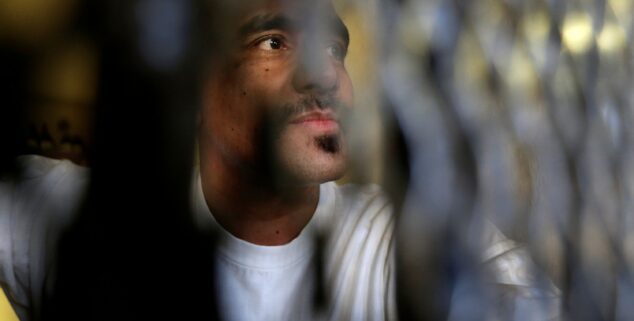 California Death Row. Photo by the Associated Press.
 As his time as governor comes to an end, Gov. Gavin Newsom is facing a life-or-death decision: whether to commute the sentences of the 547 men and 18 women in state prison who have been condemned to death.
There is good reason to believe Newsom will take that step, and there is reason to believe he won’t. Neither he nor his aides are telegraphing his plan.
A mass commutation could damage his presidential ambition. But Newsom, a life-long and outspoken opponent of capital punishment, has gone further than any California governor before him to end state-sanctioned killing.
I was part of the gaggle of reporters in the Capitol hallway outside the state Senate chambers on March 13, 2019, when Newsom, two months into his first term, strode up and made the extraordinary announcement that he was granting reprieves to California’s condemned inmates, then numbering 737.
By Executive Order N-09-19, Newsom repealed California’s lethal injection protocol, which was being challenged in court, and decreed that the death chamber at San Quentin State Prison be dismantled, its parts shipped to some warehouse.
“California’s death penalty system is unfair, unjust, wasteful, protracted and does not make our state safe,” the order said.
It bluntly continued: “I will not oversee [the] execution of any person while Governor.”
As he announced the steps, Newsom told reporters a personal story about Pete Pianezzi, a one-time bank robber who faced the possibility of a death sentence for a double murder in Los Angeles in 1937.
Newsom’s grandfather, William Newsom, who gained wealth as a builder and the moniker “Boss” by helping Pat Brown’s political ascent, and his father, Court of Appeal Justice William Newsom, liberal to his core, became convinced Pianezzi was innocent, and worked to prove it.
After a Mafia hitman-turned government witness revealed the identities of the true murderers to authorities, Gov. Jerry Brown granted Pianezzi a full pardon in 1981.
“I was a young man learning that life story and . . . got to know Pete,” Newsom said in March 2019. “I also had the opportunity in that spirit to start thinking and reflect upon the death penalty.”
The death penalty may not be front of mind for California voters now. Another execution is theoretically possible though highly unlikely. But regardless of their view of capital punishment, past governors have struggled with the issue.
After police and lawyers do their jobs, jurors reach their verdicts, and appeals are exhausted in the courts, the decision to take or spare the life of a convicted capital murderer rests with the governor.
Pat Brown was so haunted by the issue that he wrote a book about it, “Public Justice, Private Mercy,” published in 1989.
“In my eight years as governor,” he and his co-author Dick Adler wrote in the prologue, “I was obliged to consider 59 death penalty cases. I was the last stop on the road to the gas chamber for these 59 people. After much deliberation, I sent 36 of them to death and granted clemency by commuting the sentences of 23 others to life in imprisonment without possibility of parole.”
Summing up his feeling at the end of his book, he wrote:
“It was an awesome, ultimate power over the lives of others that no person or government should have or crave. And looking back over their names and files now, despite the horrible crimes and the catalogue of human weaknesses they comprise, I realize that each decision took something out of me that nothing–not family or work or hope for the future–has ever been able to replace.”
Brown’s successor, Ronald Reagan, who ran on a tough-on-crime platform, allowed one execution, that of Aaron Mitchell on April 12, 1967, for the murder of a Sacramento police officer, and granted a reprieve for a second man.
A mass commutation could damage his presidential ambition. But Newsom, a life-long and outspoken opponent of capital punishment, has gone further than any California governor before him to end state-sanctioned killing.
So began a 25-year hiatus, punctuated in 1972 when the California Supreme Court declared that the death penalty violated the state constitutional prohibition against “cruel or unusual punishment.”
That decision reduced the sentences of the 107 condemned inmates to life in prison. Most have died, Charles Manson among them.
One, Robert Massie, got out, killed a liquor store owner in San Francisco, was sent back to death row and executed in 2001 when Gray Davis was governor.
The most famous living member of the Class of ’72 is Sirhan Sirhan, sentenced to die for assassinating Robert F. Kennedy at the Ambassador Hotel in Los Angeles on June 5, 1968, the night Kennedy won the California Democratic presidential primary.
Newsom, who views RFK as a hero, blocked Sirhan’s parole in 2022. Now 82, Sirhan remains at R.J. Donovan State Prison outside San Diego.
During his first term as governor in 1977, young Jerry Brown vetoed legislation to reinstate the death penalty, only to have the Legislature override his veto. [Note: The override was the first of four Brown vetoes overridden by lawmakers in his first stint as governor, all in an eight month stretch. They are the last such overrides for any governor since.)
“I hope the day will come when society will not try to use death as punishment,” Brown said, reacting to the override, as recorded by tape kept by the UCLA Film and Television Archive.
Brown promised to uphold the law but added: “Society does not need the death penalty. I think we will be better off without it and some day will.”
California’s 25-year death penalty moratorium ended in 1992 after Gov. Pete Wilson denied clemency to Robert Alton Harris. Wilson, another tough-on-crime Republican, did not reach his decision lightly and cited Harris’s brutal upbringing in a statewide broadcast in April 1992.
“As great as is my compassion for Robert Harris the child, I cannot excuse or forgive the choice made by Robert Harris the man,” Wilson said in denying clemency.
Having investigated Harris’s life for the Los Angeles Times and witnessed his death, I knew the story, writing that his life began on Jan. 15, 1953, “the day a drunken soldier named Kenneth Harris kicked his alcoholic wife in the gut, sending her into labor two months early.” Harris had fetal alcohol syndrome, and a father who believed he was not his own and tried to strangle Robert with a baby blanket.
Harris was 25 in July 1978 and recently released from prison for a manslaughter conviction when he kidnapped and murdered two 16-year-old boys, John Mayeski and Michael Baker, in San Diego. Wilson was San Diego mayor at the time.
“Robert Harris the child had no choice – he was a victim of serious and inexcusable abuse. Robert Harris the man did have a choice. He chose to take a life, two lives,” Gov. Wilson said.
As one of 48 witnesses to his macabre execution, I reported for The L.A. Times that at 3:48 a.m. on April 22, 1992, three guards led Harris into the gas chamber, strapped him to one of two chairs, and closed the door, sealing him inside.
Warden Dan Vasquez was about to flip a lever to release cyanide pellets into a vat of sulfuric acid when we witnesses heard the muffled sound of a ringing telephone. Harry Pregerson, a judge on the U.S. 9th Circuit Court of Appeals, was calling to direct that Vasquez halt the execution.
California’s 25-year death penalty moratorium ended in 1992 after Gov. Pete Wilson denied clemency to Robert Alton Harris. Wilson, another tough-on-crime Republican, did not reach his decision lightly and cited Harris’s brutal upbringing in a statewide broadcast in April 1992.
Harris, confused, was unstrapped and led out of the chamber but his final reprieve was short lived. In that early morning, the U.S. Supreme Court took the extraordinary step of stripping the 9th Circuit of its authority over the case, and guards led Harris back into the chamber.
Once he was strapped back to the chair, and the guards left and sealed the airtight chamber behind them, Harris looked over his left shoulder and caught the eye of Stephen Baker, a witness who stood as close to the death chamber as he could. Baker was the San Diego police officer who had arrested Harris in July 1978 not knowing that one of his victims was his son, Michael Baker.
“I’m sorry,” Harris said.
Stephen Baker nodded.
By 6:14 a.m., Harris stopped breathing.
Then Assemblyman Tom McClintock, now a member of Congress, carried legislation allowing for lethal injection as an alternative to lethal gas, and during the next 14 years, California put to death a dozen more men, the last one being Clarence Ray Allen when Arnold Schwarzenegger was governor.
Allen was convicted of ordering from his cell at Folsom State Prison the 1981 murders in Fresno of Byron Schletewitz, 27, Douglas Scott White, 18, and Josephine Rocha, 17, The Sacramento Bee’s Andy Furillo reported on Jan. 14, 2006.
Allen was 76, legally blind, had a diseased heart and required a wheelchair, though he didn’t die easily. Executioners administered a second lethal doses before he took his final breath on Jan. 17, 2006.
That year, a federal judge, acting on a suit by a death row inmate, halted more executions, concluding that California’s method of lethal injection violated the U.S. constitutional prohibition against cruel and unusual punishment.
In 2016, while the state challenged that decision, voters approved a ballot measure that promised to speed up executions and rejected one to end capital punishment.
“I want to give them another chance,” Newsom told CalMatters’ reporters as he ran for governor in 2018, contemplating another ballot measure asking voters once again whether they supported capital punishment. He didn’t follow through on that notion.
Once in office, Newsom realized that 25 men had exhausted their appeals and could be executed on his watch. As he told it, Pete Pianezzi came to mind.
Pianezzi had been arrested for the 1937 murder of Les Bruneman, a gambler who had run afoul of Los Angeles mobsters. A Los Angeles Daily News reporter described the crime in November 1952 writing that “a couple of torpedoes stitched up Bruneman with a lot of lead” at the Roost Cafe in Los Angeles and killed a restaurant worker who could have been a witness.
“Hardly anyone except the politicians, grafters and police who had profited out of Bruneman’s operations were incensed over his death,” the Daily News reporter wrote.
Evidently believing Pianezzi was innocent, the reporter called him the “Bum Rap Kid,” and quoted one of the cops who arrested him as saying he no longer believed Pianezzi did the murder.
Pianezzi was nearly sentenced to death in one trial—apparently one juror held out–but spent 13 years in prison for murders he did not commit. After being paroled from Folsom Prison in 1953, he settled in Marin County, worked as a distributor of the San Francisco Examiner, met Newsom’s grandfather and father and became a fixture in North Beach.
“My grandfather had made it a life pursuit to address the injustice of Pete’s arrest and prosecution for a crime he didn’t commit,” Newsom said in 2019.
In 1979, two San Diego Union reporters, the late John Sandefer and Carl Cannon, reported that Aladena “Jimmy the Weasel” Fratianno, a Mafia hitman, unraveled the mystery after he became a government witness, telling authorities that L.A. mob boss Jack Dragna directed that Frank “The Bomp” Bompensiero, a San Diego mobster, and Leo “The Lips” Moceri murder Bruneman for refusing to share his gambling proceeds.
Pianezzi and his friends, including former Senator and Judge Quentin Kopp and the late San Francisco journalist Warren Hinckle, pressed Jerry Brown to grant the pardon. He did so in October 1981.
The San Francisco Examiner reported that Pianezzi celebrated with a glass of white wine at La Pantera Restaurant in North Beach. Justice Newsom was there, as he was at Pianezzi’s wake in 1992, at the old North Beach hangout, Washington Square Bar and Grill.
“The guy got evidence that he is innocent,” Jerry Brown told me in 2019. “Why wouldn’t you pardon him? If you don’t pardon him, you’re doing an injustice.”
No matter what Newsom does on the clemency question, the death penalty will remain embedded in the state constitution, thanks to a 1972 ballot measure championed by Reagan and future Gov. George Deukmejian. Voters would have to decide by a ballot measure to strip it from the law.
As of today, California prisons hold 565 condemned inmates, 172 fewer than when Newsom took office. Some have had their cases overturned. District attorneys in several counties have agreed to reduce the sentences of many more, and 66 have died, including 13 during the COVID-19 outbreak at San Quentin in 2020.
Newsom will face hurdles and unanswered questions if he decides to commute the remaining death sentences. It is, for example, unclear whether he could grant a mass clemency or would need to grant separate petitions.
For inmates who have no prior convictions, other than for their capital crimes, the governor could grant clemency. But for the bulk of the death row inmates, he would need to gain the approval of the state parole board, and the California Supreme Court would have to agree that he was not abusing his discretion.
Although Democratic nominees control the court, the justices’ consent is not certain. Perhaps complicating matters, two of the six sitting justices will be on the ballot in November—the 40th anniversary of the historic election in which voters ousted Chief Justice Rose Elizabeth Bird and two other Jerry Brown-appointed justices over her votes against death judgments.
A commutation would not authorize the inmates’ release. They still would face life behind bars. But Anne Marie Schubert, the former Sacramento County District Attorney who is president and chief executive officer of the nonprofit Criminal Justice Legal Foundation, pointed to the push in recent years to abolish the concept of life in prison without possibility of parole. If that effort succeeds, formerly condemned inmates could be freed.
Newsom will face hurdles and unanswered questions if he decides to commute the remaining death sentences
“This is a bombshell that is waiting to explode,” Schubert said.
There could be other political consequences. Each condemned inmate was convicted of a horrible crime. Each could make for an attack ad. Some murders were especially awful, such as the 1993 kidnap and murder of 12-year-old Polly Klaas by Richard Allen Davis, now housed at Ironwood State Prison.
Newsom’s stand on the death penalty is in sync with other potential 2028 Democratic presidential candidates. Most, if not all, oppose the death penalty.
But commutations granted by Newsom would set up a stark contrast with at least one potential Republican presidential candidate, Florida Gov. Ron DeSantis. DeSantis’s Sunshine State has carried out 13 executions so far in 2026.
Newsom has faced backlashes before. He incurred withering attacks, including from allies, for his decision as San Francisco mayor in 2004 to authorize same-sex marriages. But he is an agile politician who has shown an ability to read voters’ attitudes ahead of more cautious Democrats.
For a hint of what he might do as he prepares to leave office, look at what he said eight years ago as he prepared to assume office. Under questioning by Laurel Rosenhall, then of CalMatters, Newsom said he had met with the then-occupant of the corner office.
“I told Gov. Brown the other day to solve this before the next governor comes into office. … I said what are you doing, what are you going to do,” Newsom said.
Newsom would not reveal Brown’s reply. But the answer became apparent once Brown departed Sacramento for his home in the hills of Colusa County. The death sentences of 700-plus inmates were intact, waiting for Newsom.
Dan Morain has been a journalist in California for more than 40 years, focusing on state policy, politics and justice-related issues for publications including the Los Angeles Times, Sacramento Bee and CalMatters. He is the author of “Kamala’s Way, An American Life,” published by Simon & Schuster in 2021.
Want to see more stories like this? Sign up for The Roundup, the free daily newsletter about California politics from the editors of Capitol Weekly. Stay up to date on the news you need to know.
Sign up below, then look for a confirmation email in your inbox.
Leave a Reply