
Micheli Files
Examples of great legislative drafting in California
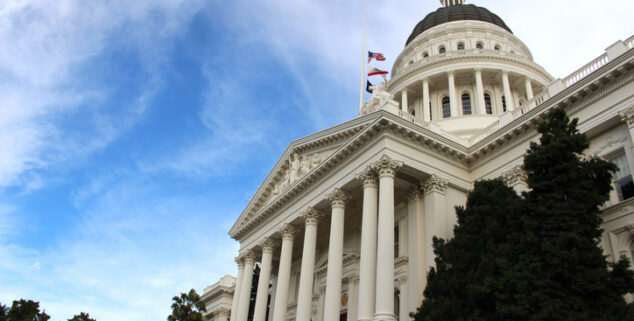 California State Capitol Building in Sacramento, California.
 In reviewing legislation during the last month of the 2026 California Legislative Session, I have come across a number of examples of excellent bill drafting and wanted to draw attention to them to serve as guides in the upcoming 2027 Legislative Session. The following are examples that I want to highlight:
This the best urgency clause I’ve seen this year (detailed explanation to clearly justify the urgency, rather than the usual short statement found in most bills):
This act is an urgency statute necessary for the immediate preservation of the public peace, health, or safety within the meaning of Article IV of the California Constitution and shall go into immediate effect. The facts constituting the necessity are:
 (a) Mobilehome and recreational vehicle parks are widely considered to be naturally occurring affordable housing, and are home to 1.6 million Californians who are often older and lower-income individuals.
(b) To maintain California’s progress on slowing down the increase in homelessness, we must keep people housed and preserve all varieties of affordable housing.
(c) There are 5,230 active mobilehome and recreational vehicle parks in the State of California with a total of 453,755 lots and spaces.
(d) The average park size is 86 lots or spaces, however the ten largest parks in the state each have over 500 spaces and the largest mobilehome park in California has 923 spaces.
(e) Half of the ten largest mobilehome parks in California are within Senate District 10; three of those are in Sunnyvale and are impacted by Senate Bill 79 (Chapter 512 of the Statutes of 2025). As public transit expands and bus rapid transit systems become more popular, the impacts of Senate Bill 79 on mobilehome and recreational vehicle parks will become more widespread.
(f) For the immediate preservation of the public peace, health, and safety, the Legislature must protect mobilehome, recreational vehicle, and special occupancy parks just as deed-restricted and subsidized affordable housing is protected.
I like the specific reference to the law being amended in the intent statement (this is the best way of using these types of statements):
It is the intent of the Legislature in amending Section 830.1 of the Penal Code to provide equal statutory recognition to deputy sheriffs who are assigned to custodial duties. This act is not intended to interfere with the collective bargaining process, alter existing bargaining units or job classifications, affect negotiations between the sheriff and employee organizations regarding compensation or assignments, or in any way encourage or authorize correctional personnel to take or displace traditional deputy sheriff law enforcement positions.
These provisions are great (I like setting forth a purpose statement in legislation, especially following solid findings and declarations):
The purpose of this chapter is to establish….
Certain statutory and regulatory requirements governing ETP recordkeeping, training delivery nomenclature, and program administration are outdated or no longer reflective of modern workforce training and recordkeeping practices.
Modernizing ETP statutes to expressly authorize electronic recordkeeping, digital training attendance tracking, and updated program terminology will improve clarity, consistency, administrative efficiency, and program performance while reducing unnecessary administrative burden.
This is an example of a well-drafted special statute finding (because of the clear explanation justifying why a general statute cannot be applied):
The Legislature finds and declares that a special statute is necessary and that a general statute cannot be made applicable within the meaning of Section 16 of Article IV of the California Constitution because of the unique circumstances in the Salinas Reservoir. The facts constituting the special circumstances are:
Recreational activities, including boating, fishing, hiking, biking, and other activities, take place in the several thousand acres of open space surrounding the Salinas Reservoir. The County of San Luis Obispo manages the reservoir and its untreated water. The City of San Luis Obispo will continue effective water treatment through microfiltration and disinfection.
I like this findings and declarations and intent statements (with their citations and details):
(a) The Legislature hereby finds and declares all of the following:
(1) Weight fees are collected on commercial vehicles by the State of California, deposited into the State Highway Account, and used for the purposes specified in Section 9400.4 of the Vehicle Code. Weight fees for vehicles operated under 10,001 pounds gross vehicle weight (GVW) and for pickups are determined by the number of axles and unladen weight. Weight fees for vehicles operated over 10,001 pounds GVW are determined by the declared GVW or combined GVW.
(2) In June 1990, the California electorate adopted Proposition 111, which increased weight fees on commercial vehicles by 40 percent on August 1, 1990, and by an additional 10 percent on January 1, 1995. Section 9400.8 of the Vehicle Code, which is amended by this act, provides that if the voters approved Senate Constitutional Amendment 1, then no local agency may impose a tax, permit fee, or other charge for the privilege of using its streets or highways other than a permit fee for extralegal loads.
(3) Local governments have broad authority to provide and operate public services, including refuse collection, water, power, heat, transportation, means of communication, and other services and works, and to impose and collect rates, fees, and other charges that defray the cost of providing those services and works, under existing laws, including, without limitation, Sections 7 and 9 of Article XI of the California Constitution.
(b) (1) It is the intent of the Legislature to respect the existing authority of local governments to impose rates, fees, and other charges for public services pursuant to the aforementioned laws, which includes recovery of street repair and other costs associated with the use of public roads to provide those services.
(2) It is the further intent of the Legislature to state clearly that a local government’s charge imposed upon the provider of, or ratepayer for, public services by, or for, a local agency to recover the cost of street maintenance and repair or other costs associated with the use of streets, roads, or highways to provide those public services is not a charge for the privilege of using its streets within the meaning of Section 9400.8 of the Vehicle Code and to reject the interpretation given to the law in Rogers v. City of Redlands (2025) 112 Cal.App.5th 667.
I like this explanatory statement for applying the bill to charter cities (it is more detailed than most of these statements found in bills):
The Legislature finds and declares that the uninterrupted provision of solid waste handling services during labor disputes, and the prevention of misuse of emergency sanitation, health, or safety authority to interfere with lawful labor activity, are matters of statewide concern and are not municipal affairs as that term is used in Section 5 of Article XI of the California Constitution. Therefore, Section 1 of this act adding Section 53064.3 to the Government Code applies to all cities, including charter cities.
The following is a simple statement for the Act’s name (without the unnecessary “and may be cited as” language that is standard):
This article shall be known as the Prohousing Enhanced Infrastructure Financing Act.
I like the following simple, clear statements in these findings and declarations:
The Legislature finds and declares both of the following:
(a) Sexual abuse by staff is an ongoing issue in Department of Corrections and Rehabilitation facilities, especially in the facilities designated for women where recent lawsuits have revealed serial abuse by staff.
(b) The purpose of this act is to implement safeguards that help to prevent future sexual abuse.
I think this is a good approach (with subdivision (b) flowing from subdivision (a):
(a) The Legislature finds and declares that investigations of the Department of Corrections and Rehabilitation and its Office of Internal Affairs require appropriately trained personnel who perform their duties with honesty and credibility and without conflict of interest.
(b) To meet the objectives stated in subdivision (a), the following conditions shall be met:
I appreciate an affirmative statement in statute (because you will often find the language below instead as a statement of legislative intent):
This section shall not be construed to limit, restrict, or reduce any public right of access to records or information provided by any other law.
This is a thorough intent statement (including a non-intent statement):
(a) It is the intent of the Legislature to do all of the following:
(1) Ensure alignment of resource valuation methods across electricity supply procurement programs to improve efficiency in regulatory implementation processes to meet the short-term, midterm, mid-term, and long-term reliability needs of the state.
(2) Improve information and transparency by consolidating compliance reporting requirements to facilitate improved stakeholder participation and regulatory decisionmaking.
(3) Minimize the state’s reliance on backstop procurement mechanisms through continuously improving interagency coordination to position the state for effective participation in a regional energy market.
(b) It is not the intent of the Legislature to prescribe any specific technical method or compliance structure, but to ensure consistency and close alignment between multiple programs affecting ratepayer cost.
This is one of the best special statute statements I have seen in a long time:
The Legislature finds and declares that a special statute is necessary and that a general statute cannot be made applicable within the meaning of Section 16 of Article IV of the California Constitution because of all of the following:
(a) Residents, workers, and visitors in the City of Patterson face comparable—and in many cases more burdensome—access conditions to emergency medical services when compared to other designated areas.
(b) Average travel distances from the City of Patterson to the nearest full-service acute care hospital or trauma center are approximately 21 miles, with average drive times of 36 minutes or more.
(c) These access delays are driven by persistent geographic isolation, limited roadway options, agricultural and freight traffic, rail crossings, State Highway 33 congestion, and weather-related disruptions, including fog and flooding.
(d) The access challenges in the City of Patterson reflect structural constraints and ongoing gaps in timely emergency medical services in a rural, medically underserved community, rather than temporary emergencies such as wildfires.
A good example of abrogating a judicial decision:
It is the intent of the Legislature by this subdivision to abrogate the holdings in People v. Corey, 21 Cal.3d 738, and Cervantez v. J. C. Penney Co., 24 Cal.3d 579, to reinstate prior judicial interpretations of this section as they relate to criminal sanctions for battery on peace officers who are employed, on a part-time or casual basis, by a public entity, while wearing a police uniform as private security guards or patrolmen, and to allow the exercise of peace officer powers concurrently with that employment.
I much prefer having legislative intent statements be separate from legislative findings and declarations (and, I really prefer separate intent statements like those set forth below, rather than “It is further the intent of the Legislature to…):
(b) It is the intent of the Legislature to do both of the following:
(1) Address the use of PFAS pesticides as a class and reduce the presence of all PFAS pesticides on California-grown produce and in California’s soil, air, and water.
(2) Begin phasing out the use of PFAS pesticides and take additional steps to address other PFAS in pesticides.
A very clear intent statement with a citation to existing law:
It is the intent of the Legislature that youth in out-of-home placements, disproportionately girls and youth of color, be entitled to protections under Section 602.05 of the Welfare and Institutions Code.
An example of a reverse contingent operative provision (usually you find contingent enactment language, so this one is doubly-unique):
This act shall not become operative if Assembly Bill 2694 of the 2025–26 Regular Session, Senate Bill 960 of the 2025–26 Regular Session, or both of those bills are enacted and take effect on or before January 1, 2027.
A good example of the appointment of a state official with clear and concise language:
The Governor shall appoint an Inspector General, subject to Senate confirmation. The Inspector General shall serve a six-year term and shall not be removed from office during that term, except for good cause. Any basis for removal of the Inspector General shall be stated in writing, shall be sent to the Secretary of the Senate and the Chief Clerk of the Assembly at the time of the removal, and shall be deemed to be a public document.
Support for The Micheli Files is provided by The McGeorge School of Law Capital Center for Law & Policy
Want to see more stories like this? Sign up for The Roundup, the free daily newsletter about California politics from the editors of Capitol Weekly. Stay up to date on the news you need to know.
Sign up below, then look for a confirmation email in your inbox.
A masterful tutorial, Chris! For sentimental reasons, my “best urgency clause” for this year is in SB 931, the Dolly Parton Day bill. (I only wish it could’ve been in SB 925;-)