
News
CIRM’s ongoing struggle with financial conflicts of interest
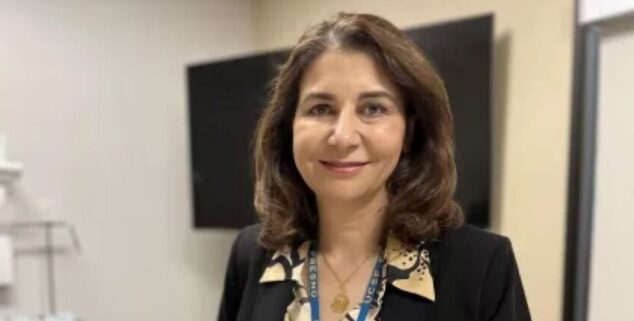 Haifaa Abdulhaq, photo courtesy of UCSF Fresno.
 Fresno physician Haifaa Abdulhaq made it clear what she wanted when she introduced herself during her first day on the governing board of a multibillion-dollar California state agency.
“One of my really big goals for the (Fresno) area of the valley is hopefully to establish a cellular therapy program,” she told her fellow directors of the California Institute for Regenerative Medicine (CIRM) on Feb. 25, 2021.
Four years later, Abdulhaq achieved her goal when she received a $9 million award from the very organization that she helped to oversee. Her success raises questions once again about nagging conflict-of-interest issues at the $12 billion CIRM, which is the largest such state enterprise in the nation.
The problems go back to CIRM’s origins in 2004. The ballot initiative that created CIRM gave virtually all institutions that could receive CIRM funds a seat at the table where the decisions are made.
‘Inherent’ conflict of interest problems
In 2011, the prestigious National Academy of Medicine (formerly the Institute of Medicine) conducted a lengthy study of the agency that identified both real and perceived conflicts as a significant problem. CIRM board members “make proposals to themselves, essentially, regarding what should be funded,” said Harold Shapiro, former president of Princeton University and chair of the study.
“Far too many board members represent organizations that receive CIRM funding or benefit from that funding,” said the study, commissioned by CIRM at a cost of $700,000.
“These competing personal and professional interests compromise the perceived independence of the ICOC (the CIRM governing board), introduce potential bias into the board’s decision making, and threaten to undermine confidence in the board.”
A former CIRM general counsel, James Harrison, who also authored portions of the law that created the agency, once said the conflicts of interests are “inherent” within CIRM. It “suffers from a wide range of perceived conflicts generated directly by (its) particular and unique governance requirements,” in the words of the blue ribbon study.
The situation involves billions of taxpayer dollars and the most respected research institutions in California and the nation, including Stanford and multiple University of California campuses.
The top 10 recipients of CIRM awards have had seats on the CIRM board since day one, with the exception of Scripps Research. They have won $2.8 billion out of the $4.5 billion that CIRM has awarded since its inception, according to information on the CIRM website, including lists of directors and CIRM grantee institutions. Scripps has held a seat in the past but not currently.
Despite concerns about the conflicts, the awards are entirely legal. CIRM directors are barred from voting on awards to their institutions but they can vote on CIRM’s concept plans for award rounds. They also set CIRM’s priorities and overall award strategy.
Abdulhaq award approved on 10-0 vote
Both CIRM and Abdulhaq have denied wrongdoing. “She did not contribute to any aspect of the CCCE (Community Care Centers of Excellence) program development and did not vote on the CCCE concept plan as a member of the board,” CIRM said in response to questions from Capitol Weekly. Both CIRM and Abdulhaq said she followed CIRM policies.
Here is how the situation worked In Abdulhaq’s case. She was appointed to the CIRM board Jan. 25, 2021, for a six-year term by Sam Hawgood, chancellor of the University of California, San Francisco (UCSF), and a former CIRM board member. She resigned from the board three years later on Feb. 1, 2024. The application deadline for her award round was Aug. 15 of that year.
In her resignation email, she said, “I need to help my community and our patients in the central valley of California by focusing my efforts on supporting our center to be a community care center of excellence. While it is with a heavy heart that I will be leaving the board, it is necessary to avoid any conflicts of interest.”
During the period she was on the board, its members and the CIRM staff developed and approved the concept plan for the community care center award program. During that time, CIRM also conducted a day-long “listening session” in Fresno to query interested parties about the need and criteria for a “center of excellence.”
Last October, Abdulhaq won the $9 million award to create “a regional hub for cell and gene therapy clinical trials and FDA-approved treatments.” She declared that the award was a “product of four years of hard work.”
Also involved in the application were her employers, UCSF Fresno, a 50-year-old California physician training program, and Fresno Community Hospital and Medical Center, which CIRM lists as the institutional recipient of the award. Abdulhaq is listed as the principal investigator and awardee on the grant.
CIRM’s anonymous scientific reviewers, who meet behind closed doors, gave the application a score of 87 out of 100. A summary of the review with pros and cons can be found in this document. It only identifies the application by number (INFR8-18823), not name. CIRM board members only see the summary – not the full application or the name of the applicant.
Abdulhaq’s award was approved on a 10-0 vote with seven directors barred from voting because of conflicts of interest.
Integrity and CIRM code of conduct
Among other questions, CIRM was asked about whether the “award and the conduct of this board member fit within the ICOC’s code of conduct that states that ICOC members must maintain ‘the highest standards of integrity?’”
CIRM did not mention the code of conduct in its response, but said, “In this case, Dr. Abdulhaq followed all CIRM conflict of interest policies.” CIRM has both a code of conduct and a separate conflict of interest policy.
(Here is the full text of Abdulhaq’s response to Capitol Weekly questions. Here is CIRM’s.)
The situation involving Abdulhaq is similar to one involving the late David Baltimore, a Nobel Prize winner and onetime president of Caltech. He served on the CIRM board from 2004 to June 6, 2007.
Baltimore co-founded a firm, Calimmune, Inc., of Tucson, Ariz., that shared in a $20 million award from CIRM. Delaware state records showed that Calimmune was incorporated in that state in 2006 although the company’s website reports that it was founded in 2007. Baltimore was chairman of Calimmune.
Changes in CIRM award approval rules
The 2011 study’s criticism involving real and perceived conflicts did lead to changes in the final approval process for CIRM awards.
The board delegated its award approval authority to a subcommittee. The 20 members of that panel, the Application Review Subcommittee, are selected from the full, 35-member board because they are the least likely to have legal conflicts of interest that would prevent them voting on an award. Nonetheless, at each meeting of the committee, which meets publicly, a number of its members are usually disqualified.
The subcommittee also does not see the full applications, only the same review summary that is available to the public.
The de facto decisions on the awards, however, are made earlier, behind closed doors by the Grants Working Group. It consists of 15 anonymous scientific reviewers and eight board members. Based on the subject matter of the award round, scientific members are selected from a CIRM list of about 200 or so out-of-state scientists.
Members of the board must file public economic interest statements. The scientific reviewers do not have to publicly disclose their personal, professional or financial conflicts of interest. But they are queried privately by CIRM staff.
The review group scores the applications and sends its decisions to the full board for ratification. The review group’s decisions are rarely overturned, based on this writer’s attendance at scores of directors’ meetings and his reviews of meeting transcripts.
Bringing CAR-T cell therapy to Fresno
Abdulhaq has deep ties to UCSF, which has received $592 million from CIRM. She is a clinical professor and oncologist and is listed on the UCSF website. She works at UCSF Fresno, the 50-year-old University of California, San Francisco, medical training program hosted in the Community Regional Center in Fresno. The Center operates a 685-bed hospital. Its facilities will house the Community Center of Excellence that is being created with the $9 million award.
In response to a question, Abdulhaq said in an email, “Like many faculty at UCSF Fresno, I am employed by Inspire Health Medical Group and I am not an employee of the University of California.” She did not answer when asked whether she has received compensation or bonuses for her work in securing the $9 million award.
She said that she and her team were “the first to bring CAR-T cell therapy to the San Joaquin Valley, the result of many years of hard work.” She said her project will mean that more patients will “gain access to lifesaving gene and cellular therapies.”
In addition to being the principal investigator on the Community Centers of Excellence CIRM grant, Abdulhaq is Director of Cellular Therapy at the Community Cancer Institute, and Director of Hematology at UCSF Fresno.
Abdulhaq has credited both UC San Francisco and UC Davis with providing valuable assistance in the preparation of her application. UC Davis also has a representative on the CIRM board. Between them, UC Davis and UCSF are linked to seven representatives on the 35-member CIRM board.
In its news release on the award, the Community Health System of Fresno had this to say about Abdulhaq, “Her commitment and perseverance, along with those of a team at Community Health System and guidance from UCSF School of Medicine and UC Davis cellular therapy experts, resulted in the award” of the $9 million grant.
David Jensen is a retired newsman and has covered CIRM for 21 years on his newsletter, the California Stem Cell Report. He authored the book, “California’s Great Stem Cell Experiment,” in 2020.
EDITORS NOTE: A representative of CIRM sent us the following comments about David’s story. They are presented here in total along with David’s responses. He has also added full transcripts of his communications with the CIRM and Dr. Abdulhaq on his newsletter, the California Stem Cell Report.
The article states:
1) “Four years later, Abdullhaq achieved her goal when she received a $9 million award from the very organization that she helped to oversee. Her success raises questions once again about nagging conflict-of-interest issues at the $12 billion CIRM, which is the largest such state enterprise in the nation.”
Dr.Abdullhaq did not receive the award. The Fresno Community Hospital and Medical Center received the award to create a Community Care Center of Excellence in the Central Valley. Dr. Abdullhaq is the principal investigator. It is an important distinction.
Response:
Describing the principal investigator as the recipient, grantee or awardee of an award is standard nomenclature when reporting about research awards in the media and at CIRM. To say that she is not a recipient would be false. She prepared the application and is responsible for its successful execution. (See her own response.) CIRM’s own website refers to “awardees” when it provides advice to applicants. On its “research resources” page, CIRM addresses its recipients with this language: “Manage your grant. Find information to support with managing your grant….” CIRM’s list of grant recipients also refers to them as grantees, in other words, recipients.
The term principal investigator is used elsewhere in the story along with the identification of the institutional recipient.
2) In addition, you use a five-year-old quote from Dr. Abdullah in the second paragraph but you don’t give context to her “big goal.” However, she did give you the context of what she meant as her big goal in her responses to your questions. Although you provide a link to Dr. Abdullah’s responses to your inquiry you do not use any of the answers, she gave you.
This is what she said:
“This project directly addresses a critical geographic and access gap, ensuring that diverse, underserved, and underrepresented populations can receive these treatments close to home.”
That goal is to give sick people in Fresno access to the type of cellular therapy that they would have to drive to San Francisco or LA to receive. That goal also happens to align with CIRM’s mission to improve access for Californians to new therapies. It’s an oversight not to incorporate her answer directly into the article.
Response:
The article is about conflicts of interest — not the justification or need for the program, which has been amply reported elsewhere. Her views on the need, however, are included in the article in addition to her letter. Most media, by the way, do not often carry the sort of full text of responses in these type of articles or links to them as did Capitol Weekly.
3) Finally, you do not state until more than halfway through the article (the 13th paragraph) that Dr. Abdullah is not on the board and has not served on the board since early 2024. Before you get to that very critical point, you have a subhead that says “‘inherent’ conflict of interest problems” which is from a 15-year-old report not related to Dr. Abdullah.
Response: The inherent conflict of interest phrase comes from a former general counsel of the board and involves a section of the story dealing with the full board. The inherent nature of the problem is still valid today and will be in the future. It applies to the entire process of appointing board members, including Abdullah, and could affect the fate of another ballot initiative to refinance CIRM.
The choice of when to mention Abdullah’s current board status is the writer’s prerogative. It was more important to describe the scope of the conflict of issue problems before going into more details about Abdullah’s tenure. They would have generated the need to explore conflict matters about “revolving door” issues at CIRM, including more exploration of her decision to resign before finishing her six-year term. Also not to mentiont that CIRM has no regulations regarding “revolving door” problems with former board members.
Want to see more stories like this? Sign up for The Roundup, the free daily newsletter about California politics from the editors of Capitol Weekly. Stay up to date on the news you need to know.
Sign up below, then look for a confirmation email in your inbox.
Leave a Reply