
Capitol Briefs
Capitol Briefs: Gubernatorial gab, bills and cool political data
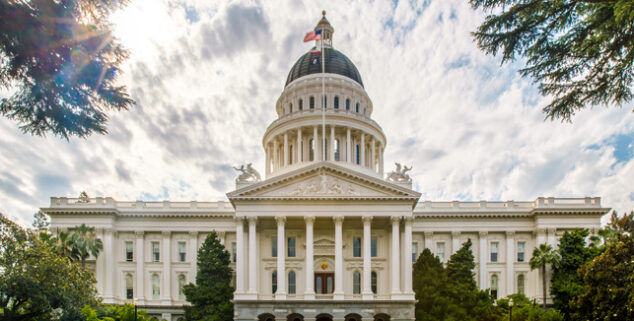 Image by Png-Studio.
 Let’s talk housing: The California Association of Realtors (CAR) hosted its 2026 Homeownership Matters Gubernatorial Forum on Thursday, bringing together several governor-hopefuls to discuss how they would address the state’s struggling housing market.
In attendance were Secretary Xavier Becerra, Steve Hilton, San Jose Mayor Matt Mahan, former U.S. Rep. Katie Porter, former Los Angeles Mayor Antonio Villaraigosa and U.S. Rep. Eric Swalwell. Other declared candidates for governor did not participate in the forum.
Moderators focused the discussion on how candidates would expand homeownership, address Wall Street’s growing presence in the housing market and tackle insurance and regulatory challenges. They noted that roughly 80 percent of California families cannot afford the state’s median-priced home.

California Association of Realtors 2026 Gubernatorial Forum, March 5, 2026. Photo by Rich Ehisen, Capitol Weekly.
Candidates largely agreed on the need to speed up construction by reducing regulatory barriers. Hilton, Villaraigosa and Mahan said they would address litigation related to the California Environmental Quality Act (CEQA). Porter emphasized working with localities to streamline the permitting process, while Becerra called for expanded modular housing.
Candidates also turned their attention to the state’s growing homeowners’ insurance crisis. Several said stabilizing the insurance market will require closer coordination with the state’s insurance commissioner, increased wildfire prevention efforts and reforms to encourage insurers to remain in California. Some stressed the need to create a more predictable regulatory environment to bring insurers back to the market.
They also raised concerns about institutional investors purchasing single-family homes. Some called for limits on corporate ownership of residential properties, while others argued that increasing overall housing supply would reduce the competitive pressure created by large-scale investors.
Following the forum, Becerra told Capitol Weekly that financial literacy should be introduced early, saying many young Californians are not in the right “mindset” to view homeownership as attainable in today’s market.
With the nomination filing deadline today and the official candidate list set to be certified on March 26, the field for the June primary will soon be finalized.
Bills, bills bills: Lawmakers this year introduced a tick less than 1,800 bills by the Feb 20th introduction deadline (more on that below). We can’t highlight all of them for you, but as always we are happy to highlight a trio we found interesting:
SB 1029, a measure from Sen. Kelly Seyarto (R–Murrieta) that would require the California Department of Motor Vehicles (DMV) to notify vehicle owners when surplus funds from a lien sale may be owed to them. In a press release Sen. Seyarto noted that when a vehicle is sold through a DMV lien sale, proceeds over what is owed return to the agency. Vehicle owners have up to three years to claim those funds, but there is nothing in current law to require the DMV to notify vehicle owners that surplus funds may be available or explain how to claim them. His proposal would require the DMV to send certified notice within 14 days of receiving lien sale proceeds, informing the registered owner that surplus funds may be available and providing instructions on how to file a claim. The measure is currently in the Senate Transportation Committee and eligible for action on or after March 13th.
SB 1197, a bill from Sen. Roger Niello (R-Fair Oaks) that would repeal daylight savings time in California and require the state and all political subdivisions of the state to observe year-round standard time. The bill is now awaiting a hearing in the Committee on Energy, Utilities and Communications.
(SB) 1218, a proposal from Sen. Jesse Arreguín (D-Oakland) that requires the Department of Motor Vehicles (DMV) to refuse to renew the registration of a vehicle if the registered owner or lessee has outstanding illegal dumping penalties. The measure is in the Senate Transportation Committee.
Politics by the numbers: As you likely know, for the 2025-2026 legislative session lawmakers are limited to bringing forth a maximum of 35 bills each. With that in mind, intrepid law professor, lobbyist and regular Capitol Weekly contributor Chris Micheli recently compiled the following data on this year’s collection of legislative proposals:
In the Assembly, 38 Members introduced the maximum 35 bills, while 42 Members did not reach the max. Of those 42, one had a single bill, 13 had 34 bills, three had 33 and six proposed 32.
In the Senate, 23 Senators introduced 35 bills, while one introduced 37 and another proposed 36, with both coming via rule waivers. Of the 15 Senators that did not reach their bill maximum, two introduced 14 bills, two had 34, four had 33 and two had 32 SBs.
Patel becomes chair of the Assembly Education Committee: Assemblymember Dr. Darshana Patel (D-San Diego) officially became Chair of the Assembly Education Committee this week. Patel also serves on the Assembly Budget Subcommittee on Education Finance. She replaces Assemblymember Al Muratsuchi (D-Torrance), who terms out in November and is now running for the office of the State Superintendent of Public Instruction.
Fiona’s silver anniversary: According to the U.S. Census Bureau roughly 50 percent of small business start-ups make it to five years. While that might not sound okay, the success rate drops off a cliff thereafter. The stats in fact tell us that only about 25 percent make to 15 years and only 15 percent are still around 25 years in.
So all of us here at Capitol Weekly want to drop some kudos and congrats on LA communications maven Fiona Hutton, who this week celebrated Fiona Hutton & Associates’ silver anniversary. (Full disclosure, Fiona is a former Open California board member.)
In a LinkedIn post, Hutton noted that she started her 100 percent woman-owned company “by draining my family’s entire savings ($30,000)” and with “no plan. No blueprint. No idea what I was doing.”
Clearly she figured out something – okay, a lot of somethings – along the way. Happy anniversary!
February tax collections close to projections: In his latest Substack offering, Assembly Budget Advisor/Guru Jason Sisney noted that “February 2026 state General Fund income tax revenues totaled $5.9 billion, or $42 million below the monthly forecast from the Governor’s January 9 budget package.”
Meanwhile, for “the 2025-26 fiscal year to date, General Fund income tax revenues are running $6.1 billion (5.6%) ahead of the January 9 budget forecast. Corporation taxes are 9.3% above forecast for the fiscal year to date, while the personal income tax (PIT) is running 4.8% above forecast.”
Sisney says the increased collections could possible even lead to a small budget surplus this year…if the AI boom doesn’t turn into the bursting bubble many fear it could be.
This report was compiled by Capitol Weekly editor Rich Ehisen and senior correspondent Leah O’Tarrow.
Want to see more stories like this? Sign up for The Roundup, the free daily newsletter about California politics from the editors of Capitol Weekly. Stay up to date on the news you need to know.
Sign up below, then look for a confirmation email in your inbox.
Leave a Reply