
Opinion
California’s new hemp laws are costing patients access to their medicine
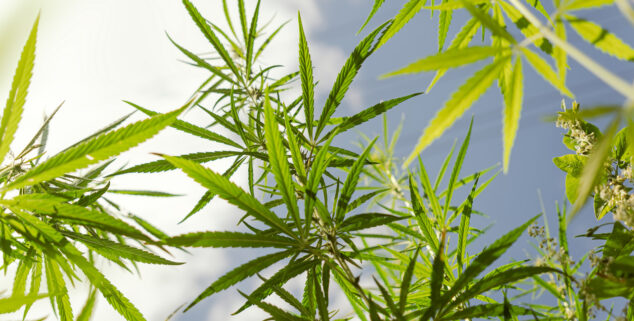 Image by DIY 13, iStock Images.
Capitol Weekly welcomes Opinions on California public policy or politics. Please read our guidelines for opinion pieces before submitting an Op-Ed. Submissions that do not adhere to our guidelines will not be considered for publication.
OPINION — Many California patients are already experiencing access hurdles to the non-intoxicating hemp-derived CBD products they’ve relied on for years. Major manufacturers have stopped shipping full-spectrum CBD products into California, and bottles have been removed from store shelves because of the state’s new hemp laws.
For patients with epilepsy, chronic pain and other debilitating conditions, that means a product they have counted on may no longer be available, with no equivalent replacement.
The situation did not arise because lawmakers set out to restrict patient access. California was responding to a potentially legitimate public health problem. High-dose THC products, synthetic cannabinoids, and chemically converted hemp products had become widely available outside the state’s licensed cannabis system, often without meaningful age restrictions, consistent testing or the consumer protections required of licensed cannabis businesses.
Addressing those products was the right decision. Unfortunately, the laws California enacted also swept in responsibly manufactured, non-intoxicating full-spectrum hemp products containing only naturally occurring trace amounts of THC.
The problem isn’t one law. It’s the combined effect of Assembly Bill 8 and Senate Bill 378.
AB 8 dramatically narrowed the types of hemp-derived products that can legally be sold outside California’s licensed cannabis system. Among its requirements, hemp extract incorporated into foods, beverages and dietary supplements must consist of highly purified CBD or CBN isolate and contain no tetrahydrocannabinols or synthetic cannabinoids.
In practice, that leaves little room for conventional full-spectrum hemp extracts, which naturally contain trace amounts of THC alongside CBD and other compounds found in the plant.
SB 378 addressed online marketplaces by increasing the legal risks associated with listing or facilitating sales of products that don’t comply with California’s hemp standards. As those provisions took effect, many companies stopped shipping certain products into California or began selling exclusively at state-regulated dispensaries to avoid violating the law.
The assumption behind these policies is that CBD isolate is an adequate substitute for full-spectrum CBD. Many patients would disagree. Isolate and full-spectrum CBD are not interchangeable formulations.
Full-spectrum products contain CBD together with naturally occurring cannabinoids, terpenes and trace amounts of THC. CBD isolate contains purified CBD alone. They are different formulations, and patients often report different experiences with each. While no single formulation works for everyone, policymakers should not assume that switching from one to another preserves meaningful continuity of care.
For many patients who have spent months or years finding a formulation, serving size and routine that works for them, switching products isn’t a minor inconvenience. It’s starting over after finally finding something that works, assuming a suitable alternative is available at all. For some, this could mean the return of debilitating symptoms after losing access to the only efficacious product for their diagnosis.
California’s licensed cannabis market is not necessarily an equivalent solution. Dispensaries may not carry the same formulations, cannabinoid ratios, package sizes or brands. Patients may also face barriers based on location, cost, delivery access and age requirements.
None of this means California should reverse course on intoxicating hemp. Unsafe products, misleading labels, synthetic cannabinoids and products designed to intoxicate consumers should remain subject to strong enforcement. Patients deserve those protections as much as anyone else. But California also needs a legal pathway for responsibly manufactured, non-intoxicating full-spectrum hemp products that contain only naturally occurring trace amounts of THC.
That pathway should require independent batch testing, contaminant screening, accurate cannabinoid labeling, manufacturer accountability, product registration, QR-code access to certificates of analysis, clear serving sizes, meaningful limits on naturally occurring THC, restrictions on youth-focused marketing, and a prohibition on synthetic or chemically converted intoxicating cannabinoids.
The standard should be straightforward: Regulate products based on whether they are reasonably capable of causing intoxication when used as directed — not simply whether increasingly sophisticated laboratory equipment can detect minute traces of naturally occurring THC.
Fixing this problem won’t happen through enforcement guidance alone. Gov. Gavin Newsom’s administration can evaluate patient impact, coordinate state agencies, clarify implementation and provide interim relief where existing authority permits. But agencies cannot override clear statutory requirements. A lasting solution will require the Legislature to revisit the underlying statutes and create a narrow, workable pathway for non-intoxicating full-spectrum hemp products.
California has long been a leader in consumer protection. It can continue to keep intoxicating hemp products off the market while preserving access to non-intoxicating CBD products that patients have relied on for years.
Patients should not become collateral damage in the effort to close an intoxicating hemp loophole. They deserve laws that recognize the difference, and California leaders should act quickly to correct it.
Sasha Kalcheff-Korn is the executive director of the cannabis education non-profit Realm of Caring.
Want to see more stories like this? Sign up for The Roundup, the free daily newsletter about California politics from the editors of Capitol Weekly. Stay up to date on the news you need to know.
Sign up below, then look for a confirmation email in your inbox.
My 85yo Dad living with Alzheimer’s, my 62yo husband with a rare type of epilepsy, my 69yo sister on hospice with a rare neurological condition similar to ALS, and me, a 55yo post menopausal family caregiver all rely of high dose, full spectrum hemp CBD for quality of life. None of us are getting high from even the high doses of CBD we all take daily. There is NO EQUIVALENT on any dispensary shelves, and we cannot afford 21-38% tax on our doctor recommended medicine. No other medicine is taxed in CA. Carve out FS hemp CBD and stop taxing medicine.