
Opinion
California’s $18 Billion hole: A Feature of Newsom’s pension spiral
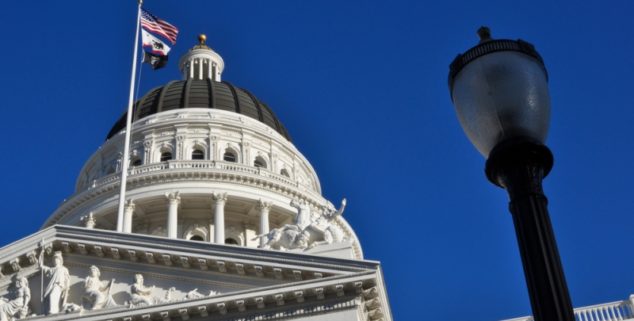 State Capitol in Sacramento. (Photo: Brandon Bourdages, via Shutterstock)
Capitol Weekly welcomes Opinions on California public policy or politics. Please read our guidelines for opinion pieces before submitting an Op-Ed. Submissions that do not adhere to our guidelines will not be considered for publication.
OPINION—On May 14, Gov. Newsom unveiled his May Revision and declared California’s deficit gone. Erased by a $16.5 billion revenue surge driven by AI-fueled stock market gains. I don’t buy it.
The nonpartisan Legislative Analyst’s Office dropped its November 2025 Fiscal Outlook like a subpoena on a quiet Friday. California stared down an $18 billion budget problem for 2026–27, $5 billion larger than the Newsom administration admitted last June.
Revenue gains from the AI boom? Almost entirely erased by Proposition 98 education mandates and Proposition 2 debt payments. Structural deficits were on track to hit $35 billion annually by 2027–28. Sacramento calls this a turnaround. Investors call it riding a hot trade and pretending you had a plan.
Thirty-plus years running hedge funds and private equity, now serving as outsourced CIO to ultra-high-net-worth family offices, taught me one ironclad rule: fiduciary duty is not optional.
Cook the books, and you get fired or sued. In Sacramento, they call it budget management. Every California family gets hosed by a public-pension black hole that grows regardless of how much tax revenue we shovel in.
This isn’t a glitch. It’s the deliberate output of single-party governance that turned the upbeat California I arrived in during 1990 into today’s fiscal death spiral.
Here’s how the math works. The LAO found that $11 billion in higher revenue projections were almost entirely wiped out—$7 billion consumed by Prop 98 school mandates, another $3.4 billion by Prop 2 debt service, $6 billion in higher program costs, and $1.3 billion from H.R. 1 federal cost-shifts driving Medi-Cal higher.
Net improvement: zero. Revenue up, hole unchanged.
The May revision’s claimed surplus doesn’t fix that machinery, it just fills the hole temporarily with AI stock proceeds, the same fuel the LAO warned was unsustainable. When the stock market corrects, Sacramento will rediscover its structural problem. Nonpartisan analysts still project out-year deficits of $20 billion or more annually once the market tailwind fades.
I lived the contrast. In 1990, a New England kid shaking off Boston winters, I arrived in a California that felt unstoppable. Today, the state carries total unfunded pension liabilities exceeding $265 billion, the largest pension debt burden in the nation, ahead of Illinois. CalPERS alone carries $166 billion in unfunded liabilities, still banking on a 6.8% annual return in perpetuity.
Two good investment years don’t change that math. CalPERS’ own 20-year annualized return sits at just 6.7%, barely below target. That’s not an investment strategy. That’s faith-based accounting.
My family-office clients and Orange County neighbors are voting with their feet, heading to Texas and Florida where the math still holds. The California Department of Finance confirms the state has shed between 197,000 and 249,000 net domestic residents annually in recent years.
Treat taxpayers like an ATM that never runs dry, and eventually the machine breaks. The people left holding the bag are those who can’t afford to leave.
Critics will blame the stock market rally or Trump tariffs for the gap. That framing is convenient but misses the structural point. The LAO’s own numbers show spending mandates outrun revenue growth even in good years.
Every new dollar arrives pre-spent on constitutionally protected programs. I’ve fired portfolio managers for less creative accounting than Sacramento’s pension true-up games.
The fix is not another Band-Aid. Shift new public hires to defined contribution plans. Retire the return assumptions. Impose hard caps on spending growth. Real reform begins with one honest admission: the model is broken by design, and no AI-driven tax surge will outrun the commitments already baked in.
Reagan warned that freedom is never more than one generation from extinction. In California, we’re one market correction away from rediscovering the same $18 billion hole.
The pension death spiral doesn’t laugh last. It laughs all the way to the next taxpayer bailout, unless someone finally says enough.
Elections are coming, and it’s time for a change.
Jay Rogers is a financial professional with more than 30 years of experience in private equity, private credit, hedge funds, and wealth management.
Want to see more stories like this? Sign up for The Roundup, the free daily newsletter about California politics from the editors of Capitol Weekly. Stay up to date on the news you need to know.
Sign up below, then look for a confirmation email in your inbox.
Leave a Reply