
Opinion
California tracks pesticides, but doesn’t track what reaches water
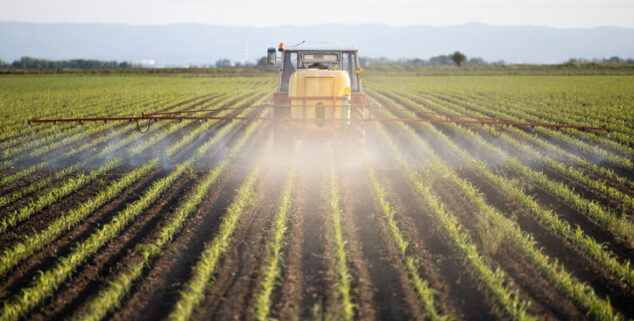 Tractor with large chemicals tank working in the field and spraying pesticides in sunset.
Capitol Weekly welcomes Opinions on California public policy or politics. Please read our guidelines for opinion pieces before submitting an Op-Ed. Submissions that do not adhere to our guidelines will not be considered for publication.
OPINION — Proposition 4’s $10 billion restoration bond contains no statutory requirement linking funded treatments to compound-specific baseline monitoring. The Legislature could fix that through budget trailer bill language. It hasn’t.
California voters approved Proposition 4 in November 2024, the largest climate resilience bond in state history. The proposed 2026-27 budget includes $314 million for wildfire and forest resilience, as the California Natural Resources Agency, the State Water Resources Control Board, and CalFire begin implementation.
This spring, the Lake Tahoe Basin Management Unit (LTBMU) authorized glyphosate treatment across 2,400 to 3,600 acres of post-fire terrain, including tributary watersheds that drain to the lake. Lake Tahoe flows into the Truckee River, and the lake supplies drinking water to communities served by the North Tahoe Public Utility District and other local utilities.
The Truckee carries runoff downstream to Reno and Sparks, where the Truckee Meadows Water Authority serves customers whose supply originates at Lake Tahoe. The Forest Service’s own hydrology report identifies municipal and domestic water supply as a designated beneficial use of the Upper Truckee River watershed and establishes a glyphosate concentration limit for those waters.
No baseline monitoring requirement exists for this project or the bond programs funding it.
Further downstream, the federal government awarded the Pyramid Lake Paiute Tribe $8.3 million in 2022 to restore fish passage for Lahontan cutthroat trout in the same watershed system. It is the same species the Forest Service’s own biological assessment determined is likely to be adversely affected by the Caldor project. Without baseline data on what enters the watershed upstream, there is no way to know what reaches them.
The California Department of Pesticide Regulation (DPR) tracks every commercial pesticide application in the state through its Pesticide Use Reporting system, which is publicly accessible and dates to 1990. The State Water Resources Control Board (SWRCB) administers water-quality monitoring programs across California’s major watersheds.
California already administers the key funding streams and data systems. Combined with the SWRCB’s existing monitoring programs, the DPR’s use data could form the basis of one of the most comprehensive compound-specific monitoring frameworks in the country.
California cannot direct federal land management, but it can condition its own bond expenditures on monitoring requirements for projects within funded watersheds. The Legislature could require it through budget trailer bill language attached to Proposition 4 expenditures, directing the SWRCB to establish pre- and post-application sampling protocols tied to application records, using existing infrastructure and a dedicated monitoring allocation.
California’s bond accountability framework requires agencies to report how funds are spent, but not what those expenditures introduce into the watershed.
In May, the Tahoe Regional Planning Agency (TRPA) announced it would expand water quality monitoring to include glyphosate testing downstream of the Caldor burn area — following significant public interest in the project, not as a condition of the restoration authorization or its bond funding.
The TRPA letter reflects a coordination request to the Forest Service, not a permit decision. The monitoring TRPA is now initiating is voluntary, regionally scoped, and reactive. That a regional planning agency is now scrambling to fill this gap voluntarily is not a solution.
The Tahoe Basin is the clearest example because it is California’s most monitored freshwater body. UC Davis has tracked its clarity since 1968. The California Tahoe Conservancy receives Proposition 4 funding for watershed improvement and forest restoration, as well as related forest health, biomass utilization, and workforce development purposes.
The systems are already there. What is missing is a statewide requirement to tie them together.
The question extends to other major watersheds receiving Proposition 4 forest-health funding — the Sacramento River headwaters, the San Joaquin, the Klamath — where monitoring capacity may be lower. No western state currently ties restoration bond expenditures to compound-specific baseline monitoring requirements, based on a review of publicly available forest-practices rules and program descriptions.
California built the Pesticide Use Reporting system because visibility matters. The principle is simple: you cannot manage what you do not measure. Proposition 4 is the largest investment in California’s natural resources in state history.
Requiring measurement is not an obstacle to that investment. It is the condition under which the investment makes sense.
The SWRCB has the programs. The DPR has the data. The Legislature has the lever. The monitoring requirement should move with it.
Katherine Levy is a writer based in Tahoe Vista within the affected watershed.
Want to see more stories like this? Sign up for The Roundup, the free daily newsletter about California politics from the editors of Capitol Weekly. Stay up to date on the news you need to know.
Sign up below, then look for a confirmation email in your inbox.
Leave a Reply