
Opinion
California faces a new nuclear era—will it lead or watch?
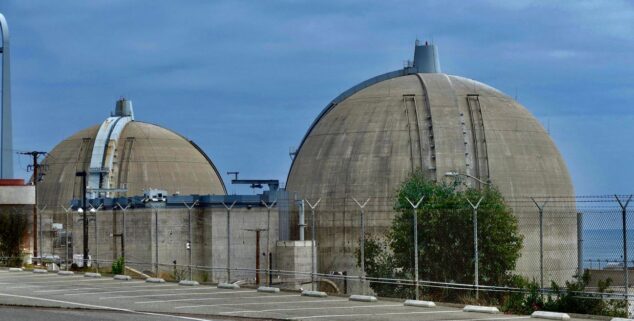 Photo by Heidi Patricola.
 Capitol Weekly welcomes Opinions on California public policy or politics. Please read our guidelines for opinion pieces before submitting an Op-Ed. Submissions that do not adhere to our guidelines will not be considered for publication.
OPINION – In 2022, California did something few thought possible: it reversed course and saved its last nuclear power plant. Extending the life of the Diablo Canyon Power Plant was more than a technical energy decision. It was a recognition that even the most climate-ambitious states need reliable, around-the-clock clean electricity.
Diablo Canyon supplies roughly nine percent of California’s power and about 15 percent of its zero-carbon electricity. Keeping it open was a pragmatic step toward maintaining grid reliability while pursuing deep decarbonization.
For those of us who worked to preserve the plant, the victory seemed to signal something bigger. If nuclear power could be defended in California, long the epicenter of anti-nuclear politics, then the worldwide conversation might finally be changing.
For a moment, it was.
The Diablo decision quickly became a symbol. If nuclear could win in California, advocates believed, it could survive anywhere.
But that momentum stalled.
Despite polls showing that a majority of Californians now hold favorable views of nuclear power, legislative efforts to reopen the door to new reactors failed to advance beyond committee. California effectively kept its ban on building new nuclear plants.
Elsewhere, the story has been very different. States such as New York, Colorado, Massachusetts, Connecticut, and Illinois have lifted nuclear moratoriums or begun serious debate over new nuclear development.
Internationally, the shift has been even more pronounced. Countries including Italy, Denmark, Belgium, Japan, France, Sweden, and Finland have reversed phaseout policies, lifted moratoria, or strengthened nuclear’s role in future energy plans.
California, long a global trendsetter in climate policy, could have led this shift. Instead, it stepped back from a conversation too often framed as nuclear versus renewables, when it should be nuclear and renewables working together to replace fossil fuels.
While California’s policy debate has stalled, other states are moving quickly to capture the economic opportunities tied to next-generation nuclear technologies. Texas, Wyoming, Tennessee, and Idaho are actively courting advanced reactor developers, nuclear manufacturers, and fuel-cycle research facilities.
The U.S. Department of Energy is accelerating this shift. Federal programs now aim to build Nuclear Lifecycle Innovation Campuses where universities, national laboratories, and private companies collaborate on reactor development, advanced fuels, fuel recycling, and workforce training.
Where these innovation ecosystems take root will matter. Nuclear supply chains, research institutions, and advanced manufacturing clusters tend to grow around places where reactors are built and tested.
States that compete for these projects will help shape the future of nuclear energy. Those that do not will watch that future unfold elsewhere.
The case for nuclear power is not only about innovation or industrial policy. It is also about the practical realities of running a modern grid.
Nuclear plants stabilize electricity systems by providing continuous power regardless of weather, reducing volatility in electricity prices. They reduce dependence on fossil fuels, lowering air pollution and the health costs associated with burning coal and natural gas.
At a time of geopolitical tension and volatile global energy markets, nuclear power also reduces reliance on natural gas, a fuel whose price and supply are often shaped by forces beyond state borders, and replaces it with uranium, a high-density fuel that can be stockpiled for decades.
Advanced nuclear technologies, including small modular reactors and microreactors, are designed to build on these strengths while offering greater flexibility, improved safety systems, and new industrial applications.
Despite the current administration’s emphasis on nuclear, it should not be a partisan issue. Nuclear power was part of the 2020 Democratic platform, and the Biden administration supported the life extension of Diablo Canyon and the completion of Vogtle in Georgia. Affordable, stable electricity with a low carbon footprint is not an exclusively Republican issue.
California has the resources to lead.
The state combines world-class universities, national laboratories, venture capital, and a culture that rewards technological experimentation. Those ingredients helped create Silicon Valley, accelerate biotechnology, and drive the transition to electric vehicles.
Harnessing them for advanced nuclear would not require abandoning California’s commitment to renewable energy. It would mean expanding the clean-energy toolkit, allowing demonstration projects, supporting university-industry research partnerships, and competing for federal nuclear innovation campuses.
California has never built its reputation by waiting for others to innovate first.
The next nuclear revolution is already underway. Now is the moment for California to act decisively: commit to leading, mobilize its resources, and shape the future of clean energy, or risk being left behind as others seize the opportunity.
Guido Núñez-Mujica is Director of Data Science at the Anthropocene Institute.
Want to see more stories like this? Sign up for The Roundup, the free daily newsletter about California politics from the editors of Capitol Weekly. Stay up to date on the news you need to know.
Sign up below, then look for a confirmation email in your inbox.
As a follow-up to the five-year extension in SB 846 (Dodd, 2022) for Diablo Canyon, California needs to pass legislation to keep Diablo Canyon running at least until 2045, the term of the NRC license renewal. Diablo Canyon unitary tax payments equal to the level in 2016 also need to be restored.
SB 931 (Laird, 2026) is *not* the solution, since Laird’s legislation is a “back door” way to shut the plant down in 2030 – to be expected from a doctrinaire opponent to safe, reliable, cost-effective and zero-emission Diablo Canyon.