
Opinion
California can protect privacy without limiting tech that helps people with disabilities work
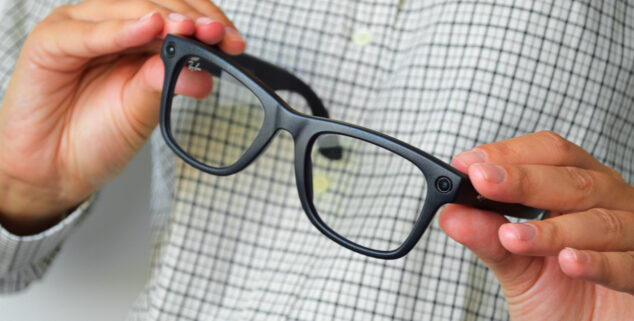 Image by Tanny Solt, iStock Images.
Capitol Weekly welcomes Opinions on California public policy or politics. Please read our guidelines for opinion pieces before submitting an Op-Ed. Submissions that do not adhere to our guidelines will not be considered for publication.
OPINION — Supported employment programs offer critical job coaching that empowers those with intellectual and developmental disabilities to meet their career milestones and enrich our local workforce. Job coaches typically provide supports on-site at an individual’s place of employment.
At a Sacramento-area Home Depot recently, an employee with intellectual and developmental disabilities started using smart glasses to connect remotely with his job coaches, as well as using the AI feature to better respond to customer service requests. Use of the smart glasses increased his confidence and effectiveness as an employee.
At Alta California Regional Center, our goal is not to establish long-term, one-on-one coaching. Our goal is to support a person doing a job on their own with increased independence and assistance tailored to the individual’s specific needs.
This January through June, Alta California Regional Center ran a pilot with Odyssey Learning Center testing whether smart glasses could provide support to people with intellectual and developmental disabilities in community jobs. After encouraging results, we are preparing to expand to a 50-person cohort in fall 2026.
These devices are already helping people with disabilities perform everyday tasks more independently. Smart glasses can provide real-time, hands-free assistance with navigating a workplace, completing job responsibilities, identifying objects, reading signs or labels, and responding to unfamiliar situations. For people who are blind or have low vision, similar technology can describe a room, identify currency, read a prescription label, or help navigate a street crossing.
Crucially, it can do so through a mainstream device that looks like an ordinary pair of glasses rather than conspicuous medical equipment.
For Odyssey Learning Center, smart glasses allowed them to re-envision what job coaching could look like. Not all individuals want a coach physically present or visible at work. Smart glasses give service providers the ability to fade their in-person supports, while ensuring the eyes and ears of trusted job coaches are available when the need arises.
Senate Bill 1130 puts our pilot expansion in jeopardy.
This bill makes it a crime to use wearable devices to record in business settings where people have a reasonable expectation of privacy. This means that users could have to ask for consent from anyone who might appear in front of or around their glasses, even when users are not actually storing any photos or videos of them. And if users fail to meet this onerous requirement, they could be fined up to $1,500 and sent to county jail for a year.
I understand and can acknowledge the privacy concerns underlying the bill, and they are something that should be addressed and taken seriously. And, although it may seem that the bill’s disability-related exemption solves these issues, it is not enough.
Relying on an exemption means invoking it. A worker who is asked why he is wearing a camera, or an employer facing a compliance question, resolves it by explaining that the wearer has a developmental disability. The bill would convert a private medical fact into a routine workplace disclosure, made by the person least positioned to refuse.
Requiring people to prove their disability and explain their need for an accommodation before they can use a mainstream device without fear of being labeled a criminal undermines the dignity and independence this technology is supposed to provide. That is not a hypothetical burden. It is what our staff would have to coach people to do.
The bill’s attachment of criminal penalties to certain uses of smart glasses creates an air of suspicion around any uses of these devices in indoor settings. The prospect of criminal liability risks further stigmatizing people with I/DD who use these devices as assistive technology. Employers, too, may reject an accommodation that looks like legal risk. The chilling effect will fall hardest on the very people the exemption was meant to protect.
California already has some of the strongest privacy laws in the country. The state should strengthen enforcement against tampering with the recording indicator light and deliberate misuse without imposing new burdens on developers, small businesses, employers and good-faith users, including Californians with disabilities who rely on this technology in their daily lives.
The state should examine how smart glasses are increasing autonomy and independence for people with disabilities and consider the barriers that could arise from implementing this bill. I am not asking the Governor to shield wearable devices from regulation, but to ensure that people with disabilities do not bear the consequences of a privacy problem they did not create.
Gov. Gavin News should veto SB 1130 and send the Legislature back to work on a narrower bill, one that protects privacy without putting the independence of people with disabilities at risk.
John W. Decker is director of community services and supports at Alta California Regional Center.
Want to see more stories like this? Sign up for The Roundup, the free daily newsletter about California politics from the editors of Capitol Weekly. Stay up to date on the news you need to know.
Sign up below, then look for a confirmation email in your inbox.
Leave a Reply