
Opinion
California can once again be an environmental leader by passing community solar plus storage legislation
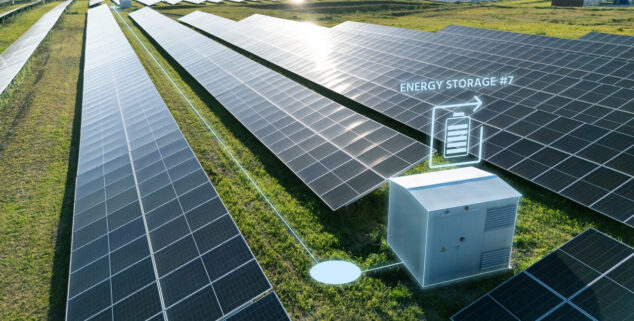 Image by Scharfsinn86, iStock Images.
Capitol Weekly welcomes Opinions on California public policy or politics. Please read our guidelines for opinion pieces before submitting an Op-Ed. Submissions that do not adhere to our guidelines will not be considered for publication.
OPINION — California’s environmental leadership is at risk. Despite the growing demand for clean and cost-effective energy, the state lacks a viable community solar and storage program that allows customers to participate in the development of shared clean generation facilities.
Although more than 20 states have adopted such programs, California has failed to make any real program available to families and businesses. The Legislature and Gov. Gavin Newsom should work together to enact AB 1813.
The absence of such a program is not an accidental oversight. Consumer, environmental and solar advocates worked together in 2022 to support the enactment of AB 2316. This bill directed the California Public Utilities Commission (CPUC) to establish a community renewable energy program. Under this program, customers could subscribe to distribution-connected solar facilities that included significant amounts of onsite energy storage to maximize their value to the grid.
Under the program outlined in the bill, subscribers receive bill credits tied to a portion of the demonstrated value that these facilities provide to the electrical grid using the same method the CPUC applies to calculating the value of rooftop solar. The bill also specified that at least 51% of program capacity must serve low-income customers.
In the four years since the enactment of AB 2316, the CPUC has repeatedly delayed implementation and ultimately adopted a program that looks nothing like the one described in the bill, most notably because it fails to adequately value the electricity produced by community solar and storage facilities.
Instead of using the same valuation method it relied upon to reform the state’s net metering program for rooftop solar, the CPUC selected a different approach proposed by the large utilities that results in pricing too low to support the financing of new solar and storage facilities. The final program is fundamentally flawed, will not yield any participation by solar developers, and appears intentionally designed to fail. The CPUC’s refusal to develop a viable and robust program, as intended by the Legislature, represents a huge missed opportunity.
Due to these intentional delays, the CPUC squandered the ability to access $190 million in federal grants and $33 million appropriated by the Legislature to support community solar projects. The delay also prevented new community solar projects from accessing generous federal tax credits that sunset in July 2026 due to changes enacted by Congress in 2025. The loss of these forms of state and federal government support makes it even harder to move forward with a viable program.
My organization TURN, which represents the interests of residential customers of the utilities, partnered with a diverse coalition to support a community solar program that could help achieve our broad clean energy targets. Due to increasing delays in connecting generation to the state’s high-voltage transmission network and rigid opposition by the Trump administration to placing renewable energy projects on federal land, California needs to deploy community solar and storage projects, which connect to the lower-voltage distribution system and don’t need any approvals from the federal government.
This effort should prioritize savings for low-income families, renters and others who can’t install solar on their homes. Nearly half (45%) of Californians are renters. Two-thirds of low-income customers rent. Community solar would allow these customers to subscribe to shared facilities and receive bill reductions that reflect the value of these facilities to the entire system.
Community solar can be used to support lower-cost compliance with the state’s solar requirements for new homes. Analysis provided to the CPUC shows that substituting community solar for rooftop solar would result in billions of dollars of savings to all ratepayers over the next two decades. Although the CPUC ignored these benefits, the Legislature and Governor should take this opportunity to endorse more cost-effective approaches to meeting clean energy objectives.
These objectives can be achieved by passing AB 1813, which would require the CPUC to fix its unusable program and make community solar a viable and robust option. The bill passed the Assembly and awaits consideration on the Senate floor. If passed and signed by the Gov. Newsom, AB 1813 would jumpstart progress on distributed renewable energy projects and produce grid savings that benefit all customers.
Californians have waited too long for this type of program. It’s time for our elected officials to heed the call.
Matt Freedman is a senior staff attorney for The Utility Reform Network (TURN).
Want to see more stories like this? Sign up for The Roundup, the free daily newsletter about California politics from the editors of Capitol Weekly. Stay up to date on the news you need to know.
Sign up below, then look for a confirmation email in your inbox.
Leave a Reply