
Opinion
California built survivor care then walked away
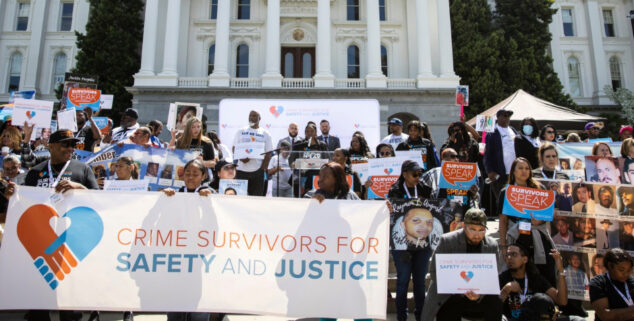 Image by Change Consulting.
Capitol Weekly welcomes Opinions on California public policy or politics. Please read our guidelines for opinion pieces before submitting an Op-Ed. Submissions that do not adhere to our guidelines will not be considered for publication.
OPINION – The Stockton mass shooting that occurred over Thanksgiving weekend has shaken the crime survivor community. Hearing about children, young people, and parents who are mostly Black and Brown being killed and injured brought up a lot of pain. As a crime survivor, it took me right back to the losses I experienced in my own family.
As law enforcement continues its investigation to hold those accountable, what rarely gets addressed is the decades-long failure to build a real system of care for victims after violence.
Immediately after the tragedy, my team and I worked closely with survivor leaders in Stockton to identify immediate support for victims, a critical step to ensure public safety. Most aren’t aware that the people at the birthday party are eligible for victim’s compensation, along with the families of 8-year-olds Journey Rose Reotutar Guerrero and Maya Lupian, 14-year-old Amari Peterson, and 21-year-old Susano Archuleta, and the 13 people who were injured. The application and approval process to get victims’ compensation can take months or even longer. It leaves family members to front funeral costs that range from $8,000 to $12,000, as well as, expenses like medical bills, mental health counseling, relocation expenses, transportation, and child care.
That’s why thousands of survivors from Crime Survivors Speak advocate for building a system of care for survivors as a central public safety strategy.
In 2023, we successfully advocated for California’s Flexible Assistance for Survivors, which provides immediate cash aid to victims of violent crime, ensuring survivors have money for emerging expenses and do not go into debt. Unfortunately, funding for this program was not included in this year’s state budget.
Trauma Recovery Centers, a vital component of public safety, have also had their budgets cut. Designed to address the needs of communities of color and lower-income populations at high risk for violent crimes, California’s 24 trauma recovery centers provide free mental health services, case management for housing and financial support, assistance with victims’ compensation, and crisis intervention. Stockton was without a Trauma Recovery Center for two years until a satellite office at St. Joseph’s Medical Center was established in 2023.
Due to the 2024 passage of Proposition 36, preliminary analysis shows more people are being arrested and incarcerated for drug addiction-related offenses. The cost of locking people up reduces the funding stream generated by prison savings (through prison closures and fewer people incarcerated in state prisons for non-violent offenses like drug possession), impacting how much money the state has for prevention programs and victim services.
The culmination of state budget cuts, declining revenue stream due to Proposition 36, along with the Trump Administration terminating Department of Justice grants for violence prevention and victim services, is eroding the progress California has made on public safety and has created a public health crisis.
Stockton is currently a traumatized city and in need of resources and healing. Unaddressed trauma – both individual and community level – increases the risk of cycles of violence. The state has a responsibility to fund programs and services that help victims and communities heal.
Our culture focuses so much on punishment and retribution that survivor care and prevention are completely overlooked. Our criminal justice system has passed some of the toughest laws in the country in the name of victims, but left too many without the support or closure needed to rebuild their lives.
Californians deserve a safety and crime prevention system that prioritizes survivors. That is why survivors across the state are urging Governor Newsom and Attorney General Bonta to personally visit Stockton. Their presence is needed to help a traumatized community begin to heal.
We are also calling on the Governor to invest in a permanent system of care for survivors in the 2026-2027 budget. It starts with fully funding the flexible cash assistance program and trauma recovery centers across California and providing free mental health services to youth and young adults who have witnessed or been victims of gun violence.
Trust survivors when we say no one should face the aftermath of violence alone, with no information, no support, no protection, no clear path forward. More police and law enforcement will not treat unaddressed trauma.
Supporting survivors is essential for public safety. Californians deserve public health solutions to address individual and community-level trauma for the safety of all our communities.
Tinisch Hollins is executive director of Californians for Safety and Justice.
Want to see more stories like this? Sign up for The Roundup, the free daily newsletter about California politics from the editors of Capitol Weekly. Stay up to date on the news you need to know.
Sign up below, then look for a confirmation email in your inbox.
Leave a Reply