
Micheli Files
Appropriations measures in the California Legislature
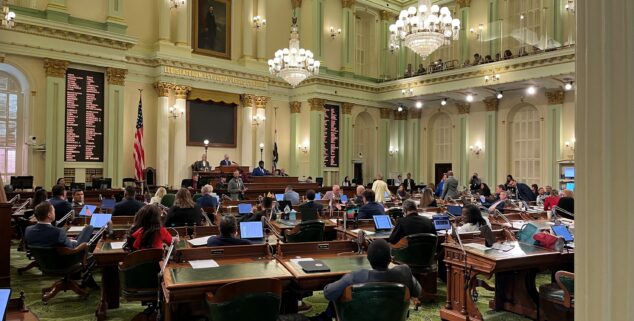 Image by Capitol Weekly
What is an “appropriations measure?” Unfortunately, California law does not define this term. However, it is used frequently in our laws and obviously in the legislative process. California’s Office of Legislative Counsel defines an appropriation as “the amount of money made available for expenditure by a specific entity for a specific purpose, from the General Fund or other designated state fund or account.”
 California’s Constitution Article IV, Sections 8 and 10 describe “appropriations for the usual current expenses of the State.” Section 12 of Article IV mentions “appropriations for the salaries and expenses of the Legislature.” Nonetheless, our state Constitution does not define the term. Appropriation is used in numerous other Articles of the California Constitution and throughout many of the 29 Codes, again without definition.
In other jurisdictions, the common definition of an appropriation bill, sometimes called a spending bill, is essentially any measure that authorizes or makes an expenditure of government funds. It requires adoption by the Legislature and approval by the Governor for purposes of appropriating state dollars.
In California, the main appropriations measure is obviously the annual state budget bill. Article IV, Section 12(d) provides that the budget bill (and budget bills junior) is the only measure that may contain more than one item of appropriation. In addition, appropriations from the General Fund of the State, except appropriations for the public schools and appropriations in the budget, as well as trailer bills that make appropriations related to the budget bill, must be passed by a 2/3 majority vote of both houses of the Legislature.
California bills can and do appropriate monies from the General Fund or special funds. In other bills, appropriations are specifically not made, even though they may otherwise be required by existing law. Hence, a reader may see a provision in a bill such as the following six examples:
Subject to an appropriation in the annual Budget Act for these purposes, the department shall provide new funding to target early childhood investments and whole child resources to help build infrastructure and strengthen local early childhood systems in the state’s highest needs communities, as identified by the equity screening tool.
This article shall be implemented upon an appropriation for these purposes.
This article shall be implemented subject to an appropriation by the Legislature for the purposes described in this article.
Upon appropriation by the Legislature, the Government Operations Agency shall establish the California Regional Initiative for Social Enterprises Program pursuant to this chapter for purposes of creating a statewide effort to support employment social enterprises in developing an inclusive workforce development system by providing targeted, specialized, trauma-informed employment services designed to serve individuals with barriers to employment.
This subdivision shall become operative on July 1, 2000, and shall be implemented only to the extent that funds are appropriated for its purposes in the Budget Act.
A superior court shall not be required to perform any duties imposed pursuant to this section until the Legislature makes an appropriation identified for this purpose.
Sometimes, the Legislature chooses not to appropriate any funds, such as an otherwise required reimbursement sch as for a state-mandated local program. For example, Revenue and Taxation Code Chapter 3 concerns the reimbursement of costs mandated by the state. In Section 2229 of that Code, any exemption of property for purposes of property taxation that is enacted by the Legislature must be reimbursed by the state. Nonetheless, the Legislature can choose not to reimburse local governments for the lost revenue.
The following is an example of language a reader would find in a tax-related bill stating that no appropriation will be made despite the statutory language cited above:
Notwithstanding Section 2229 of the Revenue and Taxation Code, no appropriation is made by this act and the state shall not reimburse any local agency for any property tax revenues lost by it pursuant to this act.
There are numerous other examples of appropriations in bills each legislative session. Slight differences in the language do not impact that the bills appropriate an amount of state funds or are dependent upon an amount being appropriated in a bill or in the budget to fund implementation of the measure.
Support for The Micheli Files is provided by The McGeorge School of Law Capital Center for Law & Policy.
Want to see more stories like this? Sign up for The Roundup, the free daily newsletter about California politics from the editors of Capitol Weekly. Stay up to date on the news you need to know.
Sign up below, then look for a confirmation email in your inbox.
Noticed the focus on appropriations measures is pretty relevant right now. What specific impacts are being discussed?