
Opinion
A cleaner California starts with stronger manufacturing
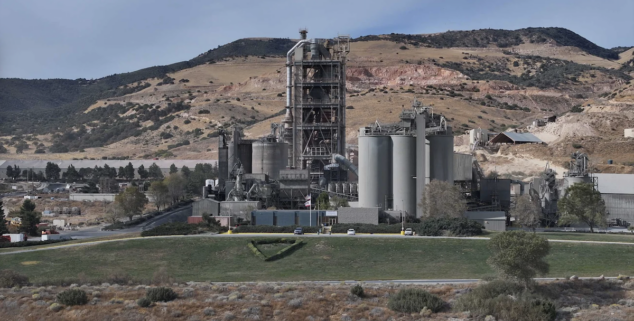 Cement plant in Lebec. Photo courtesy of National Cement Company.
Capitol Weekly welcomes Opinions on California public policy or politics. Please read our guidelines for opinion pieces before submitting an Op-Ed. Submissions that do not adhere to our guidelines will not be considered for publication.
OPINION — Cement and concrete are essential building materials that support economic growth of all kinds. Making cement is an emissions-intensive process. In addition to using large quantities of fuel, the chemical process to make cement also yields carbon emissions.
California is one of the top cement producing states in the country. This creates a challenge for the state’s cement manufacturers to comply with the requirements of California’s Cap-and-Invest Program, the state’s main emissions regulation.
But these challenges do have solutions. Years ago, the California industry established its roadmap to carbon neutrality. First, by reducing fuel and process emissions. Then, by implementing carbon capture technology.
At National Cement Company, we take pride in being a family-owned business that creates high-quality jobs, while helping our customers build and create California’s economic future. Our legacy in the cement industry is very strong. I represent the eighth generation of the Vicat family working for our parent company, Vicat Group, and the third generation of family ownership of NCC in California.
We believe in lowering our emissions and that is reflected in our products. We make the lowest-carbon cement in California and we are leading the industry forward to turn our roadmap into reality, including a first-of-a-kind project for a net-zero cement plant.
This transition is not automatic, however. Each year under Cap-and-Invest we are required to decarbonize further, or we incur additional costs on our production. There are pathways for investing into continued decarbonization, but many come at significant cost.
These circumstances were recognized in this year’s rulemaking for Cap-and-Invest. The California Air Resources Board (CARB) established the Manufacturing Decarbonization Incentive (MDI) to help California manufacturers further decarbonize, in recognition of California’s manufacturing base as key suppliers to our economy and as job creators.
MDI redirects some funding within the Cap-and-Invest program and prioritizes emissions reductions closest to the source — the facilities on which the program is built upon. MDI is a responsible and innovative way to further incentivize decarbonization investments. It has strict criteria on the types of eligible projects, with a claw-back provision for projects that do not ultimately perform.
MDI, as originally proposed by CARB, was supported by leading environmental organizations such as the National Resources Defense Council (NRDC) which applauded its eligibility for the cement sector.
As state policymakers review continuing uses of Cap-and-Invest’s funding, we urge recognition of point source reductions as the most cost-effective pathway for achieving real emissions reductions, including via MDI. MDI is not simply an incentive for industry. It is a mechanism to help manufacturers that are already here, remain here, while supporting the enormous investments required to decarbonize.
Even with MDI, however, additional supportive policies are needed to ensure the economic viability of the California cement industry.
California has seven cement plants in operation currently. Before Cap-and-Invest took effect, there were 11 cement plants. Imported cement has filled this void, with over 20% of California’s cement demand now supplied by imports.
These imports, however, do not have the same requirements that in-state cement producers have for lowering emissions. This creates an uneven playing field that puts in-state manufacturers at a competitive disadvantage. And this presents enormous risk for the survival of California’s cement plants under the rules of Cap-and-Invest.
We need help from state policymakers to level the playing field between California manufacturers and importers through a Border Carbon Adjustment (BCA) that applies the same rules to all cement used in California. To do this, we must accurately measure the carbon intensity of imported cement and ensure that cement is held to the same limits on carbon intensity as cement that is produced within California.
As Cap-and-Invest continues, the stakes are getting higher. And the future is becoming more uncertain. The Manufacturing Decarbonization Incentive is a great first step. A Border Carbon Adjustment is the next critical step.
Supporting our manufacturing sector means supporting job creation and ensuring a vibrant economy across the state.
The cement sector is adapting for its survival. Our policies need to adapt as well.
Eleonore Sidos-Vicat is the CEO of National Cement Company, a producer of cement and concrete in California, and owned by parent company Vicat Group.
Want to see more stories like this? Sign up for The Roundup, the free daily newsletter about California politics from the editors of Capitol Weekly. Stay up to date on the news you need to know.
Sign up below, then look for a confirmation email in your inbox.
Leave a Reply