
Opinion
California can’t hesitate on clean transportation
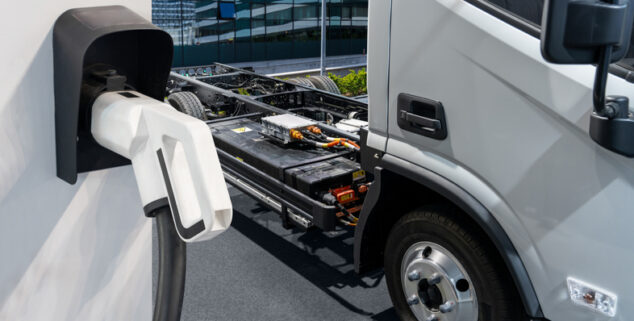 Electric truck batteries are charged from the charging station.
Capitol Weekly welcomes Opinions on California public policy or politics. Please read our guidelines for opinion pieces before submitting an Op-Ed. Submissions that do not adhere to our guidelines will not be considered for publication.
OPINION – California’s clean transportation sector is no longer an emerging market. It is a pillar of the state’s economy – supporting tens of thousands of good-paying jobs, attracting billions in private investment, fueling startups and positioning the state as a global leader in advanced transportation innovation.
That inspiring leadership now faces a huge setback. At the federal level, long-standing legal foundations supporting vehicle emissions standards are being challenged, undermining the state’s ability to set its own policies, granted by the Clean Air Act, and weakening progress. For industry, this is not an abstract debate. Uncertainty slows investment, delays hiring and risks sending jobs elsewhere.
At the same time, spiking gasoline and diesel prices are adding to the strain on wallets and bottom lines, with the cost of everyday goods expected to rise as well. Clean transportation can help families and businesses better withstand fuel price volatility, but further investment is needed to help grow the industry, inspire innovation, and deliver relief at the pump. market.
California lawmakers now face a clear choice: continue sending strong market signals that attract investment and jobs, or risk falling behind in a rapidly growing global industry.
Manufacturers, suppliers, and investors prioritize markets with clear, consistent policies. California has delivered that certainty.
Since 2000, the state’s GDP has grown 81%, making it the world’s fourth-largest economy. Leadership in advanced transportation has helped drive that growth.
Now the state is home to 67 EV manufacturing facilities and nearly $12 billion in announced EV investments – factories and supply chains that anchor jobs across the state. In addition, there are hundreds of startup founders representing thousands of jobs in our state focused on EVs, EV charging, and related systems.
Together, they are investing in people, communities, and our economy.
These investments support one of the fastest-growing workforces in our clean energy economy. Skilled tradespeople have installed more than 200,000 public charging stations and over 800,000 home chargers–strengthening local economies with work that cannot be outsourced.
When policymakers commit to clean transportation, it drives investment into our communities, improves air quality – for frontline communities in particular – and strengthens our economy.
In a time of federal uncertainty, state leadership is more important than ever. Other countries are actively courting EV manufacturing and battery production. If we hesitate, investments will go elsewhere.
This year’s budget and legislative session offer an opportunity to reinforce our economic leadership while providing the clear market signals essential for continued growth.
First, the Legislature should pass AB 1777, the California Clean Skies Act, to strengthen the state’s authority to cut diesel pollution at freight hotspots and accelerate the shift to clean, electric goods movement. As the primary freight hub for the Western United States, California’s competitiveness depends on modernizing this system.
Electric trucks are more efficient, cost less to maintain and rely on more stable electricity prices.
Second, lawmakers should fund the $200 million EV purchase incentive proposed by Gov. Newsom. It signals to automakers that we remain committed to this market, increases affordability for first-time EV buyer, and provides the demand certainty manufacturers rely on to expand production and hire workers.
The governor’s proposal also allows for used EV tax credits, critical for lower-income families looking for a reliable car that is cheaper to operate and fuel. The state must also sustain programs like HVIP that help businesses adopt medium- and heavy-duty EVs, which is critical to reducing fuel costs and supporting domestic manufacturing.
Third, we should accelerate policies that integrate EVs with the electric grid to lower costs and improve reliability. With bidirectional charging, EVs can provide backup power during outages –helping households and small businesses stay operational during blackouts and wildfire disruptions. At scale, EVs can help lower system costs, improve reliability, and reduce the need for expensive infrastructure upgrades.
Slowing down efforts to accelerate transportation electrification puts at risk the progress we have made and the thousands of clean transportation jobs we have created. In a globally competitive industry, even hesitation signals retreat. During this time of federal uncertainty, our state’s continued leadership is essential.
Clean transportation helped build California’s modern economy. With decisive action from Sacramento, it will continue to drive investment, jobs, and global leadership for decades to come.
Matt Petersen is the president and CEO of the Los Angeles Cleantech Incubator (LACI).
Want to see more stories like this? Sign up for The Roundup, the free daily newsletter about California politics from the editors of Capitol Weekly. Stay up to date on the news you need to know.
Sign up below, then look for a confirmation email in your inbox.
Leave a Reply