
Opinion
Making California’s Latino milestone count is the real work
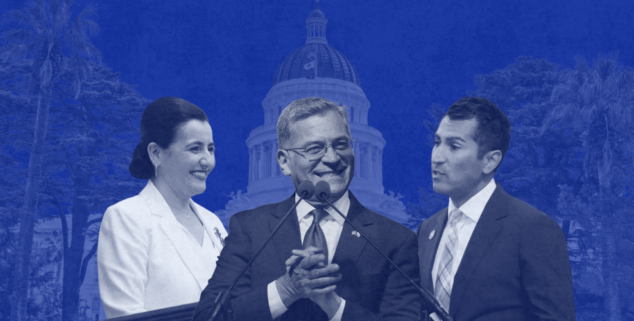 Image by Daisy Castellón, Lucas Public Affairs
OPINION – California is on the verge of something it has never seen. Robert Rivas leads the Assembly. Monique Limón leads the Senate. And Xavier Becerra is favored to beat Republican Steve Hilton for the governor’s office. If he wins, Latinos will hold all three of the state’s top offices at once, a first in California history.
This milestone reflects a shift that has been building for a generation. Latinos are nearly 40% of Californians and on track to become the majority of the state’s workforce by 2040. They are central to every major sector, from infrastructure and housing to health care and agriculture, and they increasingly drive the state’s entrepreneurship. Latino-owned firms accounted for more than half of California’s net new businesses between 2017 and 2023. Nationwide, over the same period, Latino owners added roughly 180,000 net new firms, while white-owned operations fell by 140,000. They are, in every practical sense, the fabric of California, which means no group has more riding on whether the state gets its biggest decisions right.
Behind those numbers are families like mine. When my family’s rent tripled in San Jose, my mom moved us to Sacramento, despite not knowing anyone here because she believed it would give her daughters a better shot. She cleaned houses, waited tables, worked in sales, staffed front desks – whatever that month asked of her. The affordability debates under the Capitol dome are not abstract to me. They are the map of my childhood.
Now, the politics are finally catching up to the demographics.
This milestone arrives at a complicated moment for the community. Latino families are navigating the same kind of affordability and housing squeeze that uprooted mine, as well as immigration enforcement and true uncertainty about health coverage. Meanwhile, the state, facing a multibillion-dollar deficit, scaled back Medi-Cal coverage that roughly 1.6 million undocumented Californians rely on.
Economic pressures come both from Washington and Sacramento, and they tend to land hardest on working families with the least capacity to absorb them. This is the crossroads Latino leaders inherit: more visibility than ever and increased accountability to a community with a great deal on the line.
Here is what makes the moment both a real opportunity and a genuinely hard one. Latino power in California is undeniable. But the community is not monolithic, and that power has never been fully exercised at the ballot box.
Yet, most political strategy still treats Latinos as a single audience.
There is no such thing as “the Latino vote,” any more than there is one kind of California weather. Latinos are Mexican and Salvadoran and Guatemalan, recent arrivals and third-generation Californians, evangelical and Catholic and none of the above, farmworkers in the Valley and founders from Boyle Heights to the Bay Area. What binds them is simpler and stronger than any poll crosstab: community, hard work and building something their families get to inherit.
Then there is the participation gap. Latinos are 38% of California’s adults and just 29% of its likely voters, and nearly six in 10 unregistered adults, a group that includes noncitizens who cannot register, are Latino. That gap is not about apathy. When PPIC asks eligible Californians why they have not registered, lack of confidence in elections and politics tops the list. Outreach rolls in every other autumn, then disappears. Voters engage only when they believe it will change their lives.
This is where public affairs and honest communication earn their keep, and it is the work I have spent my career on. The fix isn’t complicated. It takes intention, investment in understanding the community’s diversity and follow-through. Leaders and campaigns must:
- Put Latino advocates and community leaders in the room while policy is being discussed so that they have opportunity to shape the outcome.
- Show up in communities before you make an ask on the ballot. Genuine relationships matter.
- Work through messengers the community already trusts, from Spanish-language radio, the parish to the TikTok micro-influencer.
- And retire the assumption that one message, in one language, reaches everybody.
Skip these steps, and even historic representation can leave a community feeling unseen.
Representation opens the door. Communication, relationships and results are what get people to walk through it. California is about to experience an historical level of power being concentrated among Latino leaders. Whether it remains a milestone or becomes a turning point depends on how well they, and all of us who work in this arena, speak to the state’s largest community in a way it recognizes as its own.
Daisy Castellón serves on the board of the Sacramento Press Club and is vice president and partner at Lucas Public Affairs.
Want to see more stories like this? Sign up for The Roundup, the free daily newsletter about California politics from the editors of Capitol Weekly. Stay up to date on the news you need to know.
Sign up below, then look for a confirmation email in your inbox.
Leave a Reply