
Opinion
Women farmers feed the state while protecting the land
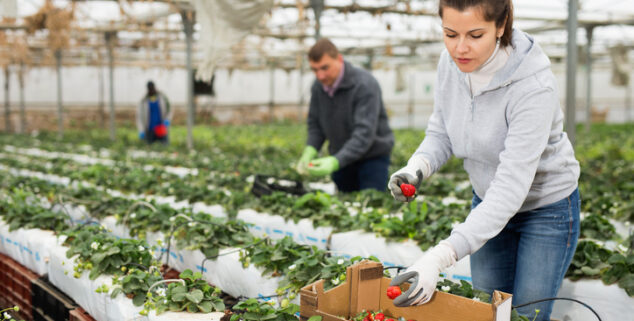 Portrait of happy cheerful female gardener picking fresh strawberries to crate in hothouse, man on background
Capitol Weekly welcomes Opinions on California public policy or politics. Please read our guidelines for opinion pieces before submitting an Op-Ed. Submissions that do not adhere to our guidelines will not be considered for publication.
Every spring, Agriculture Day at the California State Capitol offers a chance to recognize the farmers, farm workers, researchers and communities that sustain one of the most productive food economies in the world. For a state that feeds the nation and exports food across the globe, Ag Day is more than a celebration. It is a reminder that California agriculture carries three essential responsibilities: producing abundant food, protecting the land and natural resources that make that production possible, and sustaining the people and communities who make it all work.
This year’s recognition also arrived alongside a growing global conversation about the role of women in agriculture. International initiatives recognizing the Year of the Woman Farmer highlight a reality long familiar across California’s farming communities: women are central to the future of agriculture.
Across the state, women help guide farms, lead research efforts, manage food safety programs and oversee operations that keep crops moving from field to market. According to the 2022 U.S. Department of Agriculture Census of Agriculture, women now account for 36% of agricultural producers nationwide. California leads the country with more than 45,000 women producers helping steward farmland and agricultural businesses across the state.
Few crops illustrate this leadership and responsibility more clearly than strawberries. Women leaders and growers across California’s strawberry farms manage planting schedules, oversee harvest operations, coordinate food safety programs and collaborate with universities to develop improved plant varieties and new farming technologies.
California produces nearly 90% of the strawberries consumed in the United States, all grown on less than 1% of the state’s farmland. From Ventura County to Watsonville and Santa Cruz, strawberry farming supports more than 50,000 jobs across roughly 30 industries, including harvesting, cooling, transportation, research and food distribution. In many coastal and rural communities, strawberries are a cornerstone of local economic stability.
Behind these numbers are farmers and agricultural leaders who must balance productivity with stewardship. Producing food on this scale in California means navigating some of the world’s most complex environmental and regulatory conditions. Growers face water shortages, evolving climate pressures, labor challenges, and rigorous environmental standards.
Rather than slowing progress, these pressures have pushed the strawberry industry to invest heavily in research, innovation and sustainable farming practices.
Water management is a clear example. Strawberry growers were early adopters of drip irrigation systems that deliver water directly to plant roots. This targeted approach reduces evaporation and improves efficiency in a state where every drop matters. Studies have shown that an acre of strawberries can require less water than an acre of residential development in parts of Los Angeles.
Environmental stewardship also shapes pest management. Many growers rely on integrated and sustainable pest management systems that combine monitoring, biological controls and mechanical tools such as bug vacuums to reduce chemical reliance while maintaining plant health. Beneficial insects are often introduced to fields as a natural defense against pests.
These practices reflect the reality of modern agriculture in California. Sustainability is not a slogan. It is a daily operational requirement for farms that depend on healthy soil, reliable water supplies, and balanced ecosystems to remain productive.
Equally important is the human dimension of agriculture. Strawberries remain a hand-harvested crop that requires skill and care from planting to packing. The industry supports tens of thousands of workers and has historically created pathways to advancement and farm ownership for families across generations. In fact, strawberries provide more ownership opportunities than any other crop.
Agriculture Day provides an opportunity to recognize the full picture behind the food Californians enjoy every day.
California agriculture feeds the state while protecting the land that sustains it. Increasingly, that responsibility is being carried forward by the women helping lead farms, guide innovation, and strengthen rural communities.
Their work ensures that California agriculture remains productive, resilient, and capable of feeding millions while safeguarding the land for generations to come.
Chris Christian is the vice president of Market Insights of the California Strawberry Commission.
Want to see more stories like this? Sign up for The Roundup, the free daily newsletter about California politics from the editors of Capitol Weekly. Stay up to date on the news you need to know.
Sign up below, then look for a confirmation email in your inbox.
Leave a Reply