
Opinion
Voters oppose advanced manufacturing CEQA exemptions
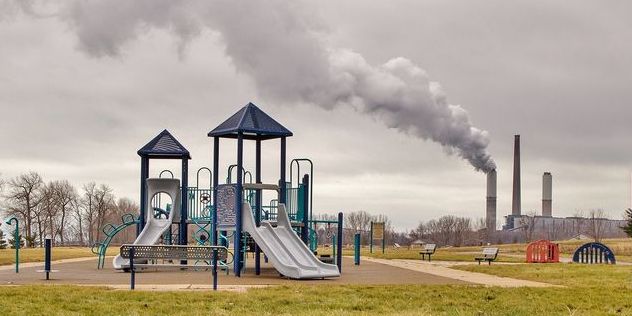 Image by ehrlif
Capitol Weekly welcomes Opinions on California public policy or politics. Please read our guidelines for opinion pieces before submitting an Op-Ed. Submissions that do not adhere to our guidelines will not be considered for publication.
OPINION – A new statewide poll finds 64% of voters would hold it against lawmakers who approved exemptions for polluting industries near homes and schools.
As a pediatrician, I see the consequences of industrial pollution affecting children’s health every day: the asthma that keeps a child home from school, the developmental delays that follow early lead exposure, the elevated cancer risk that trails a childhood spent near a petrochemical facility. These outcomes are not inevitable; they are the predictable result of policy choices. Last year, the California Legislature voted to exempt dozens of categories of industrial facilities from the environmental review process that exists to prevent exactly those harms, and a striking new poll suggests they badly misjudged how the public would feel about it.
When lawmakers passed Senate Bill 131, exempting more than 75 categories of industrial facilities from California’s landmark environmental review law, perhaps they assumed voters either weren’t paying attention or didn’t care.
FM3 Research surveyed 820 likely November 2026 voters in early March on their views of CEQA and the advanced manufacturing exemption created by SB 131. The results are unambiguous: 72% of Californians approve of CEQA, nearly two-thirds oppose the exemption, and most significantly for anyone serving in the Legislature, 64% say they would be less likely to support a lawmaker who backed these exemptions. Those numbers hold across party lines, regions, and every age group surveyed.
So what did SB 131 actually do, and why do voters care so much? The bill exempted “advanced manufacturing” from CEQA’s environmental review, public disclosure and mitigation requirements. Advanced manufacturing is a broad category comprising more than 75 types of industrial operations spanning plastics, petrochemicals, nuclear, defense, and mining. Industrial facilities like these often emit toxic pollutants – arsenic, cyanide, hexavalent chromium, and PFAS among them – that are linked to cancers, respiratory illnesses, developmental problems, and miscarriages. Exempting them from CEQA means communities might not know that such projects are going to be built nearby, and that projects could be approved even when they are sited near homes and schools. This defies common sense, and voters know it.
The breadth of what voters want protected is also striking. More than four out of five believe that pesticide manufacturing, battery manufacturing, strip mining, oil refineries, and nuclear weapons manufacturing should all remain subject to CEQA safeguards. Under SB 131, they currently do not. Large majorities ranging from 71% to 79% say the same for nuclear energy plants, waste incineration, plastic fabrication, and data center facilities. This is not a narrow or ideological position. It is a broad, consistent mandate from the California public.
Voters were additionally concerned about the cost to taxpayers when contamination goes unaddressed, and California has a $750 million lesson in what that looks like. The remediation of the Exide battery recycling plant in L.A. County landed almost entirely on the public.
The bipartisan character of these findings deserves particular attention in Sacramento, where the Abundance Agenda has been sold as a politically safe vehicle for deregulation. CEQA approval runs to 90% among Democrats, 73% among independents, and even a plurality (41%) among Republicans. Opposition to the advanced manufacturing exemption holds at 58% and up to 67% in every region of the state.
Lawmakers who assumed that weakening environmental review was a consequence-free vote were, the data now shows, listening to the wrong people.
After SB 131 passed, many lawmakers acknowledged that including the manufacturing exemption had been a mistake and promised to remedy it. However, they did not do so during last year’s session. SB 954, now before the Legislature, is their opportunity to keep that promise, restoring the most essential safeguards removed by SB 131 and requiring the environmental review and public disclosure that communities deserve before an industrial facility goes up near their child’s school.
I know what happens to children when we get these decisions wrong. So do the voters. The poll makes the public’s position clear: Californians support CEQA, oppose exemptions for manufacturing facilities, and will hold their legislators accountable. The only question now is whether Sacramento will listen and vote yes on SB 954.
(Methodology: FM3 Research conducted 820 online and telephone interviews with likely November 2026 California voters from March 5 through 11, 2026. Margin of sampling error: +/- 4.0% at the 95% confidence level.)
Dr. Bonnie Hamilton is a pediatrician, mom, and community volunteer who practices pediatric medicine in Vallejo, California.
Want to see more stories like this? Sign up for The Roundup, the free daily newsletter about California politics from the editors of Capitol Weekly. Stay up to date on the news you need to know.
Sign up below, then look for a confirmation email in your inbox.
Leave a Reply