
News
Lived experience drives push for menstrual product safety
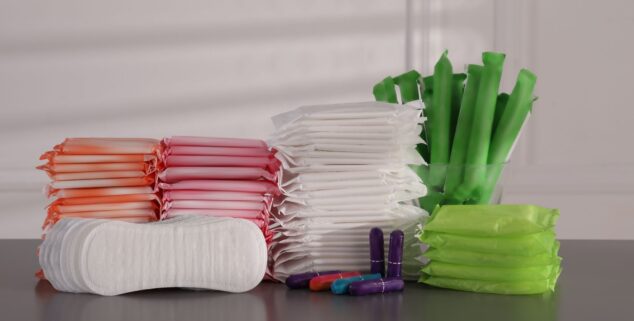 Image by Liudmila Chernetska..
 People who menstruate use thousands of tampons and pads over their lifetimes, yet the safety and accessibility of these products have received relatively little regulatory attention. Since 2017, California lawmakers have introduced a series of bills expanding access to feminine hygiene products as well as increasing transparency about and now regulating chemicals contained in those items.
Women in the Legislature are not new, but their numbers have climbed steadily, even as California’s effort to achieve full gender parity remains a work in progress, as Capitol Weekly recently reported. Supporters of menstrual-product legislation say this increased representation matters because lawmakers’ lived experience has helped bring issues like childcare, maternal health and menstrual equity into the spotlight.
California’s latest push centers on the fact that menstrual products are worn for hours at a time, pressed against or inside some of the body’s most permeable tissues.
Concerns about menstrual product safety are not entirely new. In the 1980s, toxic shock syndrome (TSS), a rare but potentially life-threatening illness caused by bacterial toxins, was linked to tampon use, leading to federal warning requirements and changes in product design. While TSS is caused by bacteria, current legislation focuses on the potential risks of long-term exposure to chemicals in menstrual products.
According to guidance from the National Institutes of Health (NIH), “the average menstruator will use over 11,000 tampons or sanitary pads.” Because these products are near the endocrine system’s chemical signaling network, researchers agree that they are a potential route for chemical exposure.
This past session, Sen. María Elena Durazo’s (D-Los Angeles) SB 754 created a testing and disclosure framework for menstrual products, requiring manufacturers to report the presence of certain chemicals and directing the Department of Toxic Substances Control (DTSC) to publicly post results. Durazo noted that the idea for the bill was originally brought to her by her then-fellow, Sunny Snell, whom she credited with researching the issue and helping shape the proposal.
“We’re looking to raise a red flag that there is an issue here, and we’re going to take these measured steps to address it,” Durazo said.
In last year’s legislative session, Assemblymember Diane Papan’s (D-San Mateo) AB 2515 passed, banning intentionally added PFAS in menstrual products and requiring the DTSC to develop standardized testing methods and trace-level thresholds by 2027.
Per- and polyfluoroalkyl substances (PFAS), often called “forever chemicals” because they do not break down easily, have been detected at low levels in the blood of people and animals across the globe. These manufactured chemicals are linked to increased risks of cancer, high cholesterol, reduced immune response, developmental effects and decreased fertility.
According to the Environmental Protection Agency, scientists are still determining the levels at which PFAS exposure begins to cause harm, leaving uncertainty around how even low-dose, long-term exposures may affect health.
For Papan, the need for regulation became evident after she learned how prevalent PFAS are in menstrual products. She called the issue “a problem hiding in plain sight,” noting that such products are used monthly by half the population for decades.
California’s recent focus on menstrual-product safety builds on nearly a decade of legislation aimed at access and consumer transparency. The state’s first major step came in 2017 with AB 10, which required low-income middle and high schools to provide free pads and tampons.
Two years later, lawmakers expanded affordability efforts with SB 92, a budget bill that eliminated the sales tax on menstrual products and diapers for children. The legislation was carried by the Senate Committee on Budget and Fiscal Review, then chaired by Holly Mitchell, current member of the Los Angeles County Board of Supervisors.
In 2020, the Legislature turned to ingredient transparency with AB 1989. The law requires manufacturers to disclose all intentionally added ingredients on packaging and websites. Access efforts expanded again in 2021 with the passage of AB 367. The law requires free menstrual products in all public schools serving grades 6–12, as well as on California State University campuses and community colleges.
Advocacy groups agree that the next logical step is chemical safety. Natural Resources Defense Council senior scientist and lead expert on PFAS, Anna Reade, said that studies have detected toxic chemicals across different menstrual-product categories.
“Multiple studies finding these various types of toxic chemicals in menstrual products really shows that the FDA isn’t doing a sufficiently good enough job of regulating, testing and monitoring menstrual products to protect people who use them,” Reade said.
In July 2024, environmental epidemiologist Jenni A. Shearston of the University of Colorado Boulder published what is widely regarded as the first comprehensive study of toxic metals directly in tampons, detecting lead, cadmium, and other metals across product types.
Shearston’s announcement prompted a federal response. In October 2024, the FDA launched an investigation into potential hazards and by December 2024, concluded that menstrual products did not pose a risk to consumers.
At legislative hearings for AB 2515 and SB 754, manufacturers raised concerns about the feasibility of meeting thresholds and the cost of repeated testing, noting PFAS contamination can occur throughout global supply chains.
“If these chemicals exist in these products, it is based purely on trace unavoidable contamination… we are not certain, again, given the ubiquity of these chemicals, that we can keep those trace unavoidable levels below 10 ppm,” Dawn Sanders-Koepke on behalf of the California Manufacturers and Technology Association (CMTA) testified at a July 2, 2024, Senate Judiciary Committee hearing on AB 2515.
During SB 754’s July 1 hearing, Elizabeth Esquivel of CMTA added that DTSC is already evaluating menstrual products through the Safer Consumer Products Program and argued for using existing regulatory channels instead of “layering unpredictable costs and mandates.”
Despite FDA reassurance and industry objections, legislators argue that uncertainty alone justifies precaution. Durazo said the state must continue evaluating new information and noted that representation shapes which issues receive sustained attention.
“More women in the Legislature [is] definitely a really important element in all of this. And having more women in the Legislature is making a difference for women’s health,” Durazo said.
For now, California’s efforts reflect a shift: treating menstrual products not just as consumer goods but as items that warrant the same scientific scrutiny and regulatory attention as other products used daily and in close contact with the body.
“Protecting women is always going to be at the forefront… If there’s any glitch along the way, rest assured, I will be a stalwart to ensure that women get protected,” Papan said.
Note: An earlier version of this story identified Dawn Sanders-Koepke as being employed by rather than a contract lobbyists for the CMTA. The text has been corrected. We also had an incorrect reference to the Natural Resources Defense Council, which has also been corrected. We regret the errors.
Want to see more stories like this? Sign up for The Roundup, the free daily newsletter about California politics from the editors of Capitol Weekly. Stay up to date on the news you need to know.
Sign up below, then look for a confirmation email in your inbox.
Leave a Reply