
Opinion
The time is now to help lower public utility customers’ rates through reforms to wildfire costs
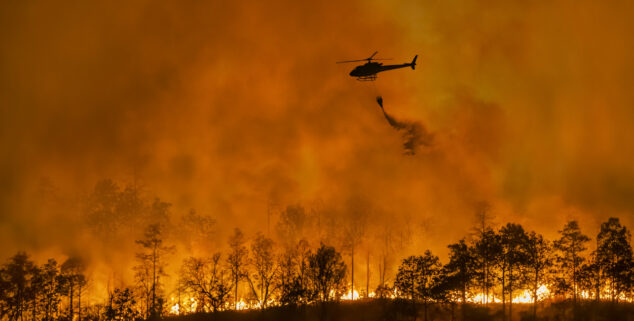 Image by Toa 55, iStock Images.
Capitol Weekly welcomes Opinions on California public policy or politics. Please read our guidelines for opinion pieces before submitting an Op-Ed. Submissions that do not adhere to our guidelines will not be considered for publication.
OPINION — California’s wildfire recovery system has a problem everyone can see, and no one has fixed: Fire victims wait years for payouts, more homeowners are dropped by their insurers every year and customers who can least afford it are left to pay for it all.
A recent state report confirms what public utilities have been living for a decade. The fixes are within reach, and California should pursue two of them this year: a state-sponsored insurance mechanism that lets publicly owned utilities manage catastrophic wildfire risk without threatening the communities they serve, and reforms that get resources to survivors faster and more predictably. The state must act now.
The California Municipal Utilities Association (CMUA) represents California’s publicly owned utilities, from the Los Angeles Department of Water and Power (LADWP) to the Sacramento Municipal Utility District (SMUD) to dozens of smaller public utilities across the state. Together, our members deliver water to 75% of Californians and electricity to 25% of Californians. These are community-owned agencies, governed by boards and city councils elected by the customers they serve. That model works. However, the financial impacts of wildfires only add to all Californians’ affordability concerns by driving up electric bills.
Here’s what makes this urgent for public power in particular: We don’t have shareholders to absorb a catastrophic loss, and unlike investor-owned utilities, we don’t have access to the AB 1054 Wildfire Fund to draw on if a major wildfire hits.
Private insurance only goes so far. California should establish a state-administered insurance fund or other financial backstop for publicly owned utilities, one that is optional, scaled to each utility’s size and risk profile, and built to cover the tail risk that private insurance and self-insurance cannot reasonably absorb.
Without it, a single catastrophic wildfire could push a publicly owned utility into bankruptcy, and because these utilities are often extensions of local government, that failure would ripple across every service the city provides, policing, fire protection, drinking water and infrastructure, landing back on ratepayers in the form of higher bills and a weaker local government to serve them. Building this mechanism now is far cheaper than rebuilding a bankrupt utility later.
But how you finance catastrophic loss is only one part of the equation. Managing litigation costs is the other, and the numbers show why this can’t wait. A review conducted for the California Earthquake Authority’s SB 254 Natural Catastrophe Resiliency Study found that as much as 40% of wildfire recovery funds never reach victims at all. The money is consumed instead by the process itself. The same study found that only 38% of homes destroyed in California’s most destructive fires between 2017 and 2020 had been rebuilt five years later.
Every year this goes unaddressed, more families are stuck waiting, more homeowners are pushed onto the state-operated FAIR Plan’s high rates and thin coverage, and utility customers absorb costs that could otherwise go toward grid hardening, vegetation management and other investments that actually prevent the next fire.
Part of the fix is straightforward math: Every dollar spent moving a claim through the system is a dollar that doesn’t reach a family trying to rebuild. Reasonable limits on how much of a settlement is consumed by litigation costs before survivors are paid, such as guardrails California already applies to other types of claims, would put more money where it belongs, faster.
Several other states, including Arizona, Hawaii, Idaho, Kansas, Montana, North Dakota, Oregon, Utah and Wyoming, have recently taken up similar reforms pairing wildfire mitigation with faster, more predictable recovery processes. California doesn’t need to reinvent the wheel; it needs to act.
Publicly owned utilities are ready to help address these issues now. Neither of our reforms requires new infrastructure or new bureaucracy, and both would make a real difference for millions of Californians before the next fire season arrives. Publicly owned power exists to put community needs first. Give us the tools to keep doing that, and act now before another wildfire happens.
Danielle Blacet-Hyden is the executive director of the California Municipal Utilities Association.
Want to see more stories like this? Sign up for The Roundup, the free daily newsletter about California politics from the editors of Capitol Weekly. Stay up to date on the news you need to know.
Sign up below, then look for a confirmation email in your inbox.
Leave a Reply