
Opinion
California’s electricity cost and reliability conundrum
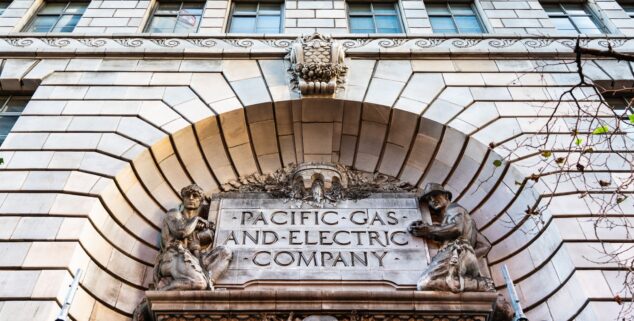 Photo by Sundry Photography.
 Capitol Weekly welcomes Opinions on California public policy or politics. Please read our guidelines for opinion pieces before submitting an Op-Ed. Submissions that do not adhere to our guidelines will not be considered for publication.
OPINION – “Pacific Gas and Electric has long been a company that Californians love to hate.” That pronouncement came from a reporter for The New York Times who profiled the company at the height of California’s calamitous electricity crisis in January 2001 as PG&E teetered toward bankruptcy (which came in April). Time has done nothing to abate that “hate.” Indeed, almost 25 years later, after a massive PG&E power outage in San Francisco shortly before Christmas, that sentiment has seemingly reached “I’m mad as hell and I’m not going to take it anymore!”
State Senator Scott Wiener, who represents San Francisco, contended that PG&E has “not adequately maintained its infrastructure” and “that it’s time” for the city “to break away.” He announced he will introduce legislation in January to do just that. San Francisco County Supervisor Matt Dorsey agreed that San Francisco needed to purchase “PG&E’s infrastructure” in the city and “run it as a municipally owned utility.” It would be more affordable, he opined, “and we would have more accountability.”
That might prove to be the case, but it would be challenging. First, affordability does not necessarily go together with accountability, which, for an electric utility, essentially means reliability. (PG&E is not shying away from accountability for the holiday power outage.)
Bay Area congressman Eric Swalwell, who’s running for governor, called the blackout a “security failure” and said that, if elected, he would seek to prevent blackouts by using “military-grade resilience standards” for the electricity grid as well as “neighborhood microgrids.” Those things would increase reliability, but they would not be cheap, especially in widespread utilization. And those costs, which would be covered by ratepayers, would come on top of the already very high costs of burying thousands of miles of power lines underground to mitigate wildfire hazards.
In recent years wildfire mitigation and damage costs have become the biggest factor in electricity rate increases. The cost of the energy itself, regardless of whether the power comes from an investor-owned utility (IOU) like PG&E or a municipal utility such as SMUD, doesn’t differ by much. In addition, about three-quarters of San Francisco’s power comes from the hydroelectric facility it owns at Hetch Hetchy in the Sierra Nevada Mountains. If San Francisco does establish a municipal utility, that supply factor will not change much, if at all.
What will change is that San Francisco will own the poles, wires, and substations – including the one in the Mission District that caused the holiday power outage – that are currently the valuable property of PG&E. As such, if that prospective San Francisco municipal utility infrastructure, particularly the poles and wires, cause a wildfire, the utility will be directly liable for the damages as opposed to the shareholders of PG&E.
Even then, the municipal utility would still have to service the bond debt used to acquire the infrastructure from PG&E, and that debt will be substantial. In fact, the cost of that infrastructure – which would be determined in a highly contentious valuation process – could be so high that it would not be a cost-effective acquisition for San Francisco.
One other big factor in separating the city from PG&E is the impact it would have on PG&E’s remaining customers, which would have to cover more costs for wildfire damage and risks. That risk is minimal in San Francisco but is significant in the less densely populated “wildland urban interface” (WUI), most of which is serviced by PG&E and the state’s other two IOUs. Some have argued that low-fire risk urban dwellers shouldn’t be liable for people who choose to live in higher risk areas. Well, tell that to the almost 14 million people in all 58 counties who reside in the WUI.
It should be noted that another gubernatorial candidate, businessman Tom Styer, views the electricity affordability problem as mainly due to the lack of power generation “competition” for the IOU “monopolies,” particularly PG&E. However, given that the cost of electricity is not in itself a key high-rate driver, it’s hard to see how this would help.
What would help? While the antipathy toward PG&E has long been well justified, the utility’s latest blackout should not throw yet another log on the fire of vilification in a gubernatorial election year that further obscures the complexity of the state’s electricity challenges. Talk is cheap; electric utility rate and reliability improvements won’t be.
Kurt Schuparra is the author of How the California Electricity Crisis Generated a Green Wave: An Insider’s Account (Routledge, January 2025).
Want to see more stories like this? Sign up for The Roundup, the free daily newsletter about California politics from the editors of Capitol Weekly. Stay up to date on the news you need to know.
Sign up below, then look for a confirmation email in your inbox.
Leave a Reply