
Opinion
California should incentivize homes with unvented attics
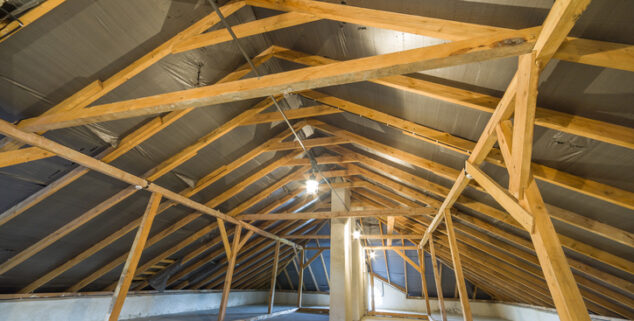 Attic of a building with wooden beams of a roof structure. Image by Bilano.
Capitol Weekly welcomes Opinions on California public policy or politics. Please read our guidelines for opinion pieces before submitting an Op-Ed.
OPINION – Traditional construction methods leave California homes increasingly vulnerable to natural disasters and soaring energy costs. Wildfires continue to devastate communities, while Californians pay the third-highest electricity rates in the nation.
While there is no single solution for every vulnerability, one simple, effective approach is to build tightly insulated homes with unvented attics – reducing wildfire risk and improving energy efficiency. As each year seemingly brings a new historic wildfire season and the state’s living costs continue to rise, California should consider policies that encourage and incentivize the construction of tightly sealed attic spaces.
Unvented attics insulate at the roofline – not at the ceiling like most homes built today. Air impermeable insulation, like spray foam, can protect attic framing and sheathing, making vents unnecessary. This protects attics from extreme temperature and humidity fluctuations, effectively sealing it from outside air infiltration.
Moving the attic inside the building’s thermal envelope (the barrier between the outside and the home living space) dramatically increases resiliency and energy efficiency. This simple switch could meaningfully improve how California builds and protects its homes. The U.S. Department of Energy even recognized unvented attics in the Building America Top Innovations Hall of Fame.
Wildfires and Resiliency
After Los Angeles’ recent devastating wildfires, California continues to evaluate how to rebuild stronger. As part of this effort, the state should update its building codes to further incentivize using unvented attics to “harden” homes against wildfire, increase energy efficiency, and create more resilient communities.
Homes with vented attics are especially vulnerable. The California Building Standards Code requires at least one square foot of vent opening for every 150 square feet of attic space. A 1000 square-foot attic, therefore, requires about seven square feet of openings, creating significant entry points for embers, heat, and smoke.
Bone-dry desert winds like the Santa Anas can make roof framing and sheathing tinder dry. A few sparks entering through vents can ignite a home. Unvented attics block embers and heat from entering, greatly reducing fire threats and smoke damage.
Sadly, my confidence in unvented attics comes from real world experience. Nearly every home in the Pacific Palisades’ Alphabet Streets neighborhood burned to the ground last January. Yet, a home that I designed with an unvented attic and spray foam insulation withstood the fire. Embers couldn’t find an opening to break through, and the tightly sealed building envelope helped keep out smoke and toxic contaminants that plagued many surviving homes. The residents were among the first families cleared to return to the otherwise deserted neighborhood.
In a state as disaster-prone as California, building with this level of structural integrity and design should not be the exception – it should become the new normal.
Efficiency and Affordability
Beyond wildfire protection, unvented attics deliver significant energy savings. By keeping HVAC ductwork within the insulated envelope, homes experience fewer heat gains in summer and losses in winter, improving overall system efficiency and saving Californians money. Unvented attics can improve heating and air conditioning efficiency of homes by an average of 18 percent, according to the California Energy Commission.
Taking Action: What California Can Do to Promote Unvented Attics
California can take significant action to promote unvented attics and their many benefits.
First, California should incentivize the construction of unvented attics through its existing energy code process. California’s Building Energy Efficiency Standards are widely regarded as a national model, pushing the envelope on energy conservation and sustainable construction practices. However, they miss an opportunity by not incentivizing the construction of unvented attics or offering any simple design options for them. By promoting less efficient vented designs, the state encourages a product that increases homeowner costs and wildfire exposure.
Second, as the California State Fire Marshal reviews updates to the Wildland Urban Interface (WUI) Code that impacts regions particularly vulnerable to wildfires, it should incorporate clear guidance on unvented attic assemblies. The Insurance Institute for Business and Home Safety has already taken this step, now requiring unvented attics in their OPTIMUM WILDFIRE RESISTANT CONSTRUCTION model code. Aligning state codes with these best practices would significantly enhance wildfire resilience.
Finally, the multiple state agencies working on public policy impacting unvented attics should work together, not independently, to ensure their efforts are complimentary and incentivize their construction. A united effort will deliver a win-win to Californians: more energy efficient homes that lower the cost of energy while hardening homes against wildfires – a necessity my fellow Californians and I can no longer afford to ignore.
Greg Chasen is a California architect, the owner of Chasen Architecture, and was named to TIME100 Climate’s 2025 list of leaders.
Want to see more stories like this? Sign up for The Roundup, the free daily newsletter about California politics from the editors of Capitol Weekly. Stay up to date on the news you need to know.
Sign up below, then look for a confirmation email in your inbox.
Leave a Reply