
Opinion
Building more is the key to affordability
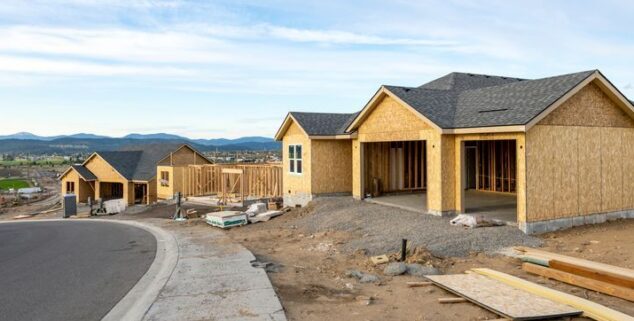 Image by Kirk Fisher.
Capitol Weekly welcomes Opinions on California public policy or politics. Please read our guidelines for opinion pieces before submitting an Op-Ed. Submissions that do not adhere to our guidelines will not be considered for publication.
OPINION – California policymakers are obsessed with boosting “affordable housing,” which makes sense when housing in the state is out of reach to a large portion of its residents.
They’re trying to solve the problem from the wrong end, though. The supply of affordable housing is best expanded not by focusing on building homes with artificially cheap price tags but by increasing the construction pace of all homes.
A bit more than a decade ago, the Legislative Analyst’s Office wrote that the state needed to build 100,000 new units every year in addition to the 100,000 to 140,000 that were expected to be built annually. In 2016, consulting firm McKinsey & Company said California needed 3.5 million new homes by 2025 to close the housing gap. A couple of years back, a “member network committed to solving the housing shortage and affordability crisis” called Up For Growth said the state has underproduced housing by 840,000 units.
Whatever the true number might be, it’s almost inconceivably high and so far has proved to be elusive.
Recently, CalMatters reported that there are nearly 40,000 affordable units that “are ready to break ground,” but they’ve encountered a roadblock: They need money.
This should have caught no one off guard. The incentive for developers to build affordable housing is weak.
“It turns out building affordable housing is not particularly affordable. In fact, there is a huge gap between what these buildings cost to construct and maintain and the rents most people can pay,” according to the Urban Institute.
This is not knowledge recently stumbled upon. Twenty years ago, a Harvard University report noted that the “private housing market generally does not provide sufficient profit for for-profit developers to build or maintain decent quality housing that is affordable to lower income households.”
So affordable housing projects have to rely on public funds. But according to Enterprise Community Partners, the resources aren’t readily available.
“Far too many affordable developments are stalled and unable to begin construction due to a lack of public funding.”
A great deal of public and private energy has been invested in forcing an affordable-housing outcome in California. Billions have been poured into the effort, as well. Yet the price of median housing is still more expensive in California than anywhere else in the country outside of Hawaii and Washington, D.C.
Rather than fixate on affordable housing, policymakers would make life better for all if they let loose housing construction across all price ranges. The mere act of “building new housing indirectly adds to the supply of housing at the lower end of the market,” says the LAO, even though “new market-rate housing typically is targeted at higher-income households.”
There is a beneficial downstream effect as new construction increases the stock of available older housing as wealthier households move into the newer dwellings, leading to a loss in value of older homes, making them more affordable. An expanded supply of new market-rate homes also puts downward pressure on rent rates, creating a market that’s more affordable overall.
Of course “this is less likely to occur in communities where new housing construction is limited,” says the LAO. High-income households in tight markets, such as California’s, also tend to price low-income households out of the market. When there’s not enough housing construction, “more affluent households, faced with limited housing choices, may choose to live in neighborhoods and housing units that historically have been occupied by low–income households,” cutting hard into the supply that is available for those with more limited economic means.
The mission of the Legislative Analyst’s Office is to offer nonpartisan advice to lawmakers. But it seems lawmakers have mostly disregarded the LAO’s “Perspectives on Helping Low-Income Californians Afford Housing” that makes the clear case for increasing market-rate construction.
Lawmakers largely continue to spotlight “affordable housing” as if there is no other alternative – maybe because it’s an effective pretense. It allows them to claim they are mending a broken market while they enact a gumbo of progressive policies, such as packing people into ever higher-density housing, centering development around public transportation hubs and issuing green mandates.
There is a bright spot, though, in San Diego. There, apartment construction is booming at the same time rents have fallen for the first time in 15 years. And it’s happened without a policy preoccupation on affordability. There’s a lesson here, if lawmakers are open to learning it.
Kerry Jackson is the William Clement Fellow in California Reform at the Pacific Research Institute.
Want to see more stories like this? Sign up for The Roundup, the free daily newsletter about California politics from the editors of Capitol Weekly. Stay up to date on the news you need to know.
Sign up below, then look for a confirmation email in your inbox.
Leave a Reply