
News
CW Q&A: CPCA’s Francisco Silva
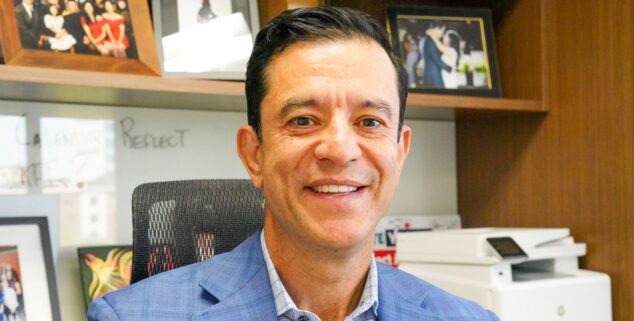 Francisco Silva. Photo by Joha Harrison, Capitol Weekly
Community clinics are a vital part of California’s healthcare provider network. But massive federal spending cuts are threatening their ability to continue serving their communities. We sat down with California Primary Care Association President and CEO Francisco Silva to discuss the future of these critical healthcare resources.
CW: Give me your view on the healthcare situation here in California, and maybe buttress that with exactly what CPCA’s role is in all of this.
Silva: A good place to start is to put in context where we were before, what we accomplished in healthcare, and what’s at risk. There are about 2,500 community healthcare centers throughout the state. The birth of most of our centers were to serve a need that was unmet by the rest of healthcare, and most originated as free clinics started by a community group, activists, doctors or different folks in the community. And the mission was to provide care regardless of coverage. After the ACA (Affordable Care Act), we went from about 16 percent of California residents not having coverage to about 4 percent, which was a huge accomplishment. Health centers are a big piece of that. And just to put that in context, we had about a 3 million patient growth in about a 10-year span after the ACA. Half of the Medi-Cal patient visits in the state for primary care happen at a health center. For one in three Californians that are on Medi-Cal, their medical home is a health center. So that just puts in context the growth and the accomplishments since the ACA in providing coverage and access to care for the community. We’re a big piece of that. Now we’re at risk of completely turning that backwards.
CW: How could this impact immigrant communities?
Silva: One of our priorities has been to make sure everybody has health coverage regardless of immigration status or income. And a big piece of that growth was covering folks that now are referred to as UIS, unsatisfactory immigration status or undocumented immigrants. And we accomplished that. And under the recent budget proposals, there’s been proposals to cut that back. For health centers alone, the January budget proposed a $1 billion cut. So that was a priority for us because, from our perspective, if you cut health centers and Medi-Cal, then you’re cutting primary care. And if you cut primary care, that means people end up in the ER, and that’s at a higher cost level than actually providing primary care. So that was a challenge in the budget in this immediate environment. Beyond that, there was a proposal to cut acupuncture and a proposal to cut the navigator program. The navigator program is meant to provide resources to do outreach to beneficiaries, to patients, to make sure they keep their coverage.
CW: Dental care too, right?
Silva: Yes, dental care was on the chopping block for UIS. There was an asset test that would have impacted our patients where they would have lowered the level at which you qualify for Medi-Cal. So for example, if the value of your car is too high you wouldn’t qualify for Medi-Cal. And that would particularly hit the elderly, which is a big part of our patient base. There was a proposal to cut PACE, the Program of All-Inclusive Care for the Elderly. Many of our health centers operate PACE programs where it’s a comprehensive model of care where you get dental, behavioral health care and pharmacy — everything at one place. That was on the chopping block also. We managed to stop all those cuts in this budget cycle, but now we have to figure out how to solve for the impact of H.R. 1.
“There are about 2,500 community healthcare centers throughout the state. The birth of most of our centers were to serve a need that was unmet by the rest of healthcare, and most originated as free clinics started by a community group, activists, doctors or different folks in the community. And the mission was to provide care regardless of coverage.”
CW: Tell me more about that.
Silva: For us, the fundamental accomplishment is making sure people have coverage. The next phase was making sure that coverage actually meant something. So we got behind Prop. 35. We were one of the sponsors of the committee that made that possible. We put together about $6 million. For the first time health centers have been able to do that, engage at the ballot box to do something like that to make sure we have revenue to not just have coverage, but meaningful coverage. What H.R. 1 represents fundamentally is taking us backwards, right? For us, the mission of health centers is to provide care regardless of coverage. So much like the ER where you don’t turn anybody away, we won’t either. But now we have to figure out how to get it done without the payment structure there. And H.R. 1 does it this way, right? There’s the work requirements, so the expectation that folks will lose coverage because of that. There’s the redetermination where every six months people have to verify that they meet the qualifications. And the worry there for both is that even if you can meet the work requirements and even if you meet the requirements for coverage, the fact that you’re putting those barriers there means an estimated anywhere between 1.5 to 3 million people are going to lose coverage in California under those new restrictions.
CW: Well, so what do you do in a situation like this? How do you make up for the kind of dollar figure loss that we’re talking about from the federal government?
Silva: I think it’s multi-layered, right? You start with how to make sure that people that qualify for coverage keep that coverage. That’s fundamental before you get to the funding piece, right? Because if we keep people that meet the determinations, it makes that revenue gap less. So it’s critical that we focus on that first. So a lot of the work being put in now is not losing sight of minimizing the impact on folks losing coverage. But then there’s other parts of H.R. 1, right? The limit on the MCO tax revenue, the potential impact on the quality incentive program that the hospitals have, the provider tax, right? That’s a potential loss of $10 billion there. We have to figure out other solutions.
CW: There’s one very prominent ballot measure (Proposition 40) that wants to take a one-year approach to this by taxing billionaires. But you are opposed, correct?
Silva: Prop 40 is not the way to go. We’re opposed to it because we think it’s a one-time fix that’s going to cost us more dollars coming into the state. So we have to look for other revenues. We’re supporting Proposition 3 (which would make permanent the state’s top marginal tax rates on higher incomes, which are set to expire in 2031). That’s critical to keep that funding in the state. We’re going to work on the budget fair share tax proposal to ensure that companies with a disproportionate number of their employees on Medi-Cal pay for it. I think there’s still flexibility with the MCO tax that we should explore. I think we need to push to continue that revenue stream, but we definitely need to explore other revenue sources. We also supported the LA County measure.
CW: The ER tax?
Silva: Yeah, the ER tax. It’s a sales tax increase to provide funding. That’s also a five-year plan. I think part of the challenge will also be, how does the state support the counties? The counties are going to be facing cost pressures because of the federal cuts, and LA came up with a solution. I think we need to be open to those types of solutions.
CW: Speaking of counties, expound a little bit on what you are working on with them jointly to try to solve some of these problems.
Silva: We were part of a coalition that included the local plans, the community clinics, L.A. County, the California State Association of Counties, the California Medical Association and the California Hospital Association. We got funding from the California Health Care Foundation, and part of the goal there was to create a plan B, whether we can stand up an alternative product for the state that could provide coverage for uncompensated care that we took to the legislature and the administration. We ran out of time, but I think it’s something that we’re ready to move forward on again. And part of the goal there was, the question, are we all willing to sacrifice? Which means it might be a program that looks more like Covered California, but not as robust as Medi-Cal. And it may mean that the reimbursement rates for all the providers might not be as high.
CW: Could it be maybe tiered like Covered California?
Silva 2: Like different tiers, silver etc.?
CW: Yes.
Silva: We didn’t have tiers, but the goal was to not lose the infrastructure that we built over the last 15 years. If things change at the federal level, you still can’t just turn a knob and undo some of the worst parts of H.R. 1. So the goal was to preserve the networks so once we get through these difficult financial times at the state level and the additional federal challenges, then you actually can turn the knob back on.
CW: A big challenge for you is reaching out to a community that doesn’t always trust institutions. Share with me a little bit about what kinds of challenges you face getting communities to trust you to come into the facilities and to actually be able to partake of what it is you’re offering?
Silva: A good way to think about it is looking at the challenges during COVID, which really highlight the special nature of the community health centers. By definition, a community health center has to be in an underserved community, one that is typically lower income and with less access to doctors. When vaccines first came out during COVID, we reached that initial tipping point of folks getting them, and then there was that really hard group of people to get to, which tended to be patients in our community. Some of the barriers are cultural or language. But the model of community health centers is the majority of the board has to be patients, so there was that trust factor. Part of our model also includes that we have community health workers that are part of the community health center, which means it’s usually a member of the community who’s out there talking to folks and trying to bring them in. If you go to any community in the state, the health center tends to look a lot like the community itself. If it’s a predominantly immigrant community, it looks very immigrant, from the providers to the patients. If you go to the rural north, it looks like the community of the rural north. We have health centers that are dedicated to the elderly, some are dedicated to the unhoused. That’s what makes it really unique to reach those patients that are hard to reach. And that’s what makes them really special in this time for us to preserve.
Now, one of the challenges we’re facing today, even if you put aside the funding piece, is that with ICE activity and the position of the federal government and how it treats immigrants, there’s a lot of fear. One of the concerns, particularly when ICE was really active in certain parts of California, particularly LA, was that people weren’t going to go get care. And then there was the data breach where the Medi-Cal data was shared with ICE. There was a lot of concern around that. But at least in the data that we’re seeing in the last few months, folks are still getting care. Utilization hasn’t dropped. Enrollment hasn’t really dropped significantly in the Health for All program. And we take that to mean that they must trust us. And that’s an important part of the community health center model.
“If you go to any community in the state, the health center tends to look a lot like the community itself. If it’s a predominantly immigrant community, it looks very immigrant, from the providers to the patients. If you go to the rural north, it looks like the community of the rural north.”
CW: What else do health centers provide their communities?
Silva: One of the things that’s really unique when we figure out what to get involved in is that we’re not just traditional medicine. We do the social drivers of health. We have health centers that focus on environmental issues, education, food insecurity. Most of my health centers have a food pantry as part of their program. People are participating in CalFresh. We also do enrollment at our health centers for social services. So when we looked at the ballot initiative landscape, that was the thinking. How does it impact the broader community? We said no to Prop 40 because you have a wrong solution that’s going to hurt more than help. Prop 3, it doesn’t necessarily include us, but a significant part of the money goes to education. That’s important. Because if our kids are not going to do well if they don’t have education that’s well-funded and in place. That’s our approach. There’s other propositions that target health centers. Prop 44. And that was just a direct attack on health centers. And our position has been it’s a righteous fight because we believe we’re protecting the community itself because of who health centers serve. So that’s the way we’ve been approaching it from a ballot initiative landscape, but also in our advocacy.
CW: How much of that is civic engagement and education?
Silva: One of the departments we have built is the Center for Civic Engagement. Part of the goal and mission of that department is to engage our patients civically at scale with our health centers. I forget the exact number, but around 25 percent of your health is impacted by your healthcare. The rest is all the other drivers, right? And part of our mission is we have to get our patients engaged locally at their school boards, city council races and at the state level. We did a $7 million operation last cycle to do that, to get people out to vote, to engage. It’s a permanent part of what we do. Part of our mission is that we predominantly serve people who have less. Seventy percent of our patients are on Medi-Cal. The other 10 – 15 percent are Medicare or duals. And the others are mostly uncovered. In some communities, we are the only provider of care. So H.R. 1 largely targets the very population that we serve. And our approach to it is engaging and changing minds. Which we have seen in California, at least in the electorate, with Prop 35. I started in healthcare at the California Medical Association when there were the Schwarzenegger Medi-Cal cuts. I was their general counsel, and we litigated that. I took a case all the way to the US Supreme Court. At that time, we had to convince even folks in healthcare, even doctors, that Medi-Cal was our fight. Because if it wasn’t funded, the rest of the healthcare system was going to fall apart. Now, it’s automatic in healthcare, including at CMA, which was a big proponent of Prop 35. Everybody knows – and I don’t know if this is good or bad – but everybody knows somebody on Medi-Cal, on Medicaid. And there was strong support for protecting it, even though it’s a program for the poor. So we do see our mission to change hearts and minds on protecting these programs and how important they are.
Want to see more stories like this? Sign up for The Roundup, the free daily newsletter about California politics from the editors of Capitol Weekly. Stay up to date on the news you need to know.
Sign up below, then look for a confirmation email in your inbox.
Leave a Reply