
News
Ticketmaster in the crosshairs again over California legislation
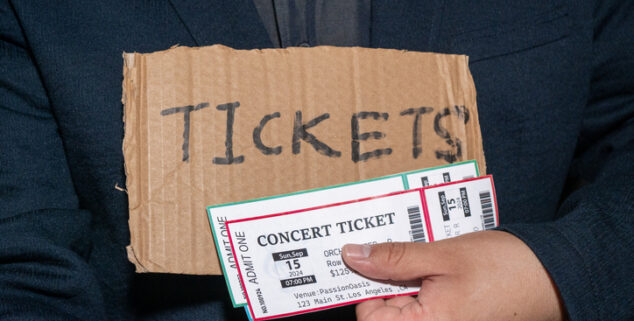 Image by JUN LI.
 Ticketmaster and its parent company Live Nation are once again neck deep in state legislation they contend would protect consumers but which critics say is really aimed at furthering their monopoly over live event ticketing in California and the United States.
In late January, the Assembly passed AB 1349 by Assemblymember Isaac Bryan (D-Ladera Heights) to ban resellers from listing tickets they don’t actually have, a practice known as speculative ticketing. A week later, in early February, Assemblymember Matt Haney (D-San Francisco), introduced AB 1720, a spot bill intended to cap the resale price of concert tickets at no more than 10 percent above their face value, including fees.
Live Nation supports both bills – and that raises alarm with some consumer advocates. The U.S. Department of Justice and the Federal Trade Commission are both suing Live Nation and Ticketmaster for allegedly thwarting competition and employing deceptive pricing tactics while controlling more than 80% of the primary ticketing at major concert venues.
California Attorney General Rob Bonta is one of the litigants in the DOJ case, which kicked off its trial this month.
“Live Nation has manipulated the market and made itself untouchable by any competitor – not because it is better, but because it has created a monopoly,” Bonta said in a press release. “This is illegal, plain and simple, and artists, their fans, and the live venues that support them are hurting as a result.”
In the past, advocates have accused Ticketmaster and Live Nation of trying to increase their dominance over the live ticketing market through California legislation and they say details of AB 1349 indicate it is more of the same.
“The monopoly wants nothing more than to crush and eliminate their competition,” said Robert Herrell, executive director of the Consumer Federation of California.
“You have to understand the long-term objective and impact of the Live Nation-Ticketmaster monopoly, and it is to gain more power,” he said. “Monopolies never give up or cede power. It has to be taken from them.”
Three sections of AB 1349 worry consumer advocates the most: definitions of “ticket” and “rights holder” and a proposed amendment to Section 22505.5 of the Business and Professions Code to prohibit the purchase or sale of tickets in violation of venue operators or event presenters’ terms and conditions.
In the past, advocates have accused Ticketmaster and Live Nation of trying to increase their dominance over the live ticketing market through California legislation and they say details of AB 1349 indicate it is more of the same.
Advocates say that the definitions are worded so that consumers wouldn’t actually buy tickets anymore but rather licenses to attend events, which would allow Ticketmaster to put whatever restrictions it wants on them, including resale bans or a requirement that you resell tickets on its platform.
The B&P revision would make Ticketmaster’s terms and conditions enforceable under state law, which they say is unprecedented.
“If you buy a ticket, you have no rights to sell it or give it to a friend, and then tickets will be more expensive,” said Pastor Tecoy Porter Sr., president of the National Action Network Sacramento, a local chapter of the civil rights and social justice organization originally founded by Rev. Al Sharpton. “AB 1349 takes rights away from you and me and gives them to a monopoly.”
Neither Live Nation nor Bryan responded to Capitol Weekly requests for comment, but Haney said his bill was inspired by legislative proposals elsewhere and developed through conversations with venues, artists and consumers. He said Ticketmaster and Live Nation have had nothing to do with it.
“They’re not involved with the bill at all. Our sponsors are the venues and the artists. They’re the ones who have been pushing for a solution to make sure actual fans get access to tickets,” he said.
“Ticketmaster is a huge secondary sales platform,” the assemblymember added. “They have to abide by these limits as well and they actually have a lot to lose in this. But they’re not involved in this at all. I don’t even know who represents Ticketmaster in Sacramento.”
Herrell said that’s not persuasive.
“The Live Nation-Ticketmaster monopoly, whether they have authored or written language that shows up in these bills directly or indirectly is less important than the fact that the nature of the whole debate that we’ve been having the last few years in the Legislature is within the framing provided by the monopoly,” he said.
“No matter what the stories is being told by the authors of those bills, and I’m as unhappy as the next person with high prices in some cases in the resale market, the real net effect of bills like that becoming law is to strengthen the monopoly,” Herrell said.
This year, Live Nation critics have a new foil in their efforts to torpedo the California legislation: Live Nation’s close affiliation with President Donald Trump.
Live Nation was one of the largest corporate backers of Trump’s inauguration, donating $500,000. Shortly after he was elected, Live Nation President Joe Berchtold said on earnings call that executives were “hopeful” that the new Trump administration would be more favorable to the company than Joe Biden, who was in the Oval Office when the DOJ suit was filed.
Trump was in office when the FTC filed suit in September 2025. The FTC press release announcing the suit even included a quote from commission Chairman Andrew Ferguson saying, “The Trump-Vance FTC is working hard to ensure that fans have a shot at buying fair-priced tickets, and today’s lawsuit is a monumental step in that direction.”
A few months earlier, in May 2025, Live Nation appointed Trump loyalist Richard Grenell to its board of directors in a move that music executives lambasted as a naked attempt to squash the DOJ investigation. Live Nation also reportedly hired former Trump aide Kellyanne Conway as a political consultant.
And late last year, Trump pardoned Tim Leiweke, a real estate developer who was indicted for alleging orchestrating a conspiracy to rig the bidding process for an arena at the University of Texas. The indictment revealed that Ticketmaster secretly funneled payments to Leiweke and company for encouraging venues to exclusively work with it instead of rival ticketing partners.
“What side are we on here in California?” asked Porter, the civil rights leader. “From my perspective, a faith and equity perspective, this effort reflects a broader, moral concern about unchecked power, lack of transparency and systems that take rights away from regular people to enrich corporations and it seems like this measure, AB 1349, locks in practices that shuts out our communities.”
Trump signed an executive order last year directing the U.S. Attorney General and the FTC to ensure the enforcement of competition laws in the live event industry. That led Bryan, the author of AB 1349, to say in an April 2025 hearing that his bill “brought Isaac Bryan and Donald Trump together.”
In January, when the bill was up for a vote on the Assembly Floor, Assemblymember Carl DeMaio (R-San Diego) complimented Bryan for his “bipartisanship” and “joining with our president in curbing some of the speculative buying and selling of tickets.”
Bryan and DeMaio were referring to the Democrat’s alignment with the president on consumer ticketing issues. But the soundbites also play into the critics’ narrative, that Ticketmaster is linked to Trump and his involvement is all the more reason to reject the California legislation.
“Ticketmaster is getting cozy with the Trump administration, right? And that’s just the way they do to avoid accountability,” said Jose Barrera, deputy director for California for the League of United Latin American Citizens. “We’re seeing this with other companies. So things like this, when you have a bill that takes rights away from you and me and gives them to a monopoly, we want to make sure that we’re not voting for those types of things and we’re providing more protections to consumers.”
AB 1349 is in the Senate awaiting scheduling for its first hearing. AB 1720 has no hearings scheduled yet in the Assembly.
Want to see more stories like this? Sign up for The Roundup, the free daily newsletter about California politics from the editors of Capitol Weekly. Stay up to date on the news you need to know.
Sign up below, then look for a confirmation email in your inbox.
i wanna keep updated from ue