
Opinion
Your kid’s phone never closes. Why do California’s rec centers?
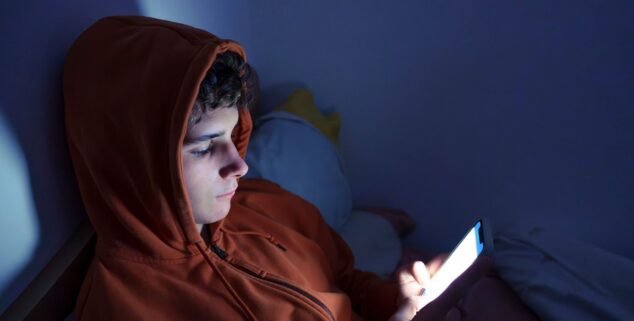 Image by Javier Zayaz.
 Capitol Weekly welcomes Opinions on California public policy or politics. Please read our guidelines for opinion pieces before submitting an Op-Ed. Submissions that do not adhere to our guidelines will not be considered for publication.
OPINION – The rec center court at 3:30 p.m. is loud in the best way. Sneakers squeak on the hardwood. The ball thumps. When someone misses a wide-open layup, they get a quick nudge from a friend, not a haptic buzz from a smartphone in a pocket. Everybody laughs anyway. For a little while, the phone stays tucked away because real life is louder.
That scene is not nostalgia. It is competition. A basketball game or a library study group is one of the few things that can compete with an algorithmic feed.
California is testing the limits of platforms’ influence in court and at the Capitol. In Los Angeles, a bellwether youth social media “addiction” case is moving toward trial against Meta and YouTube after TikTok and Snap settled. In Sacramento, lawmakers passed SB 976 to curb “addictive feeds” that keep minors scrolling without parental consent.
These are vital moves. This is Step One: regulating the design features that keep minors stuck in the scroll.
We are still missing Step Two: making sure there is somewhere better for kids to go. If we only focus on regulation, we create a vacuum: less screen time without more human connection. In public health terms, that is not a win.
We have to acknowledge the reality of why the phone is winning. For many kids, a phone is the only place that reliably stays open. The digital world is frictionless. It never closes early due to budget cuts. It never runs out of staff. To get young people to spend less time online, we must make real life the easier choice.
If California is serious about youth mental health, we must fund the physical “operating system” that replaces the digital one. We do not just regulate risk and call it a strategy; we invest in the systems that make the future work. Social connection requires that same legislative mindset. As lawmakers head into the May Revision, one number should concentrate the mind: about 40% of U.S. high school students reported persistent sadness or hopelessness in 2023.
First, we must keep the doors open. A library that closes at 5:00 p.m. or a park with locked gates cannot compete with an app that stays open 24 hours a day. The state should create a matching-grant program to help cities and counties extend evening and weekend hours at libraries and recreation centers, especially in neighborhoods with the fewest alternatives. A building that goes dark by dinner time has already lost.
Second, we should treat schools as community hubs long after the final bell. California has already appropriated more than $4 billion for the “community schools” model through 2031. The state should make after-hours access an explicit priority in grant guidance so campuses become reliable gathering places for families, mentoring, and sports. For a working parent, a school that stays open and supervised until 6:00 or 7:00 p.m. is not just a convenience; it is a lifeline.
Third, we must protect after-school and summer enrichment as essential social infrastructure. Programs like the Expanded Learning Opportunities Program (ELO-P) for TK through 6 provide a safe, staffed place for kids when home is crowded or connectivity is limited. These programs keep students engaged with peers instead of isolated in their rooms. Protect the funding, and keep expectations clear: consistent staffing, supervised space, and a reason to show up.
This is not an argument against regulating platforms. Platforms should be held accountable for design choices that harm minors. Regulation only works if we build a viable alternative. You can turn down the pull of an app, but you cannot build human connection by simply telling a teenager to “log off.”
The rec center court at 3:30 p.m. is what a healthier California looks like. It is a place where kids practice the difficult, rewarding work of being with other people in real time. If California wants kids to log off, it should prove it by keeping those doors open.
Will Lu is a public-sector and nonprofit leader focused on social connection and community infrastructure.
Want to see more stories like this? Sign up for The Roundup, the free daily newsletter about California politics from the editors of Capitol Weekly. Stay up to date on the news you need to know.
Sign up below, then look for a confirmation email in your inbox.
Leave a Reply