
Opinion
Why California needs a unified groundwater strategy
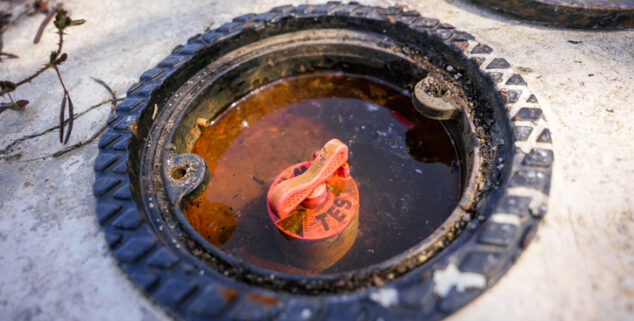 A groundwater monitoring well used for environmental groundwater sampling. Image by actualreece.
 Capitol Weekly welcomes Opinions on California public policy or politics. Please read our guidelines for opinion pieces before submitting an Op-Ed. Submissions that do not adhere to our guidelines will not be considered for publication.
OPINION – Groundwater rise is one of California’s most overlooked climate emergencies. The water rising beneath our feet is quietly colliding with a century of industrial contamination, and the state is not prepared. California representatives must take groundwater rise seriously because the consequences for public health and infrastructure will be too severe to ignore. Federal legislation provides the funding and programming necessary to identify the communities most vulnerable to the impacts of groundwater rise.
Across California, regulators maintain extensive records on contaminated bodies of water and hazardous remediation sites, especially in the Bay Area, Los Angeles Basin, and San Diego. Current policy allows polluted sites to be closed once they are deemed stable and pose minimal risk. But groundwater levels are climbing, and contamination that was once submerged is now at risk of being mobilized. When rising groundwater comes into contact with toxic chemicals, it pushes them into sewer lines, utility corridors, and shallow soils. In some cases, chemicals have been reported to vaporize and migrate upward into indoor air.
California’s regulatory history complicates this even further. Decades of pesticide use have left behind compounds that continue to release gases in shallow groundwater. A 2025 report published in the scientific journal Elsevier shows industrial spills that occurred before documentation requirements began were never added to cleanup databases, leaving gaps in the state’s understanding of where pollution sits. Without a unified system, cleanup and treatment oversight are fragmented, and the risks associated with groundwater rise are left incomplete.
This is often framed as a coastal issue, but that is a dangerous misconception. Inland communities, particularly areas with extensive groundwater pumping and historically shallow water tables, face similar risks.
Current remediation strategies were not designed with groundwater rise in mind. Capping a contaminated site to isolate pollutants becomes ineffective if groundwater rises and reaches the buried waste. Much of California’s infrastructure, particularly aging sewer systems, was never designed to resist chemical intrusion from below.
The consequences are already visible. In West Oakland, trichloroethylene (TCE) from a contaminated groundwater plume migrated upward and infiltrated a high school through its boiler room, demonstrating how vapor intrusion exposes residents long before contamination reaches the surfaces. It took years before the EPA updated TCE rules under the Toxic Substances Control Act.
To protect residents, the state needs a comprehensive approach to data collection for decision-making. Groundwater researcher Dr. Benjamin Hagedorn has emphasized that California’s datasets are inconsistent, siloed, and incomplete. A unified statewide system would enable agencies to identify contamination hotspots, track how plumes shift as groundwater levels change, and forecast where infrastructure may fail. Better data improves emergency response, public communication, and the speed of local cleanup efforts. Without it, California will continue to make climate and infrastructure decisions on incomplete data.
Fortunately, there is a policy pathway available. The bi-partisan bill Groundwater Rise and Infrastructure Preparedness Act of 2025, introduced in Congress by Rep. Kevin Mullin (D-CA), aims to coordinate state and federal efforts, integrate scattered datasets, and fund the research needed to create a nationwide mapping that identifies the communities most vulnerable to groundwater rise contamination.
California has long grappled with the consequences of past industrial decisions. Now, groundwater rise threatens to bring those contaminants back to the surface. The dangers are real, imminent, and worsening. If legislators fail to act, rising groundwater will turn hidden hazards into public health emergencies. California representatives should prioritize comprehensive data systems, modernize remediation strategies, and passage of the Groundwater Rise and Infrastructure Preparedness Act. Groundwater rise may be invisible now, but ignoring it will not make its consequences any less devastating.
Emma, Dani, Sarah, and Amira are students at Georgetown University studying environmental and public policy issues.
Want to see more stories like this? Sign up for The Roundup, the free daily newsletter about California politics from the editors of Capitol Weekly. Stay up to date on the news you need to know.
Sign up below, then look for a confirmation email in your inbox.
Leave a Reply